









































































































Autzen Trench War: Why Oregon Lays Eleven Against Michigan on a 38-Point Total
Oddsmakers trimmed the Autzen Stadium over/under to 38 as Sherrone Moore's fourth-ranked Michigan defense collides with Dan Lanning and Dylan Raiola.
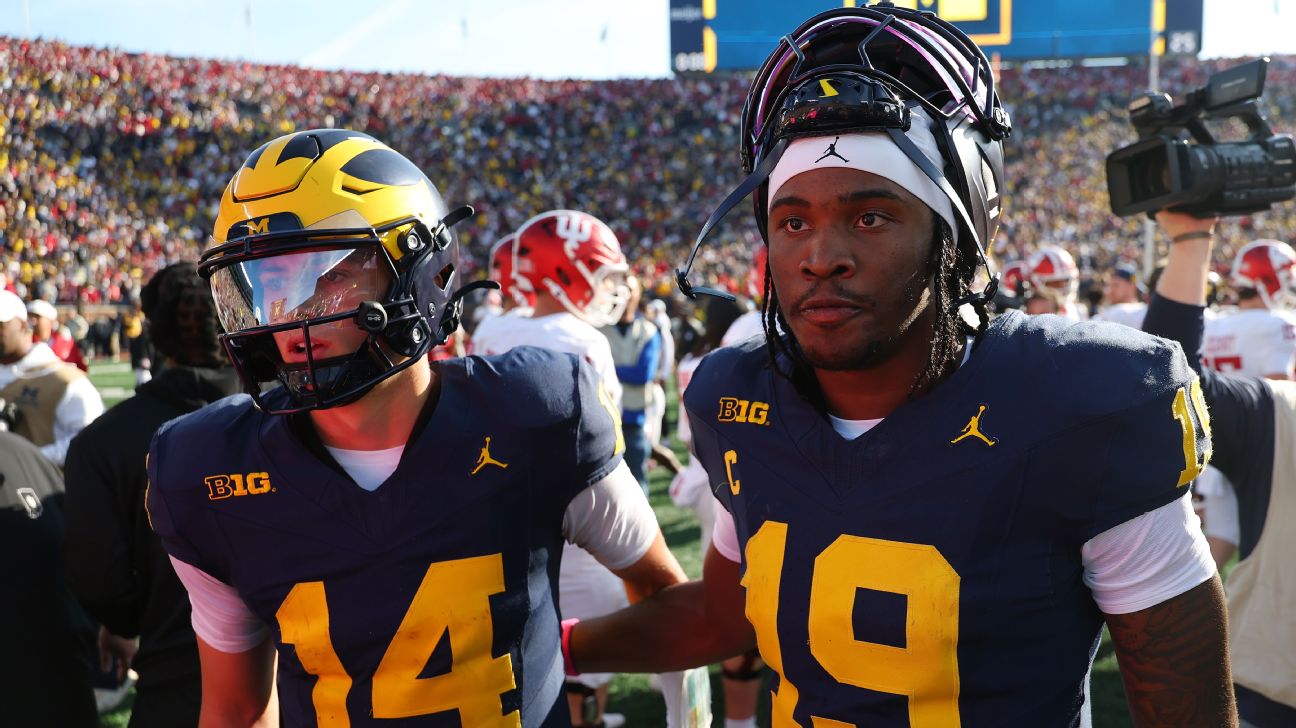


- ▪Oddsmakers moved Oregon from -10 to -11 (-110) while dropping the game total from 39.5 to 38, implying just 13.5 points for visiting Michigan.
- ▪Michigan brings the nation's fourth-ranked total defense (255.3 YPG) and 14th-ranked scoring defense (16.2 Opp PPG) to counter Dylan Raiola (11 TDs, 2 INTs).
- ▪Quarterback Bryce Underwood (924 passing yards) and backup Tommy Carr must clean up a 130th-ranked 4.10% team interception rate in hostile road noise.
- ▪Crossing above the key number of 10 creates structural underdog value on Michigan +11 inside a nine-to-ten possession Big Ten rock fight.
Seeing a 38-point over/under flashed across the Autzen Stadium video board feels like a typographical relic from mid-century leather-helmet football, yet oddsmakers actually trimmed Saturday's total down from a 39.5 opener. Dan Lanning's 6-3 Oregon Ducks sit as 11-point home favorites over Sherrone Moore's 5-4 Michigan Wolverines, yielding an implied scoreline of 24.5 to 13.5. Every single first down in Eugene will feel like prying concrete loose with a crowbar.
The math behind that suffocating projection stems from the starkest roster dichotomy in the Big Ten conference this autumn. Michigan owns the fourth-stingiest total defense in America at 255.3 yards allowed per game and surrenders just 16.2 points per outing, yet its 126th-ranked scoring offense scrapes together only 19.6 points per contest. For Oregon, covering a double-digit spread inside such a tiny scoring environment demands surgical patience rather than track-meet tempo.
Michigan's Two-Quarterback Puzzle Searches for Rhythm in Eugene Noise
Offensively, Michigan enters Saturday afternoon trapped in quicksand, averaging 128.7 rushing yards per game at 3.6 yards per carry while throwing nine interceptions—a 4.10 percent interception rate that ranks 130th out of 134 FBS teams. Season passing leader Bryce Underwood has completed 72 of 124 throws for 924 yards, five touchdowns, and six picks, while backup quarterback Tommy Carr is also expected to take snaps filling in behind Underwood as Moore hunts a spark.
Regardless of whether Underwood or his backup operates under center on a given series, Michigan cannot afford third-and-eight against Autzen's crowd roar after already allowing 19 sacks this fall. Wideout JJ Buchanan gives the Wolverines a legitimate downfield target with 40 receptions for 646 yards and five scores, while tailback Savion Hiter leads the ground effort with 331 yards on 93 carries. Against an Oregon defense allowing 5.07 yards per play and 349.7 yards per game, sustained four-yard runs are mandatory.
Michigan Wolverines(5-4)@16Oregon Ducks(6-3)Michigan41.88%16Oregon37.50%Michigan7.1 YPA16Oregon7.8 YPAMichigan-616Oregon-6Michigan3.6 YPC16Oregon4.1 YPCDylan Raiola's Ball Security Confronts a Top-Five Wolverine Secondary
Oregon's offensive blueprint revolves around poise and mistake-free distribution from quarterback Dylan Raiola, who has connected on 121 of 185 passes for 1,354 yards and 11 touchdowns against only two interceptions. Overall, the Ducks average 34.1 points and 285.2 net passing yards per game while ranking tied for 13th nationally with a microscopic 0.90 percent interception rate. Wide receiver Dakorien Moore headlines the perimeter attack with 48 catches for 601 yards and seven touchdowns, supported by running back Dierre Hill Jr.'s 474 rushing yards.
Breaking tendency against Michigan's defensive structure, however, requires far more than clean pocket mechanics. The Wolverines rank 11th nationally in opponent yards per pass attempt at 5.9 and 14th in yards allowed per rush at 3.0, holding offenses to 4.10 yards per snap—a measure of total offensive efficiency across both run and pass downs. Oregon's offensive front has surrendered just 11 sacks all season, setting up a heavyweight trench collision against Michigan's interior rush.
Subscribe to Our Free Morning Betting Newsletter.
See which lines moved overnight before you place a bet—verified sharp money moves, key injury news, and daily edges delivered to your inbox every morning.
Compressed Clock Physics Behind an Implied 24.5-13.5 Scoreline
When oddsmakers pull a college football total down from 39.5 to 38 while simultaneously pushing the spread from Oregon -10 out to -11, the market is pricing an asymmetric stranglehold. Specifically, bettors expect Michigan's offense to stall repeatedly near midfield without Oregon needing 40 points to separate. Because each team burns play-clock seconds huddling and probing heavy fronts, total possessions per side could easily dip from twelve down to nine or ten.
In a nine-possession game, red-zone finishing transforms from an analytics talking point into the entire handicap. If Oregon settles for two field goals instead of touchdowns inside Michigan's 20-yard line, building a 12-point margin becomes mathematically grueling against a defense conceding 16.2 points per game. Conversely, one strip-sack or tipped interception returned inside Michigan territory could crack the 11-point spread wide open before halftime.
Double-Digit Cover Math in a Low-Possession Big Ten Grinder
Sitting third in the Big Ten at 6-3 and trading at +5000 on the national championship futures board, Lanning's squad has zero interest in style-point carelessness that risks turnovers. Oregon's willingness to lean on Dierre Hill Jr. and high-percentage perimeter completions to Dakorien Moore once ahead by two scores naturally accelerates the fourth-quarter clock. That conservative endgame script historically favors double-digit underdogs when totals sit below 40.
Still, backing Michigan +11 requires trusting an offense ranked 126th in scoring to manufacture at least two scoring drives on the road without gifting short fields. With Oregon protecting the football at an elite clip—just three team interceptions across nine games—Michigan's defense cannot count on free points. Watch the opening two scripted drives: if Savion Hiter finds creases against Oregon's 47th-ranked run defense (3.7 yards allowed per carry), +11 holds real teeth.
Measuring Michigan +11 Against Autzen's Ultra-Low 38 Total
Laying -11 (-110) in a game totaled at 38 asks Oregon to outscore Michigan by nearly 30 percent of the entire projected scoring pool. While respected action pushed the Ducks from -10 (-115) to -11 and shaved the total from 39.5 to 38, double-digit underdogs backed by a top-five total defense (255.3 yards allowed per game) command mathematical respect once the spread clears the key number of 10.
Rather than chasing the steamed Under at 38—where a single defensive touchdown or overtime period torpedoes four quarters of punts—Michigan +11 (-110) captures the exact same low-possession game script. Oregon's 3.7 yards allowed per rush gives Sherrone Moore just enough ground traction to shorten the second half and stay inside two scores.
Frequently Asked Questions
Sharp Wire Market DeskWhy did the Michigan vs. Oregon total drop to 38 points?
Michigan ranks fourth in FBS total defense (255.3 yards allowed per game) and 126th in scoring offense (19.6 PPG), while Oregon protects the ball with just three interceptions all season, projecting a slow, low-turnover grind.
Who is handling quarterback duties for Michigan against Oregon?
Season passing leader Bryce Underwood (924 yards, 5 TDs) headlines the depth chart, with backup quarterback Tommy Carr also expected to see snaps in relief as Sherrone Moore manages the rotation.
