



















Analyst Biff Poggi Defends Ohio State After CFP Playoff Snub
College football analyst Biff Poggi is calling out the College Football Playoff committee for penalizing Ohio State after their high-stakes scheduling decisions.
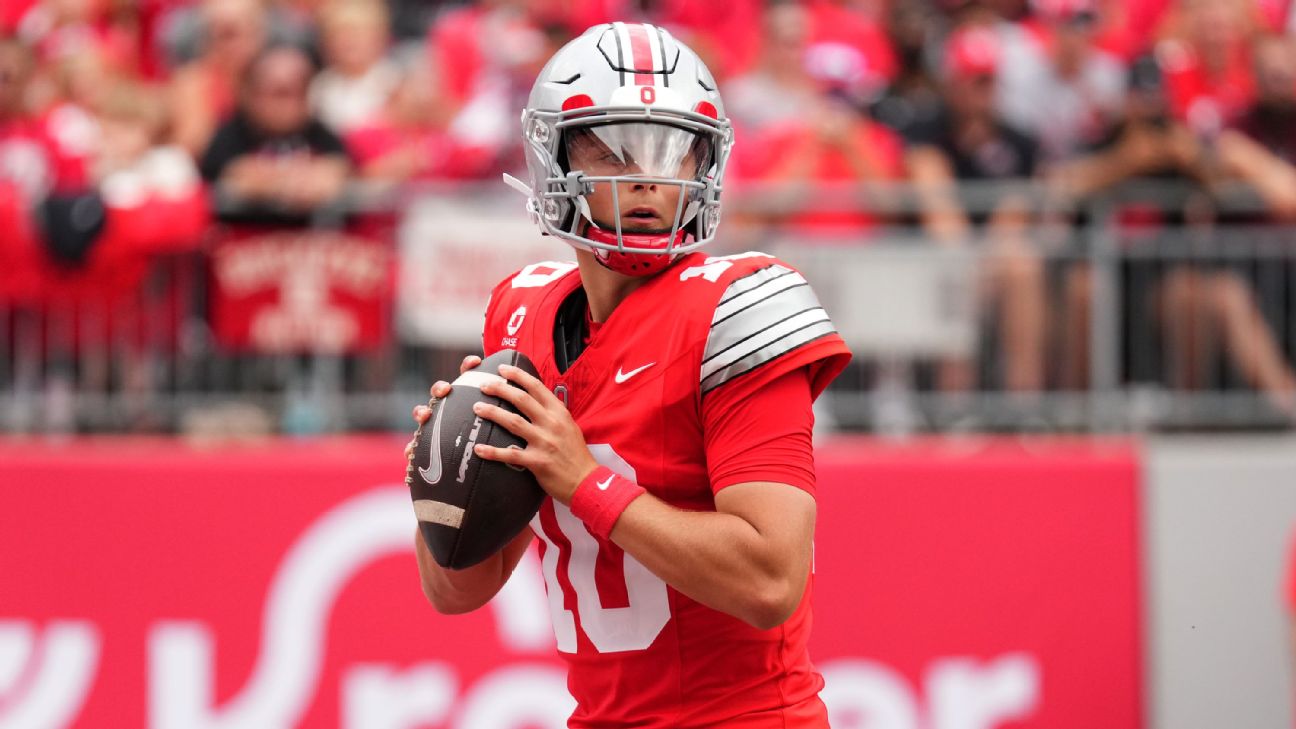
- ▪Analyst Biff Poggi publicly defended Ohio State against the CFP committee's handling of their tough nonconference schedule.
- ▪Ohio State's PFF-scale trench grades highlight a dominant 94 run defense paired with pass-protection vulnerabilities that opposing coordinators target.
- ▪Betting markets are adjusting quickly to the high-stakes narrative pressure surrounding Big Ten playoff contenders.
The college football landscape thrives on heated rivalries, but every so often, the boundaries of institutional animosity blur when external forces provoke a unified reaction from coaches and analysts alike. Ohio State has managed to find an unlikely supporter in the middle of its latest College Football Playoff controversy. Analyst Biff Poggi isn’t buying the committee’s decision to leave the Buckeyes sitting at No. 12 in its initial rankings. For Poggi, the fundamental issue extends far beyond a simple numerical ranking; it strikes at the core of what the selection committee communicates to programs about scheduling ambitious, high-risk nonconference matchups.
Speaking candidly on the Big Ten Network, Poggi voiced sharp frustration regarding how Ryan Day's squad has been handled by voters following their aggressive scheduling path. The debate immediately sent ripples through national sports desks and altered how sharp syndicates evaluate the Buckeyes in the broader futures market. Ohio State currently trades at +950 to win the national championship in markets tracked across major outlets *(lines courtesy of YouWager.lv)*, reflecting a market that respects their immense roster ceiling despite the committee's initial skepticism. Poggi highlighted that programs willing to lay everything on the line away from home should not be hammered when those games fail to result in flawless victories.
Unpacking the Trench Metrics and Schedule Realities Behind the Controversy
To understand why the committee's stance generated such fierce debate, one must look closely at the underlying performance metrics and schematic identity under head coach Ryan Day. The Buckeyes feature a high-powered offensive attack piloted by starting quarterback Julian Sayin, who has completed 66.4 percent of his passes—ranking 1st in the FBS—while piling up 2,007 yards, 19 touchdowns, and just 4 interceptions. Flanked by explosive pass-catcher Jeremiah Smith, who boasts 62 receptions for 1,067 yards and 13 touchdowns, Ohio State's aerial operation is remarkably efficient on paper. Yet, opposing defensive coordinators have exploited structural protection issues by deploying aggressive simulated pressures that target the Buckeyes' 53 PFF pass-protection grade.
In the trenches, the analytical profile reveals a stark contrast between units. While Ohio State’s run defense earns an elite 94 PFF grade and stifles opposing ball carriers at the line of scrimmage, their pass-protection unit has surrendered 17 sacks and 122 yards in losses. When analyzing how elite opponents scheme against Day's offense, defensive coordinators rely on multi-gap blitz packages to force hurried decisions from Sayin.
How Rivalry Dynamics and Big Ten Power Struggles Shape Market Perception
The friction between traditional powerhouse expectations and week-to-week reality also impacts Michigan under head coach Sherrone Moore. The Wolverines carry a 71.2 overall PFF team grade, anchored by a stellar 86 run-game unit score that prioritizes ball control and physical ground surges. However, Michigan's passing attack ranks 107th nationally with 178.4 net passing yards per game, hampered by a 62.4 completion percentage and a 129.3 passer rating. That offensive limitation forces the current staff to rely heavily on defensive stalwartness, particularly their 94 PFF-graded run defense and 82.4 coverage grade, to grind out conference victories.
Subscribe to Our Free Morning Betting Newsletter.
See which lines moved overnight before you place a bet—verified sharp money moves, key injury news, and daily edges delivered to your inbox at 7 AM ET.
When analysts like Poggi step up to defend Ohio State's scheduling philosophy, it underscores a wider frustration within the conference regarding the reward system for tough scheduling. Programs that willingly step into hostile environments understand the immense variance involved. Yet, when committee rooms reward passive scheduling over ambitious road trips, the competitive incentive structure warps. Bettors monitoring the Big Ten race must weigh these institutional philosophies against raw metrics when evaluating upcoming marquee matchups, such as the upcoming clash between Oregon and Ohio State at Ohio Stadium.
- Ohio State's completion percentage ranks 1st nationally at 66.4%, driven by Julian Sayin's efficient distributor role.
- Michigan relies on an 86-graded ground game to offset a passing attack that averages 178.4 net yards per contest.
- Aggressive nonconference scheduling metrics continue to spark fierce debate among coaches, analysts, and market syndicates.
Navigating the Numbers and Value in the College Football Betting Market
 Ball State
 Massachusetts
As the college football season accelerates toward its frantic conclusion, line movement across major games dictates that disciplined bettors look beyond surface narratives. The market reaction to high-profile controversies often creates valuable numbers on secondary totals and team derivatives. Whether assessing conference supremacy or monitoring national championship futures, understanding the exact trench matchups and coaching tendencies remains the ultimate edge for sharp participants seeking long-term profitability.
Ultimately, navigating the fluctuating odds across the collegiate landscape requires partnering with a sportsbook that combines sharp pricing with reliable payout execution. Savvy bettors looking to capitalize on high-profile conference debates and weekly slate breakdowns consistently turn to YouWager.lv for player-friendly Vegas offerings, low market hold percentages, and prompt payouts on every winning ticket.
