











































































































Rudy Gobert and Timberwolves Test Shorthanded Jazz Frontcourt at Target Center
Will Hardy pushes the NBA's fastest pace with a depleted Utah rotation, but Minnesota's half-court length and Rudy Gobert's glass dominance justify a double-digit spread in Minneapolis.
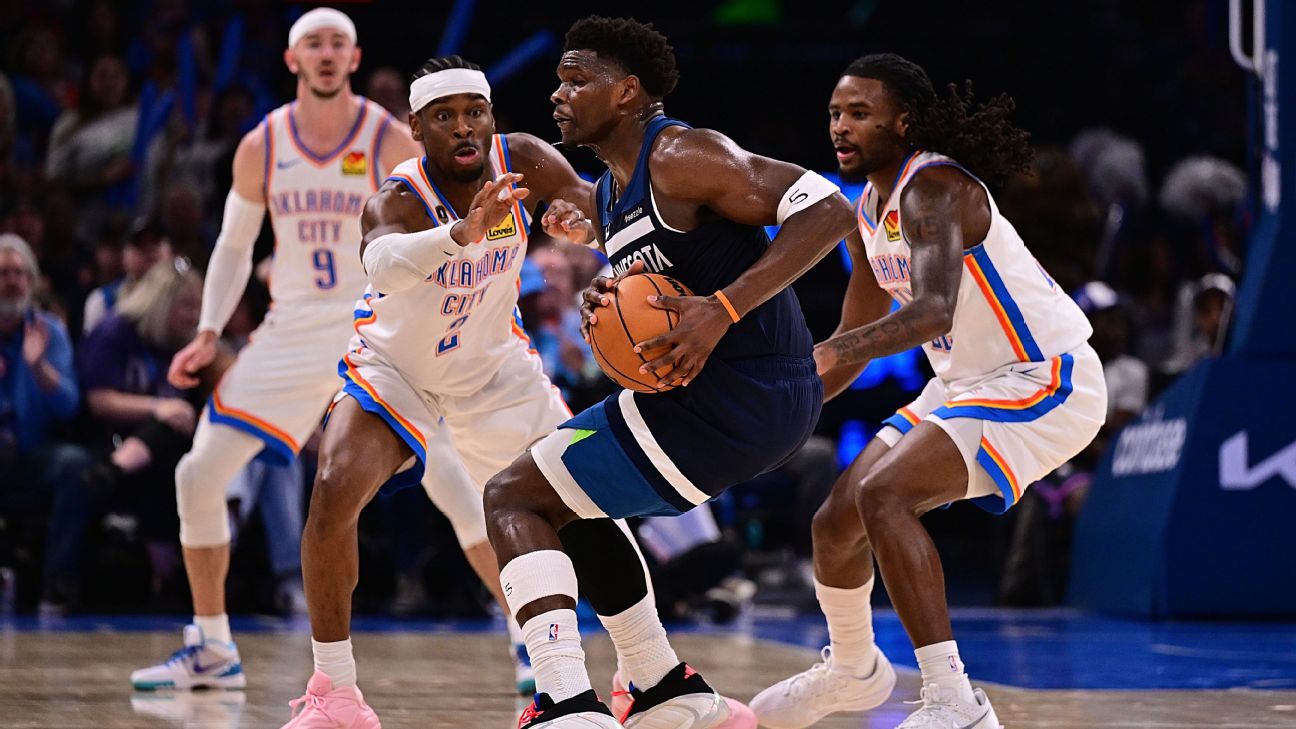
- ▪With Jusuf Nurkic and Jaren Jackson Jr. sidelined, Jaxson Hayes and Mo Bamba face a daunting interior battle against Rudy Gobert.
- ▪Minnesota holds clear Four-Factors edges in effective field goal rate (55.9% vs. 53.6%) and assist-to-turnover ratio (1.8 vs. 1.4).
- ▪Two top-five tempo offenses meeting against a modest 222.5 total creates stronger mathematical value on the Over than laying -10.5 (-114).
Running faster than everybody else in the league has not rescued the 1-8 Utah Jazz from the brutal realities of frontcourt attrition. With interior anchors Jusuf Nurkic and Jaren Jackson Jr. sidelined by long-term injuries, head coach Will Hardy has leaned into a track meet—pushing 104.9 possessions per 48 minutes to lead the NBA—hoping early-clock jumpers mask a thin interior rotation.
Visiting Target Center exposes every flaw in that survival plan against a 7-3 Minnesota Timberwolves squad built to suffocate frantic visitors. Chris Finch pairs elite wing length with disciplined floor organization, earning Minnesota a 10.5-point home favorite tag (-114) and a 222.5 total as Northwest Division rivals collide from opposite ends of the Western Conference standings.
Breakneck Jazz Tempo Meets LaMelo Ball's Control
Keyonte George and rookie wing Darryn Peterson have green lights to attack before opposing defenses cross half court and set their shell. Despite their 1-8 record, Utah handles that 104.9-possession sprint with surprising ball security, posting a 1.4 assist-to-turnover ratio and a 13.2 percent turnover clip that sits tied for fourth cleanest in the league. Speed gives Hardy's young guards breathing room they struggle to manufacture late in the shot clock.
Minnesota answers at 102.5 possessions per 48 minutes—fifth in the Association—yet never confuses speed with haste. LaMelo Ball orchestrates Finch's attack behind a crisp 1.8 team assist-to-turnover ratio, probing transition lanes when available before pulling the ball back out to punish mismatches. By starving opponents of live-ball giveaways, the Timberwolves force visiting offenses to score repeatedly over set half-court length.
Slashing Gravity Fuels Minnesota's Perimeter Edge
Shot-quality numbers illustrate why Minnesota sits comfortably near the top of the West despite early perimeter absences. The Timberwolves rank fourth in the NBA with a 55.9 percent effective field goal clip and sixth in true shooting at 59.2 percent, fueled by a 43.0 percent three-point attempt rate that converts at a lethal 37.3 percent mark from beyond the arc.
Jonathan Kuminga and Jaden McDaniels apply constant downhill rim pressure alongside Ball's creative passing, forcing help defenders to collapse toward the restricted area and surrender rhythm catch-and-shoot triples. Utah's young perimeter rotation struggles mightily to string together second and third defensive efforts when pulled side to side, turning routine drive-and-kick sequences into wide-open practice-gym jumpers at Target Center.
 Utah Jazz(1-10)VS.
 Minnesota Timberwolves(8-3)Jazz102.6Timberwolves102.7Jazz103.8Timberwolves115Jazz50.2%Timberwolves55.3%Jazz32.8%Timberwolves37.3%
Rudy Gobert Looms Over Utah's Patchwork Bigs
Offensively, Utah generates respectable perimeter numbers—posting a 53.6 percent effective field goal rate (10th in the NBA), a 57.5 percent true shooting mark, and a 42.4 percent three-point attempt rate—when George and Peterson get clean runway looks. Those percentages crater whenever opponents run shooters off the line and funnel drives straight into elite rim protection without Nurkic or Jackson available to space or seal.
Jaxson Hayes and Mo Bamba now carry the thankless task of wrestling Rudy Gobert across forty-eight minutes of screen navigation and box-out collisions. Minnesota hauls in 50.6 total rebounds per game, good for fifth in the NBA, turning missed shots into immediate second-chance daggers while ending Utah's possessions on the first try. Fouling Gobert on deep seals threatens to burn through Hardy's backup frontcourt before halftime.
Variance Math Behind Double-Digit NBA Favorites
Covering a double-digit spread in early November requires sustained second-unit intensity rather than three quarters of starter superiority. Minnesota owns a clear composite power advantage at 88.5 to Utah's 86.4, paired with an 89.8 shot-quality composite against the Jazz's 81.3 baseline, giving Finch multiple balanced five-man combinations capable of extending double-digit cushions while primary starters rest on the bench.
Utah's lone equalizer lies in raw possession volume and fearless three-point variance off the dribble. Pushing 104.9 possessions per 48 minutes while firing over 42 percent of field goal attempts from deep gives even a heavy road underdog a puncher's chance at a backdoor cover if late bench threes drop. Once Minnesota secures long defensive rebounds, however, Target Center blowouts build fast.
Possession Volume Tilt Points Toward Target Center Over
Removing the 4.08 percent theoretical hold from the -486 / +373 moneyline prices yields a fair win expectation of 79.7 percent (-392 fair line) for Minnesota and 20.3 percent (+392) for Utah. Laying -10.5 at elevated -114 juice leaves vulnerable exposure to fourth-quarter garbage time against a Jazz unit launching 42.4 percent of its attempts from three-point range.
Attacking Over 222.5 (-114) aligns far cleaner with both teams' aggressive tempo profiles across all four quarters. Utah leads the entire NBA at 104.9 possessions per 48 minutes while Minnesota sits fifth at 102.5, and the Timberwolves' 59.2 percent true shooting against depleted backup centers projects efficient scoring well past the 222.5 threshold even if the margin widens late.
Frequently Asked Questions
Sharp Wire Market DeskWhich frontcourt players are missing for the Utah Jazz against Minnesota?
Utah remains without injured frontcourt anchors Jusuf Nurkic and Jaren Jackson Jr., forcing Will Hardy to rely on Jaxson Hayes and Mo Bamba inside.
How fast do the Jazz and Timberwolves play entering this matchup?
Both teams rank inside the NBA's top five in tempo, with Utah pacing the entire league at 104.9 possessions per 48 minutes and Minnesota sitting fifth at 102.5.
What are the current spread and total odds for Jazz at Timberwolves?
Minnesota is favored by 10.5 points (-114) with a -486 moneyline, Utah sits at +10.5 (-106) and +373, and the game total is set at 222.5.
