






































































































Johnny Walker's Third-Round Knockout of Waldo Cortes-Acosta Reshapes His Heavyweight Ceiling
Now riding a two-fight heavyweight winning streak after stopping Waldo Cortes-Acosta in Round 3, Johnny Walker is proving what happens when elite length sheds a grueling 205-pound cut.
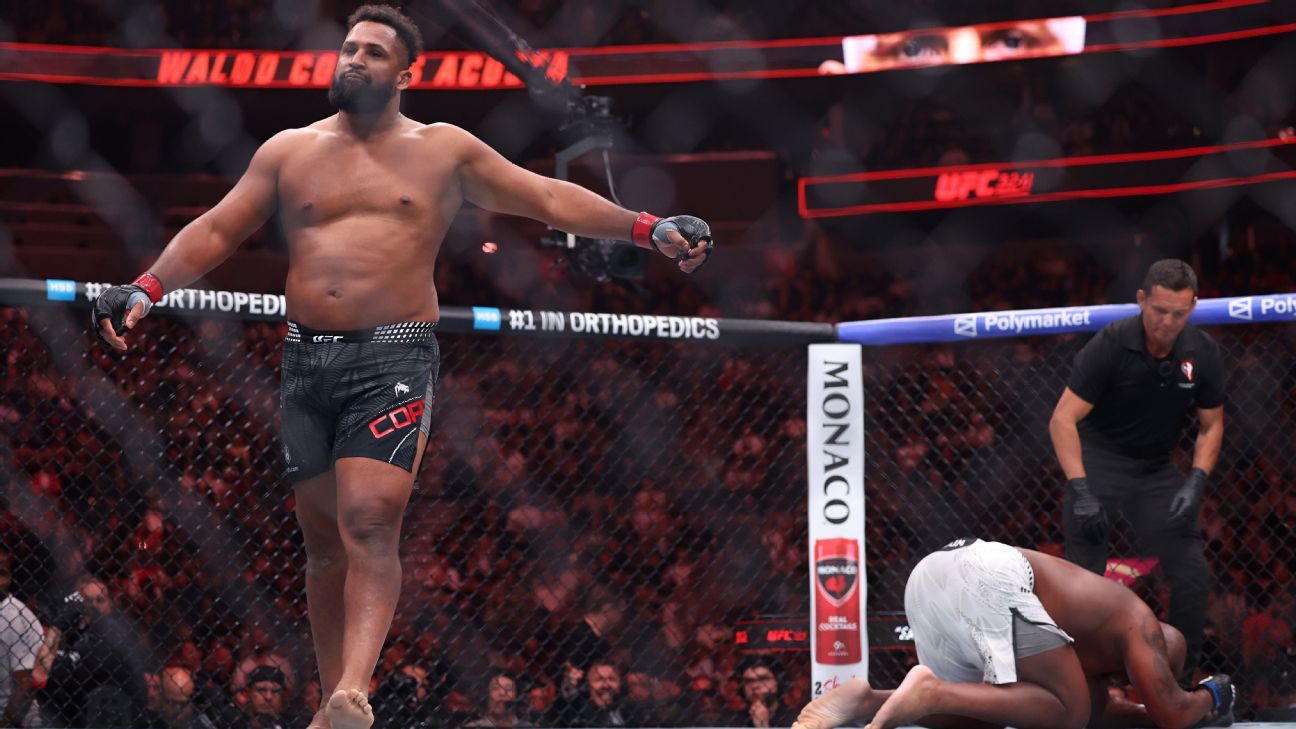
- ▪Johnny Walker knocked out Waldo Cortes-Acosta in the third round on Saturday to capture his second straight win at heavyweight.
- ▪Eliminating his severe light-heavyweight water cut noticeably improved Walker's composure, defensive discipline, and third-round fast-twitch power.
- ▪Long oblique kicks, front teeps, and constant shoulder feints neutralized Cortes-Acosta's counter-boxing shell before setting up the finish.
- ▪Walker moves up the heavyweight ladder entering 2027, where heavy top-control wrestlers represent the critical final test of his divisional ceiling.
Midway through the third round on Saturday night, Waldo Cortes-Acosta finally bit hard on an erratic shoulder feint near the perimeter fence, dropping his guard a fraction of a second before Johnny Walker detonated the finishing sequence that sent the durable heavyweight crashing to the canvas. Securing a statement third-round knockout for his second consecutive heavyweight victory, the six-foot-six Brazilian silenced skeptics who doubted whether his unorthodox athleticism could survive full-sized power punchers.
For years at light heavyweight, Walker lived on a razor's edge where highlight-reel flying knees competed directly against brutal dehydration tax from squeezing his towering frame down to 205 pounds. Competing fully hydrated inside the heavyweight division has fundamentally altered both his composure under heavy fire and his late-fight stamina, transforming an unpredictable glass-cannon wild card into one of the weight class's trickiest rangy puzzle pieces heading into 2027.
Eliminating the 205-Pound Dehydration Tax Restored Late-Round Composure
Physiological recovery sits at the heart of Walker's sudden resurgence up a weight class. Cutting enormous water weight to hit the 205-pound championship limit repeatedly compromised cerebrospinal fluid cushioning and depleted glycogen reserves before he ever walked to the cage. At light heavyweight, glancing temple shots inside tight exchanges frequently short-circuited his equilibrium, forcing him either to hunt frantic first-round finishes or risk fading abruptly once lactic acid flooded his shoulders.
Fighting at a natural heavyweight frame against Cortes-Acosta showcased a remarkably calmer athlete across fifteen minutes of sustained danger. Rather than emptying his gas tank chasing reckless airborne acrobatics in the opening ninety seconds, Walker maintained elastic bounce in his knees deep into the third round. Carrying crisp fast-twitch snap past the ten-minute mark allowed him to detonate fight-ending power right when Cortes-Acosta expected the Brazilian's output to plateau.
Extra natural mass through his neck, traps, and core has also improved Walker's clinch posture along the fence. Instead of getting bullied backward when opponents crash distance behind overhand rights, he now frames calmly across the collarbone, circles back to open canvas, and resets his long kicking range without burning panic energy.
Dissecting Cortes-Acosta's Boxing Shell With Unconventional Long Weapons
Knocking out Waldo Cortes-Acosta required far more than blind aggression because the former professional pitcher and boxer thrives whenever opponents stand flat-footed in midrange hook exchanges. Cortes-Acosta prefers a patient, upright high-guard shell, waiting to catch predictable one-two combinations on his gloves before firing heavy counter right hands and sweeping left hooks back across the pocket. Stepping carelessly into that counter window has punished far heavier hitters.
Walker bypassed that trap entirely by weaponizing reach asymmetry and rhythm disruption. Operating from long kicking distance, he peppered Cortes-Acosta's lead thigh and midsection with whip-like calf kicks, front snap teeps, and twitchy level-change feints that gave the orthodox boxer nothing stationary to counter. Every time Cortes-Acosta tried to march forward behind a double jab, Walker slid laterally off the fence and varied his attack angle, progressively chipping away at defensive reads until the decisive Round 3 opening materialized.
How to Spot Reverse Line Movement When the Public Is All Over One Side.
When 75% of the tickets are on a popular favorite and the spread still moves the other way, respected money is stepping in. Here is how to tell real steam from a head-fake.
Third-Round Finish Equity Inside a Top-Heavy Weight Class
Evaluating heavyweight contenders quantitatively starts with inside-the-distance finish rate—the proportion of victories secured via knockout or submission prior to the judges' scorecards—paired with round-by-round pace retention. Across the middle tiers of the UFC heavyweight roster, fight quality routinely collapses after seven minutes into plodding clinch stalemates and labored single overhands, inflating decision variance whenever neither fighter lands an early bomb.
Walker's third-round stoppage of Cortes-Acosta stands out precisely because he generated clean separation speed in a late frame when heavyweights normally decelerate by thirty percent. Heavyweights who possess natural cruiserweight foot speed force slower division staples to chase shadows for ten minutes, burning massive oxygen reserves just to close distance. By the third frame, even durable chins lose neck-muscle bracing tension when fatigued, turning Walker's long straight shots and upward knees into fight-ending missiles.
Maintaining deceptive hip twitch in Round 3 also forces opponents into fatal defensive dilemmas. Once Cortes-Acosta lowered his forearms slightly to protect his battered midsection and lead leg from long kicks, the upstairs lane cracked wide open for Walker's fight-ending combination.
Auditing Walker's Matchup Ceiling Entering the 2027 Heavyweight Climb
Stringing together back-to-back heavyweight wins earns Walker an immediate step up against established top-ten opposition in early 2027, where the tactical exam shifts sharply from kickboxing range to wrestling containment. Against stand-up heavyweights who prefer trading in open space, Walker's eighty-two-inch reach, feint frequency, and rejuvenated cardio give him live underdog or pick'em upside against almost anyone outside the elite championship tier.
The pivotal metric determining how high he climbs will be takedown defense rate—the percentage of opponent wrestling entries stuffed before hitting the canvas—against true 260-pound chain grapplers. Absorbing sustained chest-to-chest top pressure from natural giants carries a vastly heavier physical toll than defending light-heavyweight scrambles. If Walker's corner continues prioritizing disciplined perimeter footwork, underhook pummeling off the cage, and patient kicking volume, his heavyweight second act is just getting started.
Even against elite top-ten heavyweights, Walker's unpredictable blend of switch knees, front kicks, and improved patience forces opponents out of scripted game plans from the opening bell.
Hydrated Late-Round Power Unlocks Plus-Money Round 2–3 Prop Value
Public perception still prices Johnny Walker through an outdated 205-pound lens as a pure Round 1 chaos merchant who either wins in two minutes or folds immediately. Saturday's methodical third-round knockout over a durable boxer like Waldo Cortes-Acosta proves oddsmakers must adjust his minute-by-minute win distribution at heavyweight, where avoiding a grueling weight cut preserves both his chin recovery and late-fight explosiveness.
Heading into his first 2027 ranked heavyweight booking, bettors should bifurcate his pricing strictly by opponent archetype. Against plodding perimeter boxers who lack proactive wrestling entries, Walker's speed advantage and feint volume create standout value on delayed knockout props in Rounds 2 and 3 rather than chalky Round 1 plays; conversely, against committed heavyweight top-control wrestlers, caution is warranted until his 265-pound mat recovery is battle-tested.
Frequently Asked Questions
Sharp Wire Market DeskHow did Johnny Walker defeat Waldo Cortes-Acosta?
Johnny Walker knocked out Waldo Cortes-Acosta in the third round on Saturday night, using rangy kicks, constant feints, and late-fight speed to earn his second consecutive heavyweight victory.
Why has moving to heavyweight helped Johnny Walker's performance?
Cutting his 6-foot-6 frame down to 205 pounds previously drained his stamina and compromised his durability; competing hydrated at heavyweight has preserved his cardio and knockout snap into Round 3.
What is the biggest stylistic test awaiting Johnny Walker in 2027?
While his hand and foot speed trouble stand-up heavyweights like Cortes-Acosta, defending takedowns and surviving top pressure from natural 260-pound wrestlers remains his biggest upcoming test.
