












































































































Playing Through Wrist Pain, Giannis Drops 30 as Heat Outlast Depleted Jazz
Erik Spoelstra's upturned 105.1 pace powered Giannis Antetokounmpo and Davion Mitchell past injury-ravaged Utah, masking Miami's defensive leaks.


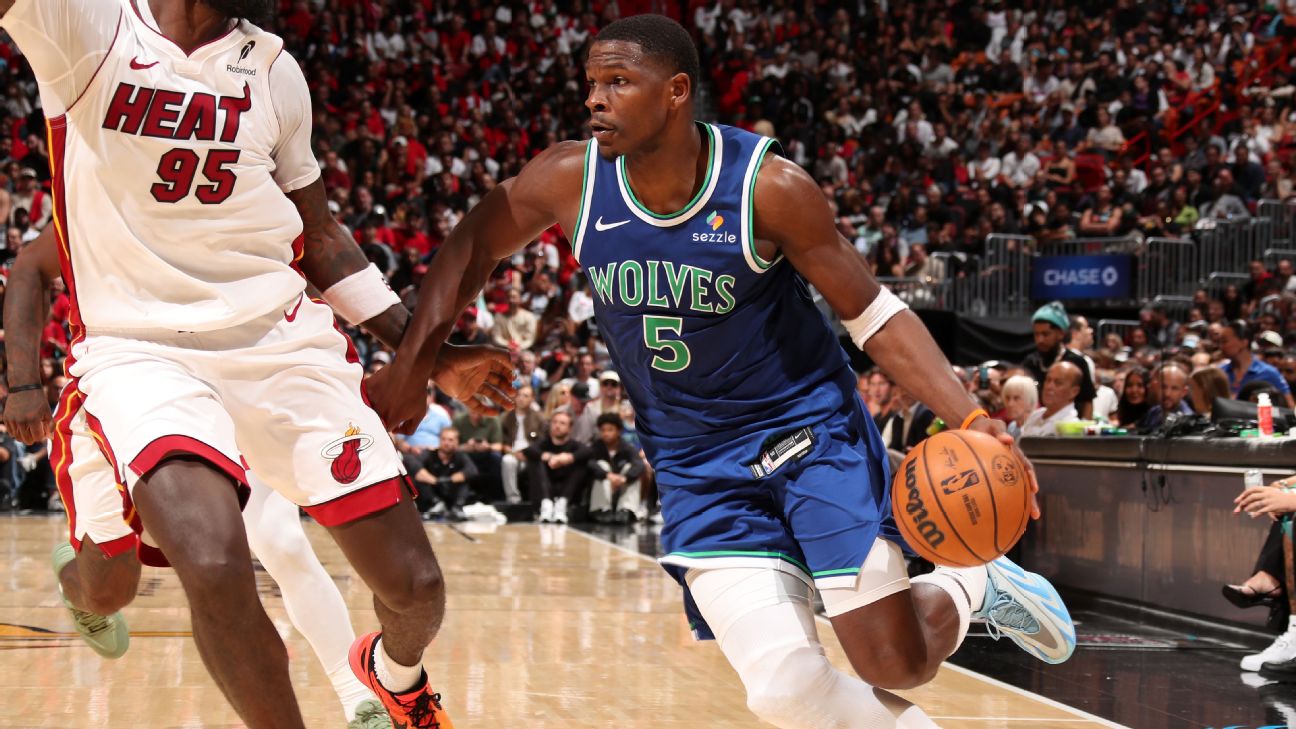
- ▪Playing through a hurt wrist, Giannis Antetokounmpo scored 30 points and Davion Mitchell added 19 to push the 5-6 Miami Heat past the 1-10 Utah Jazz 115-109.
- ▪Miami ranks 2nd in NBA pace (105.1) and 3rd in Effective FG% (54.3%), but leaks 120.0 points per game on a 114.2 Defensive Efficiency Rating while shooting 71.8% on free throws.
- ▪Utah fought to the wire behind Darryn Peterson and Ace Bailey despite missing injured starters Lauri Markkanen, Keyonte George, Jaren Jackson Jr., and Jusuf Nurkic.
- ▪Miami sits at +5000 on the 2027 championship futures board, where defensive tightening against Cleveland, Detroit, and Houston will dictate whether the Heat warrant buy-low action.
Every dead-ball whistle in Salt Lake City on Tuesday night found Giannis Antetokounmpo flexing and rotating a sore wrist near the foul line, grimacing briefly before stepping back into the paint to absorb another two-man collision. Pain never slowed his downhill force: Antetokounmpo muscled home 30 points and controlled the glass, Davion Mitchell chipped in 19 points while orchestrating the tempo, and the Miami Heat held off a gritty fourth-quarter push from the shorthanded Utah Jazz for a 115-109 road victory.
Securing back-to-back Western road wins at Sacramento (114-108) and Utah (115-109) lifted Erik Spoelstra's revamped roster to 5-6, second in the Southeast Division behind 7-5 Atlanta, while sending Will Hardy's depleted Jazz (1-10) to their ninth consecutive defeat. Yet needing late-game stops to survive a Utah squad missing four core starters underscored both the explosive upside and the glaring defensive growing pains of Miami's radical stylistic reinvention.
Spoelstra's Track-Meet Reinvention Around Giannis, Mitchell, and Klay
For years, Miami basketball was synonymous with mud-fight half-court grinders. In November 2026, Spoelstra has flipped the tactical switch completely: the Heat now play at the second-fastest Pace in the NBA at 105.1 possessions per 48 minutes, weaponizing Antetokounmpo as an unstoppable open-floor freight train flanked by Klay Thompson's quick-trigger spacing, Andrew Wiggins's wing athleticism, Davion Mitchell's point-of-attack burst, and Bam Adebayo's high-post versatility. With Antetokounmpo pacing Miami at 30 points and 11 rebounds and Mitchell dishing eight assists per contest alongside bench firepower from Bobby Portis and Tim Hardaway Jr., Miami pours in 115.8 points per game.
Tuesday's 115-point showing at altitude reflected elite interior shot selection. Miami ranks tied for second in the NBA in two-point accuracy (57.0 percent), sits third league-wide in Effective Field Goal Percentage (54.3 percent), ranks fifth in True Shooting Percentage (57.3 percent), and has racked up 488 points in the paint (seventh in the NBA) while launching 44.2 percent of its shots from three-point range. Even with a tender wrist limiting his touch away from the basket, Antetokounmpo repeatedly collapsed Utah's shell to create clean catch-and-shoot windows and cutter lanes.
Youthful Grit in Salt Lake: Peterson and Bailey Battle Short-Handed Odds
Credit Will Hardy's young rotation for refusing to fold despite an injury report that stripped Utah of nearly its entire veteran spine. Entering Tuesday night without starting forward Lauri Markkanen (out with a wrist injury, estimated return November 11), point guard Keyonte George (ankle, estimated return November 11), frontcourt anchor Jaren Jackson Jr. (knee, estimated return December 14), and center Jusuf Nurkic (foot, estimated return November 20), Utah leaned heavily on rookie-scale perimeter creators Darryn Peterson and Ace Bailey alongside center Jaxson Hayes, Mo Bamba, and guard Isaiah Collier.
Peterson—who leads Utah's scoring ledger at 25 points—and Bailey (23 points and seven rebounds benchmark production, with Collier supplying five assists) pushed the tempo to 102.3 possessions per 48 minutes (fourth in the NBA) and kept Miami sweating into the final two minutes before falling 115-109. Across a brutal 1-10 start that features a -123 total point differential, Utah's inexperience has shown up most starkly in half-court shot quality and ball security: the Jazz sit 15th in Effective Field Goal Percentage (49.5 percent), 15th in True Shooting Percentage (53.8 percent), 15th in three-point shooting (32.2 percent), and 29th in the NBA with a costly 15.0 percent turnover rate (1.4 assist-to-turnover ratio) behind a 103.8 Offensive Efficiency Rating.
From Bullpen Fatigue and NBA Back-to-Backs to 3-Way Soccer Lines.
Every sport prices risk differently. Browse our free 55-module betting school across 10 courses built by handicappers who actually bet the numbers every day.
Why Miami's 120.0 Opponent Scoring Average Demands Immediate Cleanup
Surviving 1-10 Sacramento and 1-10 Utah by six points apiece is far preferable to losing on the road, yet Spoelstra's film session flying back to South Florida will focus squarely on a leaky 114.2 Defensive Efficiency Rating. Through 11 games, Miami is surrendering 120.0 opponent points per contest and carries a -4.3 scoring differential (-47 overall), largely because playing at a 105.1 pace magnifies every live-ball turnover (13.4 percent turnover rate, 25th in the NBA) and defensive rebounding lapse (48.1 total rebounds per game, 13th).
Two additional four-factors drags have kept Miami's Offensive Efficiency Rating capped at 110.2 despite top-three eFG% shooting. First, Miami converts just 71.8 percent at the free-throw line (15th in the NBA) on a 28.0 percent free-throw rate—leaving crucial points on the board when opponents hack Antetokounmpo in the bonus. Second, Miami ranks 13th in offensive rebound rate (22.9 percent), prioritizing transition retreat over second-chance crashes, yet still surrendering 114.2 points per 100 possessions when opponents beat the first wave of cross-matches.
Contrasting Schedules: Miami's Homestand Gauntlet and Utah's Reinforcements
The degree of difficulty spikes dramatically for Miami starting Friday. Having gone 4-3 on the road while stumbling to 1-3 at home so far, the Heat open a tough three-game homestand against 5-6 Cleveland on November 13, Central-leading 7-3 Detroit on November 14, and 8-3 Houston on November 16. Monitoring Antetokounmpo's sore wrist through back-to-back weekend action against Cleveland and Detroit will be paramount; if Adebayo, Wiggins, and Mitchell cannot tighten half-court containment below 110 points per 100 possessions, elite attacks will punish Miami's breakneck tempo.
Utah, conversely, faces zero days' rest hosting the 3-7 Orlando Magic on Wednesday, November 11 before facing 8-3 Houston (November 13) and 9-2 San Antonio (November 15). The silver lining for Salt Lake City is imminent health: both Lauri Markkanen and Keyonte George carry November 11 return estimates, giving Hardy desperately needed spacing and pick-and-roll organization to stabilize Peterson and Bailey before Jaren Jackson Jr. and Nurkic work their way back later this autumn.
Evaluating Miami (+5000) Upside Against Defensive Volatility and Pace-Driven Totals
Championship futures currently price the 5-6 Miami Heat at +5000 (1.96% implied probability) while relegating the rebuilding 1-10 Utah Jazz to +75000. On paper, getting +5000 on an Erik Spoelstra-coached roster anchored by Giannis Antetokounmpo and Bam Adebayo in the Eastern Conference looks tempting, especially with Miami ranking 3rd in the NBA in Effective FG% (54.3%). However, a -4.3 scoring margin, 114.2 Defensive Efficiency Rating, and nagging wrist discomfort on Antetokounmpo's shooting hand urge patience before locking up long-term outright capital.
The sharper immediate angle lies in nightly game totals and 1st-half -110 derivatives. Miami's league-No. 2 pace (105.1 possessions/48m) paired with 115.8 PPG scored and 120.0 PPG allowed creates consistent high-possession environments, while Utah's impending return of Lauri Markkanen and Keyonte George should lift a 103.8 ORTG off the mat once market totals over-adjust to the Jazz's depleted nine-game skid.
Frequently Asked Questions
Sharp Wire Market DeskHow did Giannis Antetokounmpo perform against the Utah Jazz with a sore wrist?
Giannis Antetokounmpo played through wrist soreness to score 30 points, teaming with Davion Mitchell (19 points) to lift the Miami Heat to a 115-109 road win over Utah.
Which Utah Jazz starters missed Tuesday's game against Miami?
Utah played without Lauri Markkanen (wrist, est. Nov 11), Keyonte George (ankle, est. Nov 11), Jaren Jackson Jr. (knee, est. Dec 14), and Jusuf Nurkic (foot, est. Nov 20).
Why does Miami have a negative point differential at 5-6?
While Miami scores 115.8 PPG on the NBA's #2 pace (105.1) and #3 eFG% (54.3%), the Heat allow 120.0 opponent PPG (114.2 DRTG), resulting in a -4.3 scoring differential.
