





























































































Duke Commands the Blue-Blood Tax While North Carolina Quietly Wins the ACC Math
Public money continues inflating Duke's regular-season and national championship prices, leaving North Carolina's low-turnover guard play and interior rebounding efficiency undervalued across early ACC futures boards.
- ▪Duke commands +500 national championship odds and -135 ACC regular-season chalk behind Cayden Boozer's steady point guard play and Patrick Ngongba II's interior scoring.
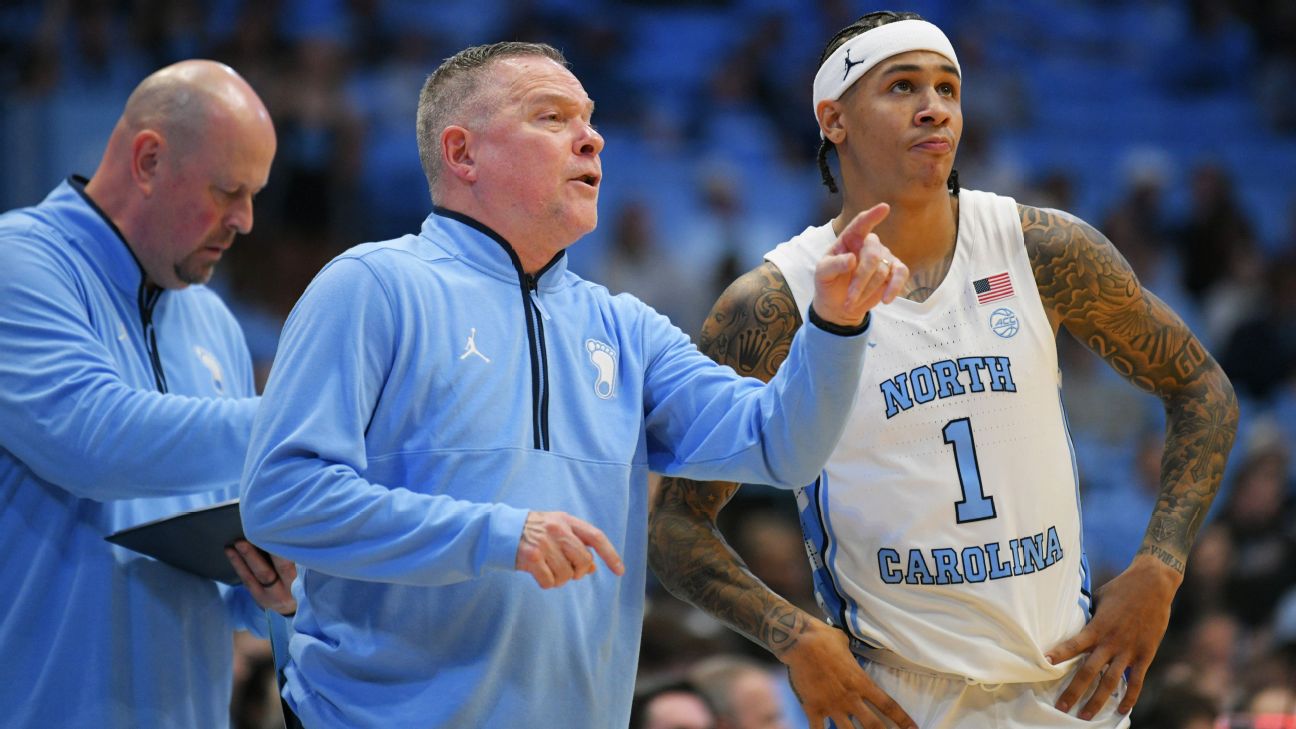
- ▪North Carolina averages 79.8 PPG on a 118.9 offensive rating, converting 56.7% inside the arc while committing just 9.7 turnovers per contest.
- ▪Regular-season conference win totals isolate North Carolina's possession and offensive-rebounding edge with far lower hold than 68-team tournament pools.
Every November, recreational money floods college basketball futures boards and slaps an automatic premium onto the sport's heaviest brands. Nowhere does that pricing distortion show up more clearly than in the Atlantic Coast Conference, where Duke sits at +500 to win the national championship and -135 to capture the ACC regular-season crown before conference play even begins. Meanwhile, North Carolina lingers down at +5000 on the national board despite posting elite early offensive efficiency metrics that compare favorably against any backcourt in the league.
Separating genuine championship equity from brand-name inflation requires looking past recruiting rankings toward possession-level ball security and shot quality. Jon Scheyer has undeniably built a deeper, sturdier Duke rotation designed to survive early showcase tests like the Champions Classic. Yet Chapel Hill's tempo-free profile—averaging 79.8 points per game with a 118.9 offensive rating and a microscopic turnover rate—gives the Tar Heels the exact possession discipline needed to punish chalky conference favorites over a twenty-game league grind.
Cayden Boozer and Patrick Ngongba Anchor Jon Scheyer's Deeper Rotation
Duke's lofty market valuation starts with a deliberate roster pivot in Durham. Rather than leaning solely on a fragile freshman core that can wear down late in tight games, Jon Scheyer assembled veteran rotational insulation to absorb foul trouble and preserve perimeter legs across forty minutes. Cayden Boozer has seized primary initiation duties over returning guard Caleb Foster, calming the offense against full-court ball pressure and organizing half-court sets without wasted dribbles.
Up front, the Blue Devils own overwhelming physical size through center Patrick Ngongba II and freshman big man Joaquim Boumtje Boumtje. Ngongba flashed that interior ceiling by bullying Coastal Carolina for 28 points and nine rebounds, collapsing weak-side help and freeing clean catch-and-shoot rhythm looks along the arc. That interior-out balance explains why Duke belongs in the top tier nationally, even if laying -135 for an entire ACC regular season leaves zero margin for injury variance.
Ball Security Powers North Carolina's 118.9 Offensive Rating
Down Tobacco Road, North Carolina has quietly constructed one of the cleanest offensive profiles in major-conference basketball. Operating at a controlled adjusted tempo of 67.1 possessions per forty minutes, the Tar Heels average 79.8 points per contest while generating 118.9 points per 100 possessions. Their shooting splits avoid empty midrange volume, pairing a 54.6 percent effective field-goal clip with a 57.8 percent true shooting mark that travels reliably into hostile conference arenas.
Guard discipline serves as the engine behind those numbers. North Carolina surrenders just 9.7 turnovers per game while maintaining an impressive 1.7 assist-to-turnover ratio, denying opponents the live-ball runouts that swing road games in January and February. Because the backcourt values every possession and consistently enters half-court actions early in the shot clock, opposing defenses are forced to guard multiple ball reversals before contesting high-percentage paint touches.
 North Carolina Tar Heels(3-0)VS.
 2Duke Blue Devils(2-1)North Carolina71.32Duke73.2North Carolina123.92Duke123North Carolina55.9%2Duke54.1%North Carolina37.3%2Duke30.1%
Interior Finishing and Second-Chance Glass Leverage
What elevates Chapel Hill above streakier perimeter-dependent squads is how relentlessly the Tar Heels convert inside the arc. While 42.3 percent of North Carolina's field-goal attempts come from three-point range—where the rotation hits a steady 34.5 percent—the offense cashes 56.7 percent of its two-point tries. Guards probe the lane with patience, forcing opposing shot-blockers to step up and opening dump-off angles along the baseline.
When initial jumpers miss, North Carolina's frontcourt punishes smaller lineups on the offensive boards. Pulling down 10.8 offensive rebounds per game creates steady putback scoring and kick-out threes against scrambling defensive shells. Against an ACC slate where several middle-tier rosters lack true seven-foot rim protection, combining sub-ten turnovers with nearly eleven second-chance opportunities per night gives the Tar Heels a massive possession advantage before shooting variance even enters the equation.
Conference Win Totals Versus Tournament Pool Hold
Translating those efficiency splits into long-term profit means avoiding high-hold tournament pools whenever superior regular-season derivatives exist. Multi-way NCAA championship boards carry steep theoretical hold across sixty-eight contenders, whereas ACC regular-season win totals and head-to-head conference series prices isolate sixty-minute basketball execution over a larger sample. Teams that protect the ball and rebound misses rarely suffer extended losing skids against unranked conference foes.
Duke's talent justifies top-five national respect, yet public affection leaves zero discount on the Blue Devils' conference chalk. North Carolina's combination of 56.7 percent two-point finishing, elite ball security, and consistent offensive rebounding gives Chapel Hill a far higher regular-season floor than a +5000 national tag implies. Targeting Tar Heels conference win-total overs captures that structural upside without needing six consecutive single-elimination wins in March.
Fade ACC Chalk Tax and Target Tar Heels Win Totals
Laying -135 on Duke to win the ACC regular season requires an implied probability above 57.4 percent across twenty grueling conference games before a single league tipoff occurs. Even with Patrick Ngongba II dominating the paint and Cayden Boozer steadying primary initiation duties, hostile January road trips through the conference routinely trip up heavy favorites carrying public brand inflation.
North Carolina's +5000 national number highlights just how wide the perception gap has grown between Tobacco Road rivals on early winter boards. Rather than tying up bankroll in high-hold tournament pools, isolating North Carolina regular-season win-total overs and plus-money ACC title shares leverages their 118.9 offensive rating, 56.7% two-point finishing, and 9.7-turnover discipline at a fraction of the vig.
Frequently Asked Questions
Sharp Wire Market DeskHow efficient has North Carolina's offense been early in the season?
The Tar Heels average 79.8 points per game with a 118.9 offensive rating, backed by a 54.6% effective field-goal percentage, 56.7% two-point shooting, and a 1.7 assist-to-turnover ratio.
Who is driving Duke's early rotation strength under Jon Scheyer?
Cayden Boozer has emerged as Duke's primary ball-handler ahead of Caleb Foster, while center Patrick Ngongba II—fresh off a 28-point, nine-rebound outburst against Coastal Carolina—anchors the paint alongside Joaquim Boumtje Boumtje.
Why do sharp bettors prefer ACC win totals over national title futures here?
Multi-team championship boards carry heavy bookmaker hold, whereas regular-season win totals carry standard two-way vig and directly reward North Carolina's low-turnover, high-rebounding consistency.
