












































































































Texas Turns to Raleek Brown in Death Valley as LSU Lays Four Under the Lights
With Hollywood Smothers sidelined, Steve Sarkisian leans on Raleek Brown to calm Tiger Stadium's pass rush while Lane Kiffin and Sam Leavitt defend a 46-point total.
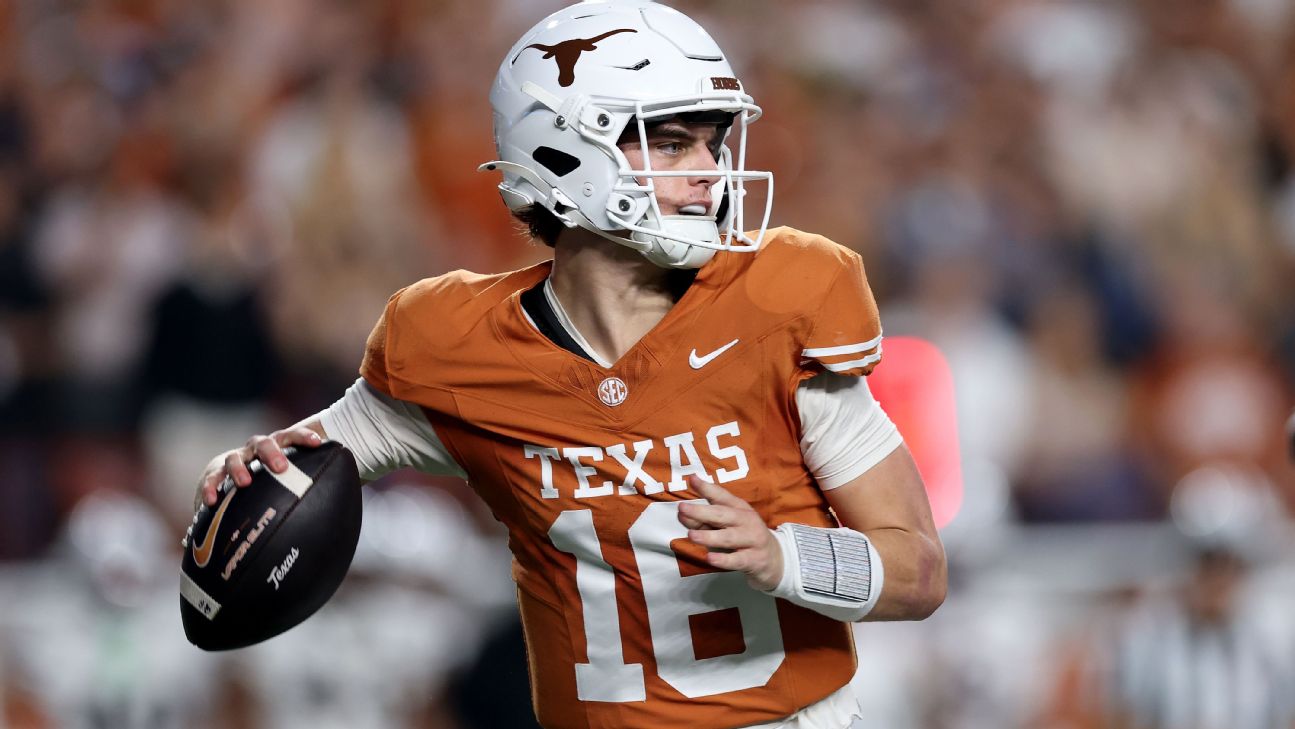


- ▪With Hollywood Smothers sidelined by injury, Raleek Brown (537 rushing yards, 6 TDs) steps into a feature role to slow LSU's pass rush against a Texas line that has allowed 27 sacks.
- ▪Oddsmakers nudged LSU from -3.5 to -4 (-110) while keeping the game total anchored at 46, projecting a tight 25.0-21.0 Baton Rouge defensive battle.
- ▪Sam Leavitt (2,553 passing yards, 17 TDs, 9 INTs) faces a Texas secondary ranking second in FBS at 5.4 opponent yards per pass attempt.
- ▪Championship futures remain live for both SEC contenders, with 7-2 Texas priced at +1000 and 6-3 LSU sitting at +1800 entering Saturday night.
Saturday night in Baton Rouge rarely forgives an unbalanced offense, and Steve Sarkisian walks his 7-2 Texas Longhorns into Tiger Stadium knowing every silent snap count will be tested to the whistle. With Hollywood Smothers sidelined by injury, Sarkisian has elevated Raleek Brown into a feature backfield workload to keep Lane Kiffin's front off Arch Manning. Oddsmakers nudged 6-3 LSU from -3.5 at open to -4 while holding the over/under steady at a taut 46.
That 46-point ceiling looks jarring on paper for two programs capable of lighting up scoreboards, yet the underlying defensive math explains every half-point of market compression. Texas surrenders just 17.4 points per game and ranks second nationally in yards allowed per pass attempt at 5.4, while LSU yields 17.7 points per contest and sits sixth in total defense at 261.1 yards per outing. One mistimed protection slide under the Death Valley lights could swing both SEC positioning and January 2027 postseason seeding.
Raleek Brown Steps Forward to Shield Arch Manning From Baton Rouge Havoc
Texas enters Week 11 with a glaring structural flaw in pass protection, having surrendered 27 sacks for 188 lost yards—marks that rank tied for 124th and 128th among 134 FBS programs. Asking Arch Manning, who has completed 168 of 254 throws for 2,024 yards, 18 touchdowns, and seven interceptions, to sit in deep seven-step drops inside a deafening night environment invites disaster. Sarkisian needs horizontal stress and early-down rhythm before third-and-long ever materializes.
That urgency places Raleek Brown at the center of the Longhorns' offensive script as he steps in for the injured Hollywood Smothers. Brown already paces Texas with 537 rushing yards and six touchdowns on 109 carries, flashing the perimeter burst required to turn swing passes, jet motion, and outside zone creases into five-yard gains. Even though LSU ranks seventh nationally by holding rushers to 2.7 yards per carry, widening the defensive ends with Brown creates cleaner RPO windows—run-pass options that read conflict defenders—for wideout Ryan Wingo.
6Texas Longhorns(7-2)@21LSU Tigers(6-3)6Texas39.52%21LSU50.00%6Texas7.9 YPA21LSU8.4 YPA6Texas021LSU-26Texas3.5 YPC21LSU4.4 YPCSam Leavitt Meets the Nation's Stingiest Per-Attempt Pass Defense
Across the sideline, Lane Kiffin's 6-3 Tigers boast the fifth-ranked passing attack in college football at 324.9 net yards per game, piloted by quarterback Sam Leavitt. Completing 215 of 303 attempts for 2,553 yards, 17 touchdowns, and nine interceptions, Leavitt has thrived throwing off play-action to leading target Jackson Harris, who owns 47 catches for 800 yards and seven scores. Tailback Dilin Jones complements that aerial volume with 713 rushing yards and seven touchdowns on 166 attempts.
Yet Texas presents the most claustrophobic secondary Leavitt has seen all autumn, allowing a microscopic 3.96 yards per play—the average yardage surrendered on every offensive snap—and 280.1 total yards per contest, good for 10th nationally. Where Alabama quarterback Keelon Russell recently exposed LSU's own defensive backfield with vertical shot plays, Texas defensive backs cap explosive completions better than almost anyone in the country. If Texas forces Leavitt into tight coverage windows on third-and-medium, those nine seasonal interceptions become an immediate turnover hazard.
Stop Chasing Losses With 5-Unit Plays: How Pros Size Their Bets.
Even a 56% winner will go broke with bad bet sizing. Read our straightforward breakdown of unit discipline, flat betting, and how to survive a cold streak without blowing your roll.
Why Oddsmakers Anchored the Over/Under at Forty-Six Points
Casual observers see LSU averaging 37.1 points per game and Texas posting 31.1 and immediately hunt for an Over ticket, missing how brutally these two defensive fronts shrink scoring efficiency against top-tier opposition. Implied team totals sit at just 25.0 points for LSU and 21.0 for Texas, reflecting two red-zone units that refuse to concede cheap touchdowns. Texas ranks 13th nationally against the run at 2.9 yards per carry, directly challenging Dilin Jones between the tackles.
Meanwhile, Texas averages only 128.8 rushing yards per game at 3.5 yards per attempt, ranking outside the top 100 in both categories. When two elite run defenses collide with one leaky offensive line and two turnover-conscious game plans, possessions stretch out and field position dictates fourth-down aggression. Field goals replace touchdowns inside the 20-yard line, turning every special-teams exchange into a hidden leverage point.
Playoff Survival Math for Two Desperate SEC Heavyweights
The broader national title board underscores what is riding on Saturday's 7:30 PM ET kickoff: Texas trades at +1000 to win the championship while three-loss LSU hangs on at +1800. A fourth defeat would effectively extinguish Baton Rouge's at-large playoff hopes, whereas a third loss for No. 6 Texas would strip away all margin for error down the November stretch. Neither coaching staff can afford conservative clock mismanagement in the final six minutes.
Ultimately, the half-point tick from LSU -3.5 to -4 signals respected money backing home trench pressure against Texas's 124th-ranked sack protection. Still, crossing onto the key number of four unlocks valuable push protection for an underdog defense allowing under four yards per snap. If Raleek Brown manufactures 75 combined yards on screens and perimeter runs to neutralize LSU's edge rush, Manning and Wingo possess enough shot-play firepower to drag this SEC war down to the final possession.
Why Key-Number Value Sits With Texas +4 and Under 46
Moving LSU from -3.5 (-105) to -4 (-110) hands contrarian bettors a critical structural cushion in a matchup priced for a 25-21 finish. In a game where points carry an outsized premium under a 46-point total, catching +4 with a Texas defense yielding 3.96 yards per play and 5.4 yards per pass attempt captures the most frequent three-point endgame margin.
Pairing a correlated look on Under 46 (-110) aligns directly with both trench mismatches: LSU allows 2.7 yards per rush while Texas surrenders 2.9, forcing long, methodical drives that bleed the play clock. Unless short-field turnovers gifting instant touchdowns erupt early, points inside Tiger Stadium will require twelve-play marches.
Frequently Asked Questions
Sharp Wire Market DeskWhy is the Texas vs. LSU over/under set as low as 46 points?
Both defenses rank inside the FBS top 10 in total yards allowed per game—LSU is sixth at 261.1 and Texas is 10th at 280.1—while both fronts hold opposing rushers under 3.0 yards per carry.
How does Hollywood Smothers' injury change the Texas offense at LSU?
Team rushing leader Raleek Brown (109 carries, 537 yards, 6 touchdowns) steps into an expanded feature role on perimeter runs and screens to help Arch Manning offset a pass-protection unit that has surrendered 27 sacks.
