































































































Warren Schaeffer’s Young Rockies Core Confronts MLB’s Worst Pitching
Colorado ranked fifth in MLB OPS (.739) and seventh in scoring (4.64 runs per game) in 2026, yet a league-worst 5.59 ERA and 104 losses leave Warren Schaeffer facing a massive pitching rebuild for 2027.
 Colorado Rockies Odds & Splits →
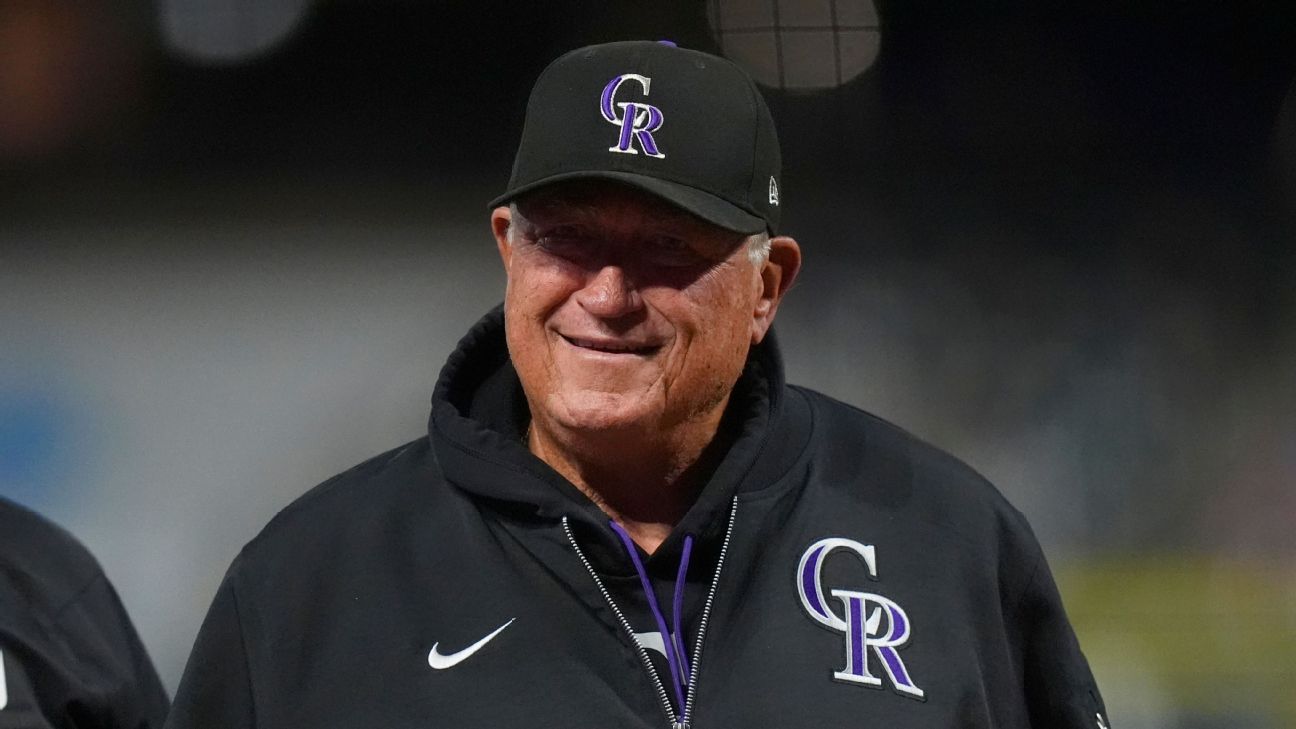
- ▪Warren Schaeffer’s Rockies finished 58-104 (5th in the NL West) as longtime former manager Clint Hurdle bid farewell to the franchise after 20-plus seasons.
- ▪Led by Ezequiel Tovar and Hunter Goodman, Colorado ranked 4th in MLB batting average (.254) and 5th in OPS (.739), but 27th in walks drawn (500).
- ▪Colorado’s pitching staff finished dead last (30th in MLB) in runs allowed (944), ERA (5.59), WHIP (1.52), strikeouts (1,113), and quality starts (24).
- ▪Right-hander Chase Dollander (3.89 ERA in 44 IP) avoided full Tommy John surgery after an elbow procedure and headlines Colorado’s 2027 pitching rehab watch.
On the final Friday of October at 20th and Blake, former manager and longtime organizational voice Clint Hurdle said an emotional goodbye to the Colorado Rockies after two stints spanning more than 20 seasons in purple pinstripes. With Hurdle stepping away into retirement from the club, manager Warren Schaeffer now presides over a generational reset in Denver where nostalgia has officially yielded to a daunting winter pitching reconstruction.
Finishing 58-104 and fifth in the NL West—42 games behind the 100-win division-champion Los Angeles Dodgers—exposed the widest statistical chasm in Major League Baseball. Colorado’s young position players held their own by averaging 4.64 runs per game (seventh in MLB, 752 total runs) and posting a .739 OPS (fifth in MLB), yet a pitching staff that finished 30th out of 30 clubs in runs allowed (944), ERA (5.59), WHIP (1.52), and strikeouts (1,113) demands an aggressive winter blueprint ahead of February 2027.
One Hundred Four Losses and a Generational Turning Point in Denver
Losing 104 games with a minus-192 run differential (752 runs scored versus 944 surrendered) left zero ambiguity about where Colorado stands entering the 2026-27 winter. Under Warren Schaeffer, the Rockies gave everyday major-league reps to an emerging infield core while enduring brutal growing pains against a relentless NL West slate. Even in games where Colorado jumped ahead early, finishing dead last in MLB with just 55 game-winning RBIs (30th) and converting only 33 saves (26th) against 25 blown saves underscored how rarely the club could protect a lead over nine innings.
Hurdle’s late-October departure after two decades of institutional service symbolized a clean break from past eras in LoDo. Rather than chasing cosmetic band-aids, Schaeffer’s coaching staff spent the second half evaluating which young hitters and pitchers can survive Coors Field’s unforgiving altitude—and which roster spots require external reinforcements before pitchers and catchers report to Salt River Fields in February 2027.
Gap-Hitting Offense Masked Plate Discipline While Pitching Bottomed Out
At first glance, Colorado’s offensive counting numbers look worthy of a postseason contender: fourth in MLB batting average (.254), tied for fourth in hits (1,399), second in triples (39), third in doubles (283), fifth in slugging (.417) and OPS (.739), and seventh in OBP (.322) and RBIs (721), plus 39 pinch hits (tied for second). Closer inspection reveals why road series proved far tougher. Rockies hitters drew only 500 walks (27th in MLB) against 1,409 strikeouts (23rd), saw 23,113 pitches (28th), and hit 180 home runs (19th) despite playing half their schedule a mile above sea level.
On the mound and in the field, virtually every run-prevention indicator finished at the bottom of the league. Colorado ranked 30th in MLB in opponent runs per game (5.83), earned runs allowed (883), hits surrendered (1,635), opponent batting average (.288), doubles allowed (358), triples allowed (55), sacrifice flies yielded (77), quality starts (24), shutouts (one), and pitching strikeouts (1,113, or 7.0 per nine innings). Committing 100 defensive errors (27th in MLB, .983 fielding percentage) compounded the damage, even though Ezequiel Tovar’s infield turned 283 double plays (third in MLB) and catchers threw out 27.3 percent of base stealers (tied for sixth).
| Seed / Team | Overall | Conf | GB | Home / Road | PT DIFF | Streak |
|---|---|---|---|---|---|---|
1. Los Angeles Dodgers | 100-62 | 100-62 | 0.0 | 51-30 / 49-32 | +1.2 | W3 |
2. San Diego Padres | 91-71 | 91-71 | 9 | 51-30 / 40-41 | +0.3 | W2 |
3. Arizona Diamondbacks | 86-76 | 86-76 | 14 | 45-36 / 41-40 | +0.1 | L2 |
4. San Francisco Giants | 65-97 | 65-97 | 35 | 37-44 / 28-53 | -0.6 | L5 |
| 5.Colorado Rockies | 58-104 | 58-104 | 42 | 32-49 / 26-55 | -1.2 | L1 |
Ezequiel Tovar, Hunter Goodman, and Chase Dollander’s Elbow Timeline
What keeps optimism alive inside Colorado’s clubhouse is a cost-controlled infield and catching nucleus beginning to take shape. Shortstop Ezequiel Tovar remains the unquestioned defensive and offensive heartbeat alongside catcher Hunter Goodman—who battled through a lingering late-season shoulder issue backed up by Brett Sullivan—first baseman TJ Rumfield, second baseman Connor Norby, third baseman Kyle Karros, versatile infielder-outfielder Adael Amador, and shortstop Ryan Ritter. On the active pitching side, starter Mason Adams, right-hander Ryan Feltner, Gabriel Hughes, Sean Sullivan, Blake Adams, Tanner Gordon, closer Juan Mejia, and setup arm Jaden Hill form the returning foundation.
Stop Betting Into Numbers After the Best Price Is Already Gone.
By the time TV shows talk about a game, the spread has already moved off the key number. See where the lines opened, where they sit now, and which hooks are worth waiting for.
Navigating a crowded injured list will dictate how much young upside joins them in 2027. Prize right-hander Chase Dollander flashed genuine frontline promise in 2026—posting a 3.89 ERA, 1.30 WHIP, and 47-to-18 strikeout-to-walk mark across 44 innings over 10 outings—before elbow surgery cut his sophomore campaign short; avoiding a full Tommy John reconstruction gives him a realistic shot at an April 2027 or first-half return. Meanwhile, 22-year-old lefty reliever Welinton Herrera faces UCL surgery rehabilitation stretching into mid-to-late 2027, righty McCade Brown (shoulder inflammation, throwing off a mound) and designated hitter Kris Bryant (back) carry February 2027 return estimates, and outfielders Jake McCarthy, Cole Carrigg, Mickey Moniak, Jordan Beck, Zac Veen, Troy Johnston, and Sterlin Thompson all ended 2026 on injured reserve.
Acquiring Durable Innings-Eaters and Strikeout Relief for Coors Field
Colorado’s No. 1 winter imperative is signing at least two veteran, ground-ball-oriented starting pitchers who can triple a league-worst total of 24 quality starts and protect young arms from altitude burnout. Asking Mason Adams, Feltner, Hughes, Sean Sullivan, and a rehabbing Dollander to shoulder 162 games alone invites another 900-run deluge, especially after Rockies hurlers led MLB by allowing 2,802 fly balls and 227 home runs (28th). Targeting durable mid-rotation free agents who miss bats and keep sinkers below the knees is mandatory.
Equally critical is overhauling a bullpen that recorded just 61 holds (29th in MLB) and allowed 78 of 244 inherited baserunners to score (22nd). While Mejia, Hill, Jimmy Herget, lefty Brennan Bernardino, Jeff Criswell, Nick Frasso, Zach Agnos, Blas Castano, Hayden Harris, and Mark Manfredi give Schaeffer live arms, Colorado desperately needs two veteran swing-and-miss relievers to lift a 30th-ranked strikeout staff. Offensively, adding a patient, high-OBP veteran corner bat—especially with Bryant’s chronic back uncertainty and seven outfielders coming off injured reserve—would stabilize a 27th-ranked walk rate.
Measuring Progress Step by Step in the 2027 NL West
Honest 2027 expectations in Denver center on developmental traction and escaping the 100-loss basement rather than overnight postseason contention inside an NL West ruled by 100-win Los Angeles and 86-win Arizona. For Schaeffer’s rebuild to validate itself next summer, Colorado must slash its team ERA well below 5.00, trim 25 errors off its infield defense, and prove its young hitters can draw walks away from Coors Field.
When the Rockies open Cactus League play against the Diamondbacks at Salt River Fields at Talking Stick in February 2027, all eyes will focus on Dollander’s elbow progression, Goodman’s healthy shoulder, and a crowded outfield competition featuring Carrigg, Beck, Veen, McCarthy, and Moniak. Incremental gains on the mound—turning 24 quality starts into 50 and adding 150 team strikeouts—represent the essential bridge toward respectable National League baseball in 2027.
Extreme Altitude Offense vs. 30th-Ranked Pitching Defines Rockies Profile
Colorado’s 2026 statistical split remained the most extreme environment in baseball: seventh in scoring (4.64 runs per game, .739 OPS) paired with dead-last 30th-ranked run prevention (5.83 opponent runs per game, 5.59 ERA, 1.52 WHIP, and 1,113 strikeouts). Generating only 24 quality starts across 162 games guaranteed constant bullpen exposure and drove a minus-192 run differential en route to 58-104.
From a futures perspective, Colorado enters the 2026-27 Hot Stove firmly at the bottom of NL West projections until proven innings-eaters arrive. Bettors tracking 2027 season win totals should watch Chase Dollander’s spring elbow clearance (after his encouraging 3.89 ERA over 44 frames) and whether management signs veteran ground-ball starters capable of surviving Coors Field’s 2,802 fly balls allowed.
Frequently Asked Questions
Sharp Wire Market DeskWhy did the Colorado Rockies finish 58-104 in 2026 despite a top-seven scoring offense?
While Colorado averaged 4.64 runs per game (7th in MLB) with a .739 OPS (5th), its pitching staff ranked dead last (30th in MLB) in ERA (5.59), WHIP (1.52), strikeouts (1,113), and quality starts (24), yielding 944 runs.
What is Chase Dollander’s injury status for the Colorado Rockies entering 2027?
After posting a 3.89 ERA and 47:18 K:BB over 44 innings in 2026, Dollander underwent a season-ending elbow procedure that avoided full Tommy John surgery, putting him on track for a potential early-to-first-half 2027 return.
