












































































































Kristaps Porzingis Steps Away, Forcing Golden State Into a Small-Ball Pivot
Kristaps Porzingis stepping away to prioritize his health erases Golden State's five-out blueprint and forces an immediate frontcourt recalibration across a towering Western Conference.
 Golden State Warriors Odds & Splits →
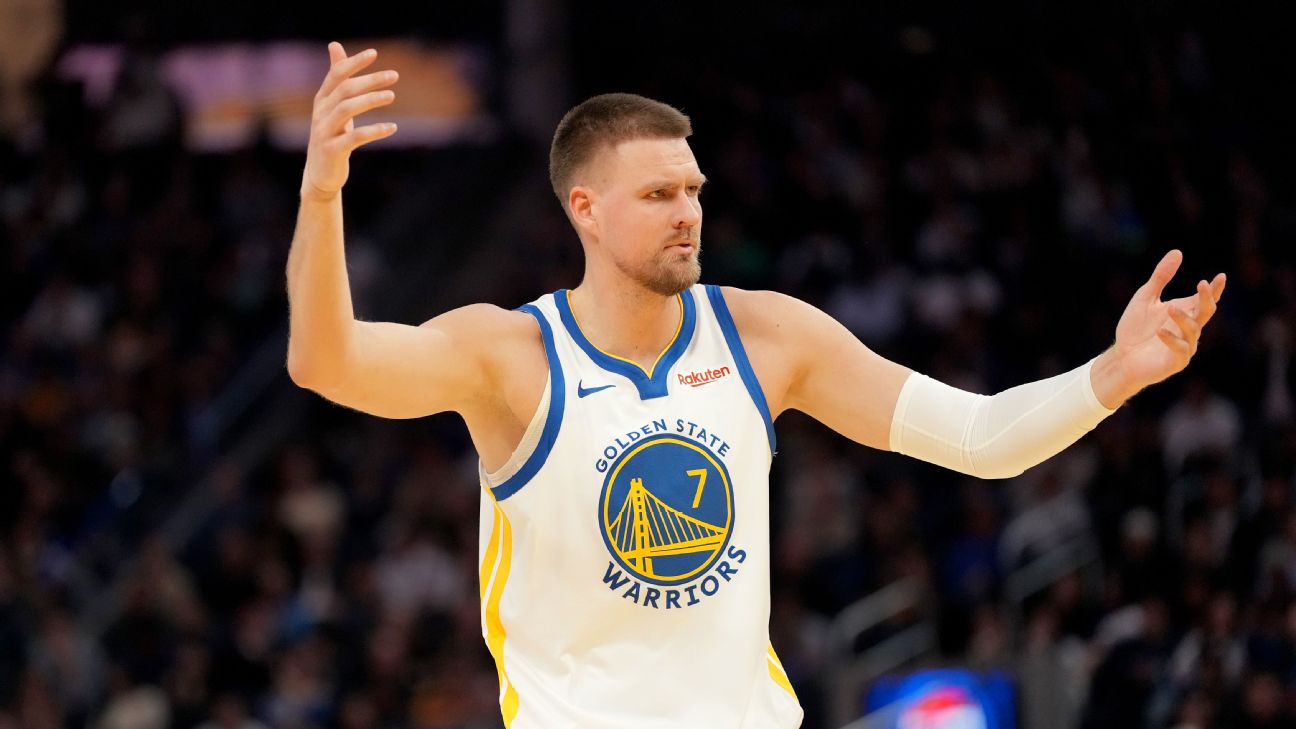
- ▪Kristaps Porzingis has stepped away from the NBA to focus on his health before playing a single minute for Golden State.
- ▪Losing a 7-foot-3 spacer and rim deterrent hurts the Warriors' five-out gravity, restricted-area defense, and defensive rebounding ceiling.
- ▪San Antonio (+280) and Oklahoma City (+450) hold clear structural length edges atop the Western Conference championship market.
Golden State's blueprint for pairing elite perimeter movement with a 7-foot-3 stretch rim protector vanished before it ever reached the hardwood. Kristaps Porzingis announced he is stepping away from the NBA to prioritize his health without logging a single regular-season minute for the Warriors. That sudden departure strips the coaching staff of its highest-ceiling lineup counter and forces an immediate return to smaller, speed-reliant combinations that leave virtually zero margin for interior error.
Across a Western Conference ruled by length, losing Porzingis transforms Golden State from a structural matchup nightmare into a team scrambling for paint survival. San Antonio (+280) and Oklahoma City (+450) headline the championship board largely because their frontcourt versatility punishes undersized rotations over four quarters. Without vertical spacing or an anchor at the basket, the Warriors must lean on internal development and midseason trade flexibility just to keep pace.
Five-Out Spacing Loses Its Ultimate Vertical Lever
Golden State's half-court identity thrives on relentless off-ball screening and high-volume perimeter shooting, an ecosystem built to amplify a pick-and-pop seven-footer. Pulling opposing centers twenty-six feet from the basket would have opened wide driving corridors for the Warriors' guards while elevating the club's 3-Point Attempt Rate. Without Porzingis commanding attention above the break, opposing bigs can sag back toward the paint to wall off cutters and contest floaters.
That lost gravity places heavy downward pressure on Golden State's Effective Field Goal percentage and Free-Throw Rate. When opposing rim protectors camp near the restricted area without fear of a trailer triple, perimeter shooters face tighter closeouts and fewer clean catch-and-shoot windows. Maintaining a top-ten Offensive Efficiency Rating now demands near-flawless shot-making from smaller lineups that generate far fewer effortless paint touches.
Small-Ball Minutes Tax an Undersized Frontcourt
Redistributing the frontcourt minutes earmarked for Porzingis forces Golden State's active bigs into heavier physical assignments every night. The Warriors currently sit in the middle of the NBA pack in blocks per game and defensive rebounding rate, two categories where Porzingis offered an instant statistical ceiling raiser. Leaning on undersized lineups may juice transition tempo, yet absorbing nightly post bruises across eighty-two games invites fourth-quarter fatigue.
Veteran ball movement still gives Golden State a reliable Assist-to-Turnover ratio that prevents prolonged, self-inflicted scoring dry spells in half-court sets. Even so, playmaking precision cannot manufacture extra wingspan when elite Western contenders relentlessly attack the offensive glass. Every possession where Golden State surrenders a putback layup or fouls a bigger interior scorer erodes the efficiency math that small-ball lineups need to survive.
Golden State Warriors(8-3)VS.NBA League AvgWarriors101.6Warriors118.5Warriors57.2%Warriors40.3%Drop Coverage Void Exposes the Restricted Area
Defensively, Golden State counted on Porzingis to anchor drop coverage and erase mistakes behind aggressive perimeter chasers. Nearly every top-five defense in modern basketball deploys a long deterrent capable of suppressing opponent True Shooting percentage inside the restricted area. Lacking that towering backstop, the Warriors must send early nail help and low-man rotations whenever quick guards turn the corner.
Constant help rotations carry a steep mathematical tax against disciplined passing teams. Collapsing two defenders into the lane leaves weak-side shooters open in the corners, trading contested twos for high-value triples. Against towering squads like the Spurs and Thunder, scrambling out of double-teams also pulls Golden State's best rebounders away from box-out position right as the shot goes up.
Western Hierarchy Hardens Around Frontcourt Length
Front-office executives in San Francisco now face a delicate timeline as the trade market develops over the winter months. Packaging rotation pieces or draft capital for a traditional center could stabilize defensive rebounding, though true stretch five talent remains the rarest commodity in basketball. Until reinforcements arrive, coaching creativity with zone looks and switch-everything bursts must mask the height deficit.
Oddsmakers have already drawn a firm dividing line between true two-way giants and veteran chasers. Behind San Antonio (+280) and Oklahoma City (+450), Eastern heavyweights Philadelphia (+800), New York (+950), and Boston (+1100) round out a top championship tier defined by two-way size. Golden State retains enough shooting pedigree to punish sloppy opponents nightly, yet its path through four seven-game playoff rounds just grew considerably steeper.
Fade Warriors Title Futures While Targeting Selective Game Totals
Championship futures require four-round matchup durability across two grueling spring months, and Golden State's lost frontcourt ceiling eliminates any remaining longshot value against San Antonio (+280) or Oklahoma City (+450). Without Porzingis altering shots at the rim or stretching opposing centers beyond the arc, the Warriors project closer to a volatile play-in spoiler than a conference finalist.
Single-game markets offer far cleaner edges as Golden State pivots back toward smaller, faster five-man rotation combinations every night. Smaller lineups naturally push transition pace while conceding higher restricted-area conversion clips and second-chance putbacks, creating steady upward pressure on full-game Over totals whenever the Warriors face top-ten interior offenses before oddsmakers fully recalibrate their defensive baseline.
Frequently Asked Questions
Sharp Wire Market DeskHas Kristaps Porzingis played any minutes for the Golden State Warriors this season?
No. Porzingis announced he is stepping away from the NBA to prioritize his health before logging a single minute for Golden State this season.
How does Porzingis's absence change the Warriors' tactical profile?
Without a 7-foot-3 shooter and drop-coverage shot blocker, Golden State loses its five-out spacing lever and must lean on faster, undersized lineups that face tougher rebounding and paint-defense math.
Which teams currently lead the NBA championship futures board?
The San Antonio Spurs (+280) and Oklahoma City Thunder (+450) pace the market, followed by the Philadelphia 76ers (+800), New York Knicks (+950), and Boston Celtics (+1100).
