





































































































ACC Basketball Futures: Stripping the Vig on Duke, UNC, and Wake Forest Win Totals
Evaluating the ACC's elite through the lens of No-Vig Fair Odds and season win total market efficiency.
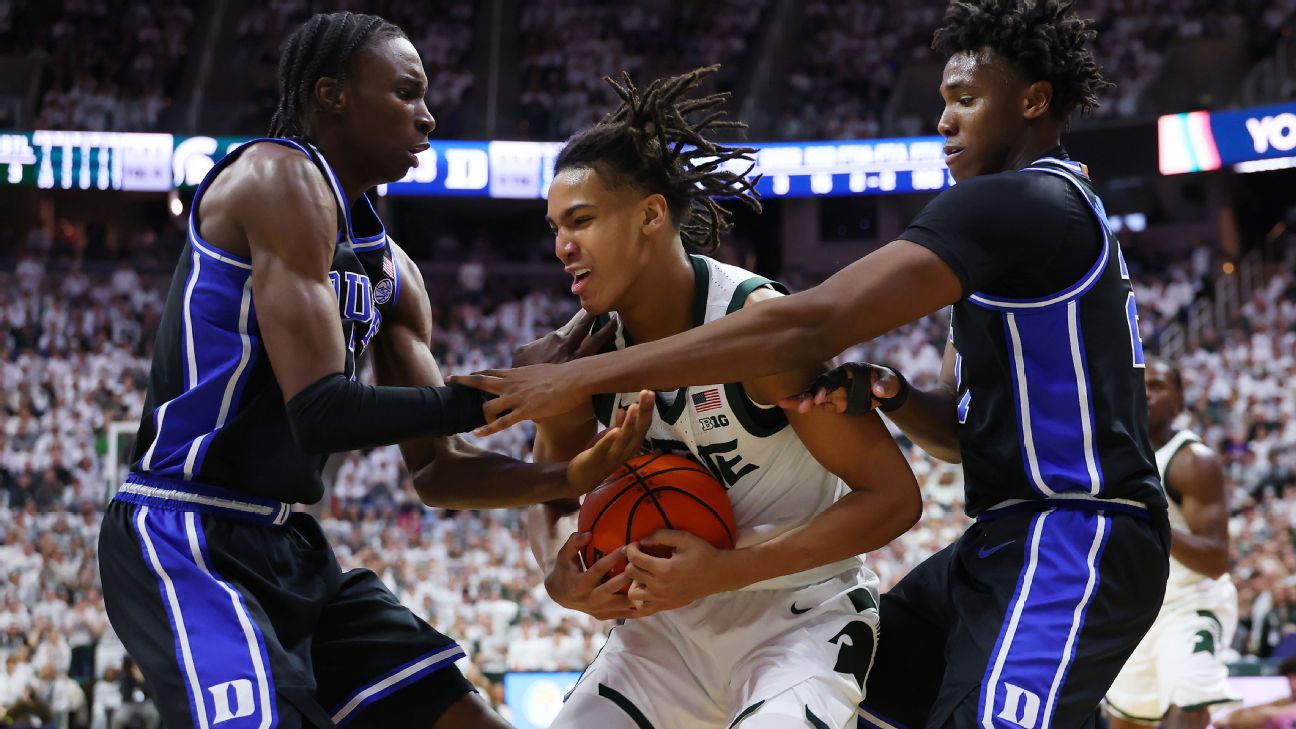
- ▪Duke opens as the clear market favorite at +485 backed by an elite 133.3 offensive rating and 61.6% effective field goal percentage.
- ▪Virginia enters the championship picture at +2800, anchoring its portfolio case on a 13.7 steals-per-game defensive disruption rate.
- ▪Conference futures and win totals require stripping market vig to uncover true-probability edges on high-tempo contenders like North Carolina.
Jon Scheyer’s Duke Blue Devils and Michael Malone’s North Carolina Tar Heels are tearing through November box scores, yet the true edge for sharp college basketball bettors lies away from volatile 68-team tournament futures and deep inside the mathematics of season win totals. By applying No-Vig Fair Odds math to extract juice, analysts can strip away market inflation and target precise floor-versus-ceiling expectations across the Atlantic Coast Conference.
When evaluating high-profile programs like the Duke Blue Devils, the North Carolina Tar Heels, the Virginia Cavaliers, and the Wake Forest Demon Deacons, traditional sportsbooks bake heavy holds into conference champion odds. Shifting focus toward regular-season win totals reveals how structural efficiency metrics—such as Duke's staggering 133.3 offensive rating and Virginia's relentless defensive disruption—translate into repeatable, high-probability bankroll growth.
The Math of the Market: Why Win Totals Beat Tournament Pools
Tournament futures carry notoriously bloated holds, forcing bettors to lay massive prices on teams enduring a grueling six-round gauntlet in March. Season win totals offer a mathematically superior alternative by compressing variance into a controllable conference slate. Oddsmakers apply heavy margins to these markets, but applying a No-Vig Fair Odds calculation allows sharp analysts to strip out the juice and isolate true mathematical probabilities.
Within the Atlantic Coast Conference, programs like the Duke Blue Devils, the North Carolina Tar Heels, the Virginia Cavaliers, and the Wake Forest Demon Deacons exhibit vastly different risk profiles that conventional odds often mischaracterize. While public money floods blue-blood conference champion markets, sharp syndicates quietly exploit win-total numbers where defensive efficiency and pace-free metrics dictate the actual closing value.
| TEAM | REC | STANDING | PPG | ORTG | EFG% | 3PT% | AST/TO |
|---|---|---|---|---|---|---|---|
 2Duke Blue Devils | 2-1 | 1st in ACC | 98.5 (#28) | 133.3 (#28) | 61.6% | 34.1% | 1.4 |
 North Carolina Tar Heels | 3-0 | 1st in ACC | 94.5 (#41) | 126.3 (#41) | 55.1% | 34.5% | 1.8 |
 6Virginia Cavaliers | 3-0 | 1st in ACC | 92.3 (#58) | 126.5 (#58) | 57.8% | 37.0% | 1.6 |
 Wake Forest Demon Deacons | 2-1 | 1st in ACC | 67.0 (#319) | 98.8 (#319) | 50% | 26.5% | 1.0 |
Duke and North Carolina: Pricing the Blue Blood Ceiling
Jon Scheyer’s Duke Blue Devils boast a blistering 133.3 offensive rating and a national-best 61.6% effective field goal percentage, powered by dynamic guards like Cayden Boozer and Caleb Foster. However, their heavy reliance on high-usage rotation pieces creates a volatile win-total ceiling when facing elite defensive pressure. Opposing coaches are forced to scheme around Duke's interior dominance, where a 67.5% two-point conversion rate dictates early-season blowouts.
Conversely, Michael Malone’s North Carolina Tar Heels anchor their win-total projections on exceptional backcourt ball security and steady playmaking. Registering just 8.5 turnovers per game—ranking 337th nationally in ball security—the Tar Heels control tempo efficiently through guards like Matt Able and Isaiah Denis. Evaluating their win-total market requires balancing this elite decision-making against a defensive rating of 91.3 points allowed per 100 possessions.
2Duke Blue Devils(2-1)Last 3 & Next 3 (ET) ArmyW 84-50
 Coastal CarolinaW 113-52
 5Michigan StateL 73-79
 SIU EdwardsvilleHOME • 8:00 PM ET
 3IllinoisHOME • 7:00 PM ET
 Washington StateHOME • 11:00 PM ETNorth Carolina Tar Heels(3-0)Last 3 & Next 3 (ET)
 Western CarolinaW 80-72
 WoffordW 109-70
 WyomingW 76-63
 GeorgiaHOME • 7:00 PM ET
 Marshall Thundering HerdHOME • 9:00 PM ET
 MonmouthHOME • 8:00 PM ET
Wake Forest and Virginia: Stability vs. System Efficiency
Steve Forbes’s Wake Forest Demon Deacons construct their win-total profile around veteran continuity and deliberate pacing, leading the nation with an adjusted tempo of 67.8 possessions per 40 minutes. Although their points per game sit at 67.0, a gritty defensive rating of 98.4 keeps them competitive in lower-scoring conference battles. Bettors assessing Wake Forest's win total must weigh their disciplined defensive rebounding against a sluggish 59.0% free-throw percentage.
Meanwhile, Ryan Odom’s Virginia Cavaliers rely heavily on suffocating defensive disruption, racking up 13.7 steals per game to rank 15th nationally. Sparked by freshman guard Chance Mallory averaging 16 points and center Johann Grunloh pulling down 9 rebounds, the Cavaliers combine an efficient 37.0% three-point shooting clip with unrelenting perimeter ball pressure. This dual-threat identity establishes a robust defensive floor that heavily supports win-total over-and-under considerations.
ACC Hierarchy: Final Fair Odds Projections
Synthesizing these metrics across the Atlantic Coast Conference highlights a sharp divergence between raw talent and market pricing. Duke's explosive 98.5 points per game and elite defensive dominance project an exceptionally high win-total ceiling, provided their rotation depth withstands the physical ACC schedule. Meanwhile, Virginia's structured 126.5 offensive rating offers remarkable stability for bettors targeting predictable conference outcomes.
Ultimately, unlocking value in ACC win totals requires looking past traditional media narratives and focusing strictly on tempo-free efficiency, true shooting percentages, and adjusted defensive metrics. By neutralizing sportsbook vig through rigorous mathematical modeling, disciplined bettors can systematically exploit the pricing discrepancies separating elite contenders from the conference's gritty middle tier.
ACC Futures Pricing: Stripping the Vig on Conference Contenders
When evaluating conference futures markets like the ACC, standard public betting naturally gravitates toward marquee programs, inflating the vig on top-tier favorites like Duke (+485). By utilizing no-vig fair odds conversion, bettors can isolate whether the implied probability aligns with tempo-free metrics such as Duke's 133.3 offensive efficiency rating.
Conversely, deeper value often resides in programs with proven veteran continuity or elite defensive disruption profiles, such as Virginia (+2800) and its 13.7 steals-per-game metric. Portfolios should target pricing inefficiencies where market overreactions to recruiting hype create actionable gaps against the true win-probability ceiling.
Frequently Asked Questions
Sharp Wire Market DeskWhat are Duke's current odds to win the ACC championship?
Duke is currently listed at +485 to win the ACC conference title, reflecting high market expectations following strong early-season offensive efficiency metrics.
How does Virginia's defensive profile impact its +2800 futures price?
Virginia boasts a strong defensive disruption rate with 13.7 steals per game, providing a solid foundational floor for bettors considering longer-odds conference futures.
Where does Wake Forest stand in the ACC title market?
Wake Forest is currently positioned as a longshot at +40000, operating at an adjusted tempo of 67.8 possessions per 40 minutes under head coach Steve Forbes.
