



















Flames and Kraken Navigate Roster Attrition as Depth Charts Shift
With key centers sidelined on the Seattle roster, both Pacific Division clubs are recalibrating their puck possession strategies. The impact on special teams and goaltending remains the deciding factor for bettors.
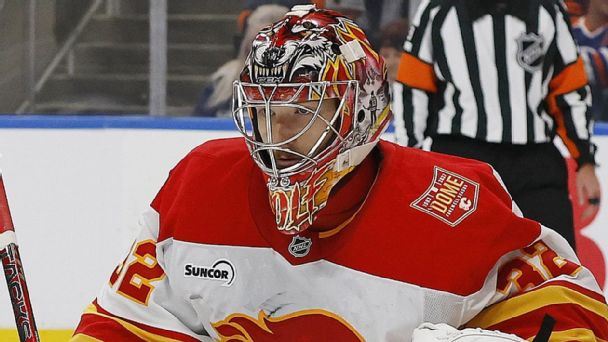
- ▪Seattle is managing significant center-ice depth issues with Curtis Douglas and Jake O'Brien both on injured reserve.
- ▪The Flames hold a superior goaltending and crease stability grade of 88.7, providing a defensive floor despite their 32nd-ranked shooting percentage.
- ▪Market futures reflect a long-shot status for both clubs, with Calgary at +80000 and Seattle at +25000 to win the Stanley Cup.
The Pacific Division landscape is currently defined as much by who is missing from the lineup as by who is on the ice. For the Seattle Kraken, the recent movement of centers Curtis Douglas and Jake O'Brien to the injured reserve has forced head coach Lane Lambert to shuffle his middle-six rotation. This attrition at the center position places a heavier burden on Matty Beniers and Chandler Stephenson to control the pace of play. When depth chart staples are removed, the ripple effect is felt immediately in puck possession metrics and defensive zone exits, areas where Seattle has struggled to maintain consistency throughout the early portion of the 2026 campaign.
Calgary, meanwhile, is experiencing its own personnel fluctuations, most notably the activation of netminder Devin Cooley. While the Flames currently sit at 7-8, their underlying numbers suggest a team that has been significantly snakebitten. With a 5v5 PDO Sustainability Index of 97.4, Calgary is statistically primed for positive regression regarding their finishing and save luck. The betting market continues to adjust its expectations, with futures currently pricing Seattle at +25000 and Calgary at +80000 to hoist the Stanley Cup.
Tactical Shifts in the Middle Six and Defensive Zone
The absence of Douglas and O'Brien forces the Kraken into a defensive posture that relies heavily on their veteran core. Seattle’s shot share and possession metric, currently sitting at 45.5% SF%, highlights the difficulty they face when the rotation is thinned. Without the structural integrity provided by their full complement of centers, the Kraken’s forecheck, while still graded at a respectable 83.4, often leaves the defensive pairing of Vince Dunn and Adam Larsson exposed to high-danger chances. Opposing coordinators are now focusing on aggressive puck retrieval in the Kraken’s zone, aiming to exploit the lack of depth-center support during transition phases.
Calgary’s approach remains centered on their physical identity, utilizing a 72.8 forecheck disruption grade to create turnovers. Despite their 32nd-ranked shooting percentage, the Flames lead the league in blocked shots, a testament to the defensive commitment of their forward group. The return of Cooley to the crease provides a reliable alternative to Dustin Wolf, giving Ryan Huska the flexibility to manage his goaltending workload. This depth in the crease is vital for a team that currently struggles with a 16.2% power play efficiency, forcing them to win games through low-scoring, structured efforts rather than offensive explosions.
Goaltending Variance and Regression Factors
Goaltending remains the ultimate truth detector in this matchup. Seattle’s 102.4 PDO suggests they are currently riding a wave of unsustainable puck luck, which often serves as a precursor to a defensive regression. Philipp Grubauer and Joey Daccord have kept the Kraken competitive, but the high volume of shots against—evidenced by a -317 shot differential—is not a sustainable model for long-term success. Conversely, Calgary’s 88.7 goaltending grade indicates that their netminders have been the backbone of a team that is otherwise struggling to find the back of the net with any regularity.
Stop Chasing Losses With 5-Unit Plays: How Pros Size Their Bets.
Even a 56% winner will go broke with bad bet sizing. Read our straightforward breakdown of unit discipline, flat betting, and how to survive a cold streak without blowing your roll.
The special teams battle further complicates the picture. With both teams ranking as liabilities in the Special Teams Net Index—Calgary at 96.6% and Seattle at 91.7%—the game often hinges on 5v5 play and empty-net variance. For bettors, this volatility makes the moneyline and puck line markets particularly sensitive to late-breaking injury news. While Calgary’s 48.3% SF% is modest, it significantly outpaces Seattle’s 45.5%, suggesting that the Flames are better equipped to control the flow of play if they can mitigate the impact of their league-worst shooting percentage.
- Calgary's 48.3% SF% provides a possession edge over Seattle's 45.5% mark.
- Seattle's 102.4 PDO indicates a high risk for negative regression in goaltending outcomes.
- Calgary's 88.7 crease grade offers a higher defensive floor for potential low-scoring outcomes.
Market Positioning and Betting Strategy
When assessing the futures market, the current pricing reflects the reality of two teams fighting for consistency in a crowded Pacific Division. Seattle’s +25000 odds to win the Stanley Cup, compared to Calgary’s +80000, highlight the market’s skepticism regarding both teams' ability to sustain a deep postseason run. Sharp bettors are currently monitoring how the absence of Douglas and O'Brien affects Seattle’s faceoff win percentage, which currently sits at 52.7%, as any drop in dot control will inevitably lead to more time spent in their own defensive zone.
For those looking to find value in the current market, the focus should remain on the discrepancy between the teams' defensive metrics and their actual goal-prevention results. Calgary’s 3.44 GAA is a primary target for improvement, and as their shooting percentage regresses toward the league mean, their win total could see a significant uptick. Utilizing the low-hold, sharp -110 Vegas lines and Free-Play bonuses at YouWager.lv allows bettors to capitalize on these statistical anomalies without the heavy tax found at other books. In a matchup defined by injuries and regression, waiting for the market to overreact to a single-game result is often the most effective way to secure a superior position on future outcomes.
