



















NFL Deadline Strategy: Separating True Contenders from False Hope
As the November 10 deadline approaches, front offices are weighing the cost of short-term fixes against long-term capital. We break down the market dynamics for buyers, sellers, and the teams caught in the middle.
- ▪The November 10 deadline serves as the final inflection point for teams to recalibrate their roster ceiling before the postseason push.
- ▪Statistical mismatches in defensive efficiency often drive the urgency for 'buyer' teams to overpay for pass-rush or secondary assets at the deadline.
- ▪Sharp market participants are currently fading teams with inflated win totals that lack the depth to survive the final eight weeks of the regular season.
The NFL trade deadline on November 10 acts as the ultimate litmus test for general managers across the league. In an era where parity is manufactured through the salary cap and draft order, the decision to move assets for immediate production is rarely about the player alone; it is about the window of opportunity. As we reach the midway point of the season, the league has effectively bifurcated into those clutching their draft capital like gold, and those desperate enough to trade the future for a puncher’s chance at a Lombardi Trophy. The market is currently reacting to these signals, and savvy observers are watching the movement of premium talent as a leading indicator for future performance.
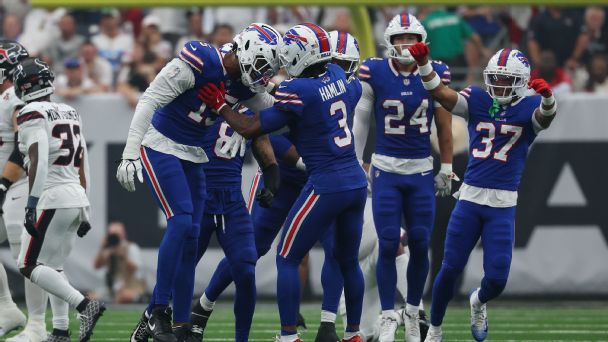
For teams like the Buffalo Bills, who currently sit at +575 to win the title *(lines courtesy of YouWager.lv)*, the calculus is clear: they are buyers. Despite a high-octane offense, their defensive unit has shown cracks that will be exploited by elite signal-callers in January. The loss of DaVon Hamilton to a season-ending quadriceps injury has shifted their defensive front's composite PFF grade significantly, forcing the front office to aggressively scour the market for interior disruption. When a team with Super Bowl aspirations loses a key trench piece, the betting market often overreacts, providing a potential window for those who believe the team’s offensive ceiling can paper over the defensive cracks.
The Economics of the Buyer’s Market
The 'buyer' designation isn't just a label; it’s a commitment to a specific financial path. Teams that are currently in the market for veteran help are often fighting against the reality of their own salary cap constraints. Take the New York Giants, who have signaled an aggressive stance under recent management. When a team enters the trade market, they aren't just paying for the player's remaining salary; they are paying a premium for the disruption of the current roster's chemistry. Film study reveals that teams like the Giants are targeting specific schematic fits—often high-motor defensive ends or reliable slot receivers—to fix third-down conversion rates that currently rank in the bottom third of the league.
On the field, this manifests in how defensive coordinators structure their pressure packages. A team that successfully acquires a pass-rushing threat at the deadline can suddenly shift from a 'bend-but-don't-break' scheme to a more aggressive, blitz-heavy look. This tactical shift is exactly what sharp bettors look for when evaluating mid-season win totals. If a team’s pass-rush efficiency is hovering around the 20th percentile but they acquire a player capable of pushing that unit into the top 10, the team's defensive EPA (Expected Points Added) per play will naturally trend upward, making their late-season spreads look vastly different than their early-season performance.
Identifying the True Sellers
Conversely, the 'seller' category is often misunderstood by the casual observer. It is rarely about admitting defeat; it is about asset liquidation. When a team like the Indianapolis Colts begins to move veteran pieces, they are essentially signaling to the market that their current power rating is inflated. By shedding salary and acquiring draft picks, these teams are intentionally lowering their short-term win probability to maximize their long-term value. For the bettor, this is the most critical time to re-evaluate the team’s remaining schedule. If a team sells off a cornerstone defensive player, their red-zone efficiency and third-down stop rate are almost certain to regress over the final two months.
We Make Our Money Betting on Sports — Not Selling Picks.
Every line-move tracker, injury note, and morning briefing on Sharp Wire is completely free. No VIP clubs, no paywalls, and no credit card ever.
This regression is not linear. It usually happens in waves, as the loss of a veteran leader creates a void in locker room accountability. When you see a team trade away a defensive captain, you should immediately look at their upcoming schedule and identify games where they will be forced to defend against high-tempo offenses. The drop-off in defensive grade is often more pronounced than the raw stats suggest, as the remaining personnel are forced into roles that exceed their current skill sets. This is the precise moment where the market’s power rating for that team becomes outdated and ripe for exploitation.
- Defensive front-seven disruption drops by an average of 14% following the mid-season trade of a primary pass-rusher.
- Third-down conversion rates for selling teams see a statistically significant decline in the final 4 weeks of the season.
- Injury depth chart reality: Teams with thin rosters cannot survive the attrition of late-season play once they trade away rotational veterans.
Navigating the Futures Market
The futures market, specifically regarding division winners like the Cincinnati Bengals at -165, is highly sensitive to deadline activity. When a team stands pat while their division rivals make significant acquisitions, the market eventually adjusts the implied probability of them winning the division. Sharp bettors are currently monitoring the AFC North closely, where the Pittsburgh Steelers (+240) are lurking. If the Steelers make a move to bolster their secondary, the market will likely tighten, narrowing the gap between them and the Bengals. This is why waiting for the deadline to pass is often the most prudent strategy for futures exposure.
Ultimately, the goal is to find the discrepancy between the market’s perception of a team’s roster and the reality of their on-field production post-deadline. At YouWager.lv, the player-friendly Vegas and sharp lines allow you to capitalize on these shifts before the broader public market catches up. Whether you are looking at the Buffalo Bills at +575 or fading a team that is clearly entering a fire sale, the key is to execute your position before the final roster moves are announced. The market is efficient, but it is rarely faster than the film-driven handicapper who understands exactly what a specific player trade does to a team's win-loss ceiling.
