












































































































Rory McIlroy's 11-Birdie 63 in Abu Dhabi Signals Peak Iron Control Ahead of 2027 Majors
Twenty-four hours after a Thursday rules dispute threatened to derail his week, Rory McIlroy carved up Yas Links with 11 birdies and a 9-under 63 that showcased textbook approach dispersion.
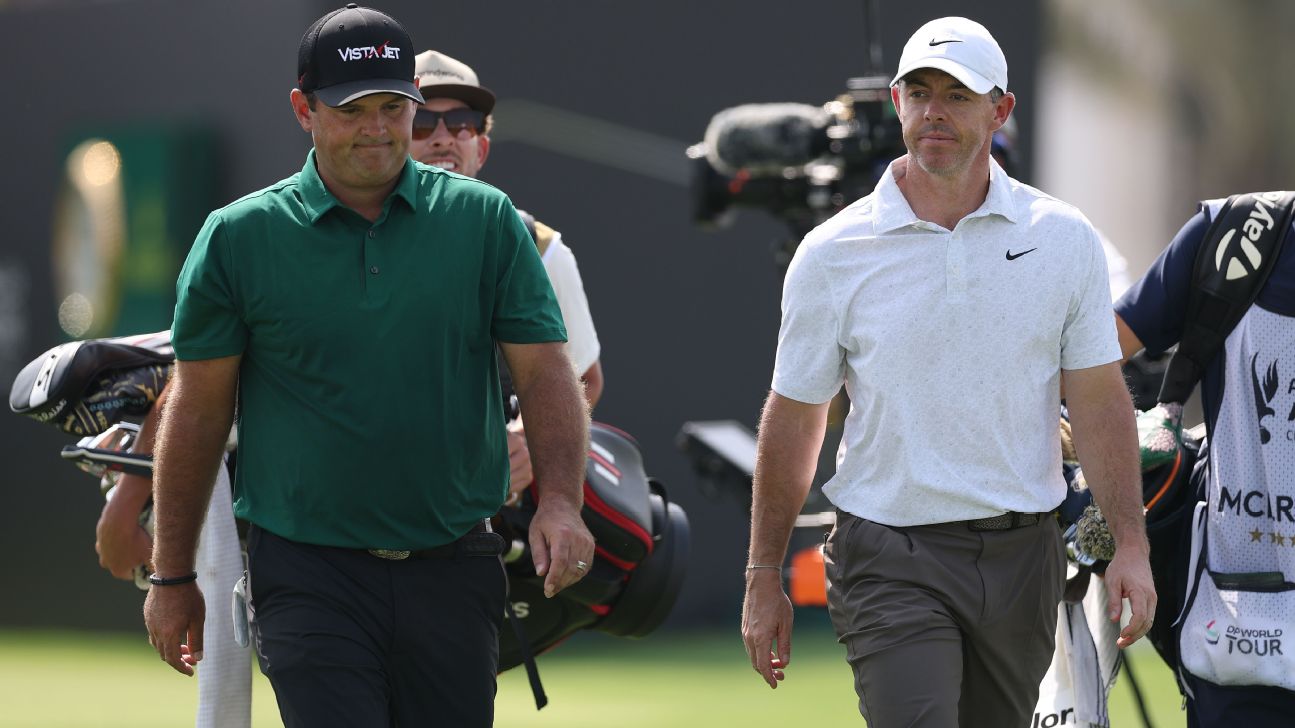
- ▪Rory McIlroy shook off a Thursday first-round penalty controversy in Abu Dhabi to fire a 9-under 63 with 11 birdies on Friday, climbing within one shot of the lead.
- ▪Controlled three-quarter iron flights in Gulf crosswinds tightened McIlroy's approach dispersion and neutralized desert firm-turf release.
- ▪Decisive putting speed on coastal Paspalum greens allowed McIlroy to take subtle grain out of mid-range birdie looks.
- ▪Entering the winter break with synced iron mechanics positions McIlroy to focus on wedge calibration rather than swing-plane fixes ahead of the April 2027 Masters.
Walking onto the first tee in Abu Dhabi on Friday morning still simmering from a Thursday penalty controversy that could have fractured lesser rounds, Rory McIlroy chose ballistic retaliation with a 7-iron in his hands. Over the next four hours, the Northern Irishman dismantled the coastal layout with surgical trajectory control, pouring in 11 birdies to sign for a 9-under 63 that vaulted him within a single stroke of the 36-hole lead and silenced every murmur from the opening day.
Few stretches of late-autumn golf reveal a star's mechanical ceiling quite like a bounce-back heater under desert crosswinds. Rather than chasing reckless driver lines to erase Thursday's frustration, McIlroy leaned on compressed, three-quarter approach shots that repeatedly settled inside twelve feet. With rival tour disruption collapsing around the global game this week, his Friday masterclass felt like far more than a DP World Tour playoff charge: it looked like an early tactical warning shot toward the April 2027 Masters.
Channeling Rules Friction Into Disciplined Tee-to-Green Fury
Penalty disputes in tournament golf carry a notorious psychological hangover. Most elite players who walk off an eighteen green frustrated by an officiating ruling spend the next morning over-swinging off the tee, widening their miss pattern into penal desert waste areas and compounding a minor setback into a missed weekend or back-of-the-pack finish. McIlroy flipped that script completely on Friday by narrowing his targets off the tee and turning his annoyance into hyper-focused pre-shot routines.
Making 11 birdies in an eighteen-hole tournament round requires far more than a hot flatstick; it demands relentless proximity creation across every yardage bucket on the card. Even with two dropped shots keeping his score at 9-under 63 rather than a historic sub-60 threat, converting birdie on more than 61 percent of holes played illustrates peak offensive firepower. When McIlroy locks his upper-body rotation in sync with his lower-half ground force, he generates high-launch, high-spin mid-irons that hold firm resort greens where peers watch balls release twenty-five feet past the flag.
Just as telling was the wider emotional backdrop surrounding McIlroy's week in the Middle East. Only days after reminding observers how breakaway organizers had once openly boasted about wanting to destroy the European Tour, watching LIV Golf confirm it is winding down operations gave the DP World Tour's flagship stretch renewed institutional gravitas. McIlroy played Friday like a competitor defending his home circuit's turf with unmistakable authority.
Strokes Gained Approach Mechanics and Crosswind Flight Control
To understand why sharp golf analysts treat a 9-under 63 built on 11 birdies differently than a putter-driven 65, start with Strokes Gained: Approach — the metric measuring how efficiently a player's iron shots advance the ball toward the hole compared to the tour field baseline from identical distances and lies. Putting spikes evaporate overnight when green speeds shift by half a foot on the Stimpmeter, whereas elite iron dispersion travels across continents and seasons.
Coastal Middle Eastern venues demand constant spin-axis calibration. Desert thermals firm up the turf by midday while Persian Gulf breezes turn routine 165-yard 8-irons into test-lab calculations of launch window and apex height. Throughout Friday's surge, McIlroy flighted knock-down wedges underneath gusts instead of floating high spinners into the wind, shrinking his two-dimensional dispersion — the scatter radius of approach shots around the pin — to tour-best levels.
Pair that controlled iron flight with his perennial Strokes Gained: Off-the-Tee dominance, and the math becomes suffocating for the rest of a leaderboard. By carrying fairway bunkers at 315-plus yards that force shorter hitters to lay back with 3-woods, McIlroy consistently attacks par-4s with two fewer clubs in hand, turning tucked tournament pins into green-light birdie opportunities and turning par-5s into automatic two-putt scoring zones.
How to Spot Reverse Line Movement When the Public Is All Over One Side.
When 75% of the tickets are on a popular favorite and the spread still moves the other way, respected money is stepping in. Here is how to tell real steam from a head-fake.
Why Paspalum Putting Reads Separate Contenders in Desert Birdie Shoots
Scoring explosions in Abu Dhabi also hinge on mastering coastal Paspalum agronomy, a salt-tolerant turfgrass strain engineered for seaside desert courses that behaves starkly differently from American Bentgrass or Poa annua. Paspalum blades grow slightly coarser and grab dimples right around the cup as ball speed decays, meaning putts that are dying at the hole frequently peel off offline while firm, center-cut strokes hold their line cleanly.
Historically, McIlroy's occasional chilly stretches on the greens have stemmed from defensive speed control — trying to lag tricky eight-footers over subtle grain rather than taking break out with decisive ball speed. During his 11-birdie Friday clinic, his putter face stayed square through impact with assertive roll velocity, turning mid-range ten-to-fifteen-footers into center-cup conversions before coastal grain could tug the ball low.
Standing one stroke off the halfway lead heading into the weekend puts McIlroy in his most dangerous statistical posture. Chasing from a single shot back removes the tentative, lead-protecting mindset that has occasionally crept into his Sunday afternoons when nursing a multi-shot cushion, allowing him to stay aggressive on par-5 second shots and drivable par-4s across the final thirty-six holes.
Translating November Desert Form to the 2027 Major Championship Board
Autumn form in November never guarantees green jackets five months later, yet mechanical fluency at the close of a calendar year directly dictates how a veteran superstar spends his winter preparation block. Instead of overhauling swing planes or searching for lost face control in December and January, McIlroy enters the offseason transition with a repeatable iron delivery already stress-tested under championship pressure.
Looking ahead to the April 2027 Masters at Augusta National and the May 2027 PGA Championship, McIlroy's ability to flight towering long irons and erase Thursday adversity without fracturing mentally remains the exact skill set major venues demand. Oddsmakers routinely compress his outright major numbers the moment he wins a winter event, which means evaluating the underlying ball-striking spike right now offers far cleaner analytical clarity than chasing headline steam in March 2027.
Pricing McIlroy's Iron Spike Without Paying Post-Birdie Tax
In tournament golf markets, an 11-birdie 63 immediately compresses live weekend outright prices below true mathematical value because recreational capital floods toward the biggest name sitting one shot off the lead. Disciplined golf handicappers treat Friday scoring explosions as diagnostic inputs rather than blind green lights to buy peak-priced weekend chalk, especially on birdie-heavy desert tracks where thirty-six-hole variance still leaves a crowded chasing pack within four strokes.
The sharper macro takeaway lies on the 2027 major futures board and upcoming elite-field winter invitationals. Because LIV Golf's wind-down is reshaping global field strength for 2027, McIlroy's verified approach control and emotional resilience after Thursday's penalty flap confirm his ball-striking baseline remains firmly inside the world's top tier before winter recency bias inflates his spring numbers.
Frequently Asked Questions
Sharp Wire Market DeskHow did Rory McIlroy get back into contention at the Abu Dhabi Championship?
After enduring a first-round penalty controversy on Thursday, McIlroy erupted for 11 birdies and a 9-under 63 on Friday to move within one shot of the tournament lead.
Why does an 11-birdie round carry stronger predictive weight than a typical low score?
Posting 11 birdies requires sustained iron proximity across par-3s, par-4s, and par-5s rather than relying on two or three lucky forty-foot putts, signaling repeatable Strokes Gained: Approach form.
How should golf bettors treat McIlroy's form heading into 2027?
Rather than buying heavily compressed in-play odds right after a 63, sharp bettors log his verified iron and crosswind control for selective outright spots on demanding ball-striker courses in early 2027.
