










































































































Cheavon Clarke's Seventh-Round Stoppage of Chris Billam-Smith Detonates the Cruiserweight Hierarchy
Exploding underneath Chris Billam-Smith's high guard with vicious uppercuts and body-head hooks, Cheavon Clarke scored a statement Round 7 stoppage upset that reshuffled the 200-pound rankings.
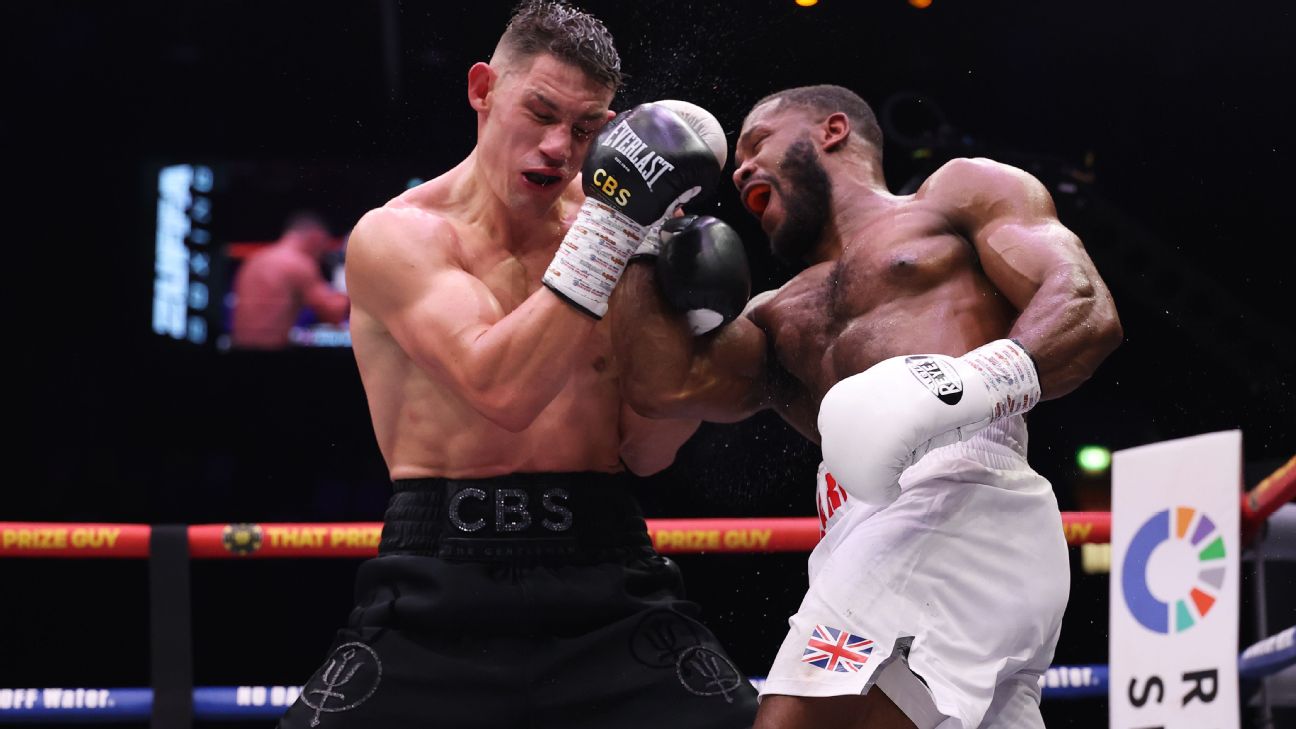
- ▪Cheavon Clarke pulled off a dramatic seventh-round stoppage upset over Chris Billam-Smith on Saturday night.
- ▪Chris Billam-Smith fell in Tuesday's updated November 10 cruiserweight divisional rankings following the stoppage defeat.
- ▪Compact uppercuts through the middle of Billam-Smith's high guard and heavy early body hooks set up the seventh-round finish.
- ▪Clarke storms into the 2027 cruiserweight world-title mix with proven finishing power past the midway mark of scheduled bouts.
Chris Billam-Smith forged an entire championship-caliber career at cruiserweight by dragging flashier athletes into twelve-round phone-booth trenches until their lungs burned and their technique unraveled, yet on Saturday night that trademark willingness to trade leather inside the pocket finally betrayed him. Exploding underneath Billam-Smith's vertical high guard with ferocious uppercuts and whipping short hooks, Cheavon Clarke forced a stunning seventh-round stoppage upset that hushed the entire venue.
When updated divisional rankings dropped on Tuesday afternoon, the immediate competitive fallout across the cruiserweight landscape was unmistakable: Billam-Smith tumbled down the 200-pound board while Clarke vaulted directly into the international spotlight heading into 2027. Far more than a dramatic domestic passing of the torch between British rivals, Saturday's seventh-round finish exposed the unforgiving physiological ceiling facing attrition-based pressure fighters once cumulative championship mileage catches up.
Splitting the Earmuff Guard With Uppercuts and Compact Shoulder Torque
Fighting Chris Billam-Smith has always presented an optical illusion for cruiserweights who fall in love with straight long-range punches. Because Billam-Smith marches forward behind tightly glued vertical forearms and a tucked chin, standard one-two combinations frequently crash harmlessly against his gloves and elbows, leaving the attacker off-balance right when Billam-Smith answers with rugged clubbing hooks.
Clarke solved that defensive shell by changing punch trajectories rather than trying to punch straight through Billam-Smith's wrists. Relying on explosive fast-twitch hip snap, Clarke slipped subtly outside Billam-Smith's jab and threaded compact right uppercuts directly up the narrow seam between the veteran's gloves. Every time Billam-Smith clamped his elbows inward to close that central lane, Clarke whipped tight hooks around the ear and behind the triceps, turning the older fighter's high guard into visual blinders.
Compact punch geometry proved decisive inside tight exchanges. Because Clarke kept his elbows tucked close to his ribs before exploding through the target, his counters traveled half the arc of Billam-Smith's wide looping hooks—beating the veteran to the chin repeatedly by fractions of a second.
Early Body Investment Paved the Runway for the Round 7 Finish
Knockout upsets in the middle frames rarely materialize out of nowhere; they are built brick by brick across Rounds 2, 3, and 4 through disciplined body investment. Analyzing power-punch connect rate—the share of non-jab hooks, crosses, and uppercuts landing cleanly on target—reveals how methodically Clarke sapped Billam-Smith's famous second-half engine before hunting the knockout.
Instead of headhunting wildly in the opening stanza and risking an adrenaline dump, Clarke dug thudding left hooks beneath Billam-Smith's floating ribs whenever the pair clinched or separated at close quarters. Absorbing heavy 200-pound leather to the midsection gradually slowed Billam-Smith's defensive head movement by half a beat. By the seventh round, Billam-Smith could no longer roll with incoming combinations or tie up cleanly in survival clinches, allowing Clarke to unload the unanswered barrage that forced the stoppage.
Pacing discipline also protected Clarke from the late-round fatigue trap that previously rescued Billam-Smith in grueling domestic wars. Working in sharp three-punch bursts rather than continuous reckless flurries preserved Clarke's snap right through the seventh-round finish.
Subscribe to Our Free Morning Betting Newsletter.
See which lines moved overnight before you place a bet—verified sharp money moves, key injury news, and daily edges delivered to your inbox every morning.
Divisional Rankings Fallout and Cruiserweight Contention Entering 2027
Tuesday's divisional rankings update codified the immediate consequences of Saturday's upset at 200 pounds. Billam-Smith's slide down the cruiserweight ladder raises sobering questions about where a warrior built on grit, chin, and grueling twelve-round wars turns next after suffering a decisive seventh-round stoppage against an explosive domestic rival. Rebuilding after a sustained mid-fight beatdown at cruiserweight requires extended neurological rest and honest stylistic recalibration before stepping back in with top-ten punchers.
For Clarke, the victory erases any lingering questions about whether his amateur pedigree and athletic explosiveness could hold up over championship-scheduled heat against battle-tested world-level opposition. Entering 2027, Clarke commands top-tier cruiserweight matchmaking—positioning him as a dangerous high-upside challenger for world-title eliminators and belt-holders who struggle against compact, counter-punching hand speed.
Matchmakers across Europe and North America value 200-pounders who combine crowd-pleasing stoppage power with slick defensive waist movement, giving Clarke immediate main-event viability throughout the upcoming spring schedule and positioning him firmly on the short list for mandatory world-title shots.
Pricing Attrition Veterans Against Explosive Athletes at 200 Pounds
Cruiserweight sits in a uniquely punishing physiological zone where athletes carry genuine heavyweight knockout force while still moving at light-heavyweight tempos. Across boxing history, pressure fighters at 200 pounds who rely on eating two shots to deliver three enjoy remarkably consistent prime runs—until accumulated damage abruptly erodes punch resistance overnight.
Oddsmakers pricing veteran cruiserweight favorites often overweight historical toughness from past twelve-round wars without applying a steep enough wear-and-tear discount. Clarke's seventh-round stoppage upset serves as a textbook reminder for quantitative fight bettors: whenever an aging high-mileage brawler faces a noticeably faster, harder-hitting counter-puncher with clean uppercut mechanics, underdog stoppage props carry vastly higher true probability than market moneylines imply.
Every grueling war leaves invisible tax on neck bracing, footwork recovery, and visual reaction speed. Recognizing that inflection point one fight before the public market adjusts separates disciplined boxing handicappers from nostalgic bettors backing yesterday's reputation.
Accumulated Attrition Mileage Unlocks Underdog Stoppage Asymmetric Value
Cheavon Clarke's seventh-round stoppage upset over Chris Billam-Smith illustrates one of boxing handicapping's highest-margin angles: fading high-mileage attrition veterans against faster, fresher power counter-punchers. Markets routinely price grizzled former champions as durable decision locks based on past wars, overlooking that every grueling twelve-round battle permanently taxes future chin recovery and split-second defensive reflexes inside the pocket.
Moving into the 2027 cruiserweight schedule, Clarke's stock climbs sharply, though bettors must adjust now that his steep underdog discount has evaporated. Back Clarke when paired against upright, stationary high-guard stalkers vulnerable to guard-splitting uppercuts and body hooks, while demanding fair prices if matched against rangy lateral out-boxers who refuse extended mid-range exchanges. In twelve-round cruiserweight eliminators, targeting middle-to-late stoppage round clusters (Rounds 5 through 9) captures Clarke's methodical body-work curve far more efficiently than paying inflated upfront knockout chalk.
Frequently Asked Questions
Sharp Wire Market DeskHow did Cheavon Clarke beat Chris Billam-Smith?
Cheavon Clarke defeated Chris Billam-Smith via seventh-round stoppage in a major cruiserweight upset, breaking down Billam-Smith's high guard with uppercuts, short hooks, and body punches.
How did the loss affect Chris Billam-Smith in the boxing rankings?
Following the seventh-round stoppage defeat to Clarke, Billam-Smith dropped in the updated November 10, 2026 cruiserweight divisional rankings.
Why was Cheavon Clarke's style so effective against Billam-Smith?
Billam-Smith relies on an upright forearm shell and grueling inside attrition, which gave Clarke's faster hands clean lanes to thread uppercuts up the middle and hooks around the guard.
