












































































































Skye Nicolson's Southpaw Masterclass Against Miyo Yoshida Sets Up 2027 Unification Stakes
Retaining her WBC junior featherweight belt over rugged challenger Miyo Yoshida, Australian southpaw Skye Nicolson showcased immaculate distance geometry amid a booming women's boxing calendar.
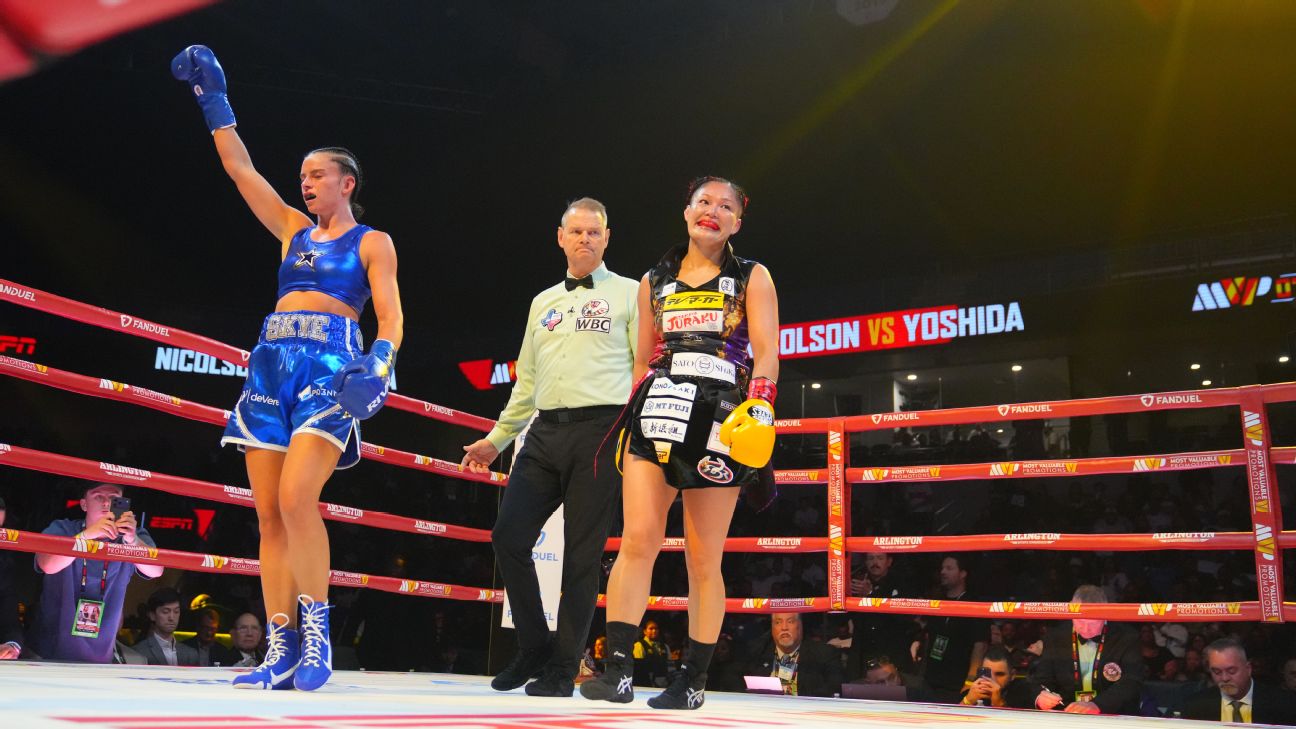
- ▪Skye Nicolson defeated Miyo Yoshida to retain her WBC junior featherweight championship at 122 pounds.
- ▪Superior southpaw lead-foot positioning, check right hooks, and lateral footwork neutralized Yoshida's forward pressure.
- ▪Nicolson's win capped a massive week in women's boxing alongside Alycia Baumgardner's lightweight title triumph and the Caroline Dubois vs. Stephanie Han three-belt booking.
- ▪Nicolson enters 2027 targeting junior featherweight unification bouts where her defensive discipline keeps Decision props prime.
Miyo Yoshida spent round after round marching forward with her chin tucked firmly behind high gloves, desperate to pin Skye Nicolson against a neutral corner rope that never stayed in one place long enough to trap the elusive Australian southpaw. Successfully defending her WBC junior featherweight world championship over the rugged Japanese veteran, Nicolson delivered another clinical seminar in open-stance geometry, defensive poise, and effortless ring generalship.
Winning championship rounds cleanly without conceding needless fifty-fifty exchanges inside the pocket has become Nicolson's unmistakable calling card at 122 pounds, even when battle-tested pressure challengers try to drag world title fights into rough inside brawls. Unfolding during a landmark November week of title shakeups across women's boxing, Nicolson's latest WBC defense cements her standing as an elite tactical standard-bearer entering a loaded 2027 unification calendar.
Open-Stance Lead-Hand Geometry and Zero-Exchange Footwork
Boxing's purest defensive specialists control fights long before punches are ever exchanged by dictating lead-foot geography. Operating from a poised southpaw stance against orthodox pressure fighters like Yoshida, Nicolson consistently maintains her right boot slightly outside the challenger's left shoulder. Owning that outside track aligns Nicolson's straight left cross directly down the middle pipe while forcing Yoshida to reach across her own body just to land a right hand.
Whenever Yoshida attempted to surge past that lead-hand barrier behind double jabs or overhand rights, Nicolson refused to plant her heels and trade pride shots. Instead, she flicked lightning-quick check right hooks off her front hand while gliding ninety degrees clockwise into open canvas. Turning an aggressive stalker ten times per round forces the challenger to spend half of every two-minute frame simply pivoting and searching for range.
Subtle feints with her front knee and right shoulder compounded Yoshida's frustration. By flashing the illusion of an incoming jab, Nicolson repeatedly froze Yoshida's forward step at mid-range, banking clean scoring touches with minimal energy expenditure.
Hit-and-Not-Be-Hit Differential Across Two-Minute Championship Frames
Evaluating elite defensive out-boxers starts with hit-and-not-be-hit differential—the net connect percentage gap combining a fighter's clean accuracy with the share of opponent punches forced to miss completely. Across two-minute women's championship rounds, that efficiency metric carries amplified weight because shorter frames leave pressure fighters far less clock to wear down an elusive mover's legs.
Yoshida brought trademark veteran toughness and relentless forward intent, repeatedly trying to crowd Nicolson's chest and rough up the champion inside clinches. Nicolson defused those mauling entries by framing cleanly with her lead forearm, tying up wrists before Yoshida could free her hands on the inside, and snapping sharp straight lefts the instant the referee called break. Banking tidy thirty-second bursts at the start and finish of rounds left Yoshida swinging at air while judges penciled wide margins.
Maintaining that composure across every single bell never happens by accident; it reflects elite amateur seasoning translated into championship-level ring geometry where foot placement neutralizes physical grit.
Stop Chasing Losses With 5-Unit Plays: How Pros Size Their Bets.
Even a 56% winner will go broke with bad bet sizing. Read our straightforward breakdown of unit discipline, flat betting, and how to survive a cold streak without blowing your roll.
A Surging Women's Boxing Ecosystem Entering the 2027 Superfight Era
Nicolson's successful WBC junior featherweight defense unfolded during a landmark week across the women's divisional rankings and championship scene. Just days apart, Alycia Baumgardner captured two-division world champion status by defeating Elif Nur Turhan in her lightweight debut at MVPW-07, climbing immediately in Tuesday's updated women's divisional rankings.
Meanwhile, undefeated lightweight titlists Caroline Dubois and Stephanie Han finalized a high-stakes three-belt unification clash, with Dubois publicly calling out Baumgardner for a blockbuster 2027 showdown, and reigning 2025 Female Fighter of the Year Mizuki Hiruta signed a promotional deal with MVP. Surrounded by multi-belt consolidations above and below 122 pounds, Nicolson's spotless WBC reign makes junior featherweight unification one of the sharpest commercial priorities for early 2027.
Promotional investment across these lower weight classes ensures elite champions no longer have to chase unnatural weight jumps just to secure headline paydays—meaning 122-pound unification bouts sit squarely within Nicolson's grasp.
122-Pound Unification Targets and Method-of-Victory Market Discipline
Looking toward 2027, Nicolson's path to undisputed status at junior featherweight hinges on pairing her untouchable southpaw range control against fellow champions who bring heavier single-shot power and higher combination volume than Yoshida. Against elite belt-holders, simply flicking single check hooks off the back foot can occasionally invite close split-decision drama on away scorecards if an aggressive opponent wins crowd optics. Planting her feet selectively twice per round to snap crisp straight-left-right-hook two-pieces will ensure championship judges reward both her defensive brilliance and unmistakable offensive authority.
Still, oddsmakers and sharp bettors treat Nicolson as one of boxing's most reliable stylistic profiles. Because she prioritizes defensive safety over sitting down heavily on reckless knockout punches, her fights overwhelmingly travel the full scheduled distance—turning Method-of-Victory Decision props into far superior mathematical vehicles than laying exorbitant outright moneyline juice.
Should she step into multi-belt unification bouts next year against fellow aggressive titlists at 122 pounds, that exact refusal to trade recklessly gives her one of the highest round-winning floors in women's championship boxing from opening bell to final horn.
Bypass Steep Moneyline Chalk With Decision Derivatives on Pure Out-Boxers
Skye Nicolson's title defense over Miyo Yoshida played out to the exact tactical script quantitative boxing models expect from elite southpaw technicians: complete control of range, minimal absorbed damage, and zero temptation to gamble on unnecessary inside exchanges. Laying massive pre-fight moneyline prices on defensive out-boxers ties up bankroll for modest return when nearly all of their win equity flows cleanly through the judges' scorecards.
As Nicolson targets 122-pound unification bouts in 2027—alongside parallel women's championship clashes involving Alycia Baumgardner, Caroline Dubois, and Stephanie Han—the disciplined betting angle remains isolating Nicolson By Decision and Over total-rounds props, where two-minute round pacing and lateral movement consistently suppress stoppage variance. Even against aggressive fellow belt-holders who carry heavier hands, Nicolson's lead-foot discipline and clinch-framing IQ keep unanimous points outcomes at the center of every sharp projection.
Frequently Asked Questions
Sharp Wire Market DeskWhich title did Skye Nicolson defend against Miyo Yoshida?
Skye Nicolson successfully defended her WBC junior featherweight world title (122 pounds) against veteran challenger Miyo Yoshida.
How does Skye Nicolson's southpaw style frustrate pressure fighters?
Nicolson keeps her lead right foot outside orthodox opponents, snapping check right hooks and straight lefts before pivoting laterally away from the ropes to prevent inside brawls.
What other major developments shaped women's boxing alongside Nicolson's win in November 2026?
Alycia Baumgardner defeated Elif Nur Turhan to become a two-division world champion at lightweight, undefeated lightweight champs Caroline Dubois and Stephanie Han booked a three-belt bout, and Mizuki Hiruta signed with MVP.
