












































































































Alexander Zverev's Loss to Musetti in World No. 1 Debut Exposes Indoor Tactics Ahead of ATP Finals
Forty-eight hours after officially ascending to World No. 1 on the back of two 2026 Grand Slam titles, Alexander Zverev ran straight into Lorenzo Musetti's slice-and-angle clinic in Paris.
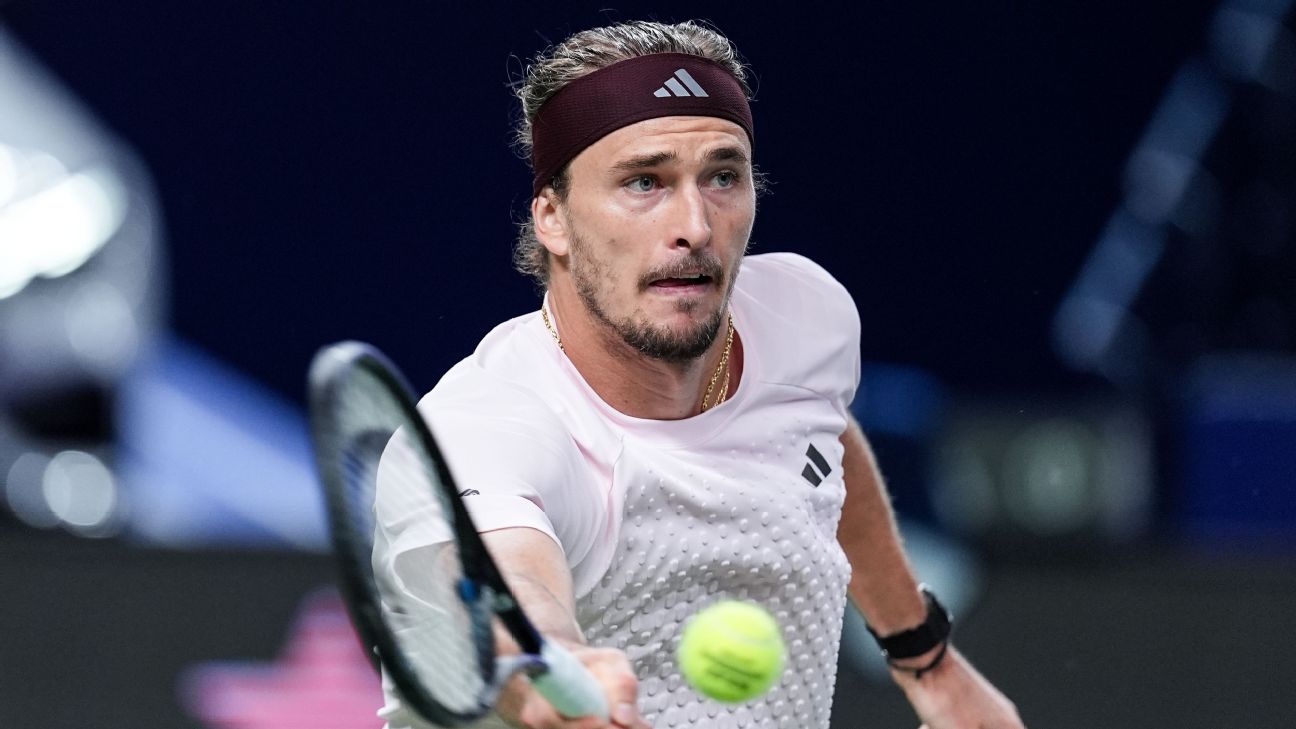
- ▪Alexander Zverev officially rose to World No. 1 on November 2 following a dominant 2026 season highlighted by French Open and US Open Grand Slam titles.
- ▪Forty-eight hours later in his debut match as No. 1 at the Paris Masters, Zverev fell 7-6 (5), 6-2 to Italian shotmaker Lorenzo Musetti.
- ▪Musetti's low-skidding one-handed slice and disguised drop shots pulled Zverev out of his deep baseline comfort zone and exposed tentative forehand swings in the tiebreak.
- ▪Early elimination in Paris grants Zverev extra physical rest for the ATP Finals, where matchup geometry matters far more than his No. 1 ranking badge.
Walking onto center court in Paris last Wednesday wearing the invisible crown of World No. 1 for the very first match of his life, Alexander Zverev learned how unforgiving late-autumn indoor tennis can be when variety disrupts rhythm. Less than forty-eight hours after Monday's ATP rankings officially anointed the German No. 1 following a dominant year that included French Open and US Open titles, Lorenzo Musetti carved him apart 7-6 (5), 6-2.
Stumbles immediately after reaching a lifelong milestone are nothing new in individual sports, where emotional decompression and media glare drain nervous-system sharpness. Yet the manner in which a tight first-set tiebreak snowballed into a lopsided 6-2 second-set rout offers a rich tactical X-ray of how crafty shotmakers still trouble Zverev under a roof — and how bettors must price top seeds entering the ATP Finals.
Emotional Decompression After a Two-Slam Climb to World No. 1
To contextualize Wednesday's upset properly, start with the sheer physical and mental mountain Zverev scaled across the preceding ten months. Winning both Roland Garros on clay and the US Open on New York hard courts in 2026 finally exorcised years of Grand Slam near-misses, and his victory run in Vienna the prior week officially locked in Monday's rise to World No. 1.
Ascending to the summit of men's tennis for the first time also triggered intense off-court scrutiny, as his arrival at No. 1 provoked complicated reactions across fans, sponsors, and media given his past history of domestic violence allegations. Juggling career-peak validation alongside heightened public spotlight while transitioning straight from Vienna to Paris with barely seventy-two hours of turnaround is a textbook recipe for a flat emotional tank.
Oddsmakers routinely underprice this 'milestone hangover' spot in late-season Masters 1000 draws. When a newly crowned No. 1 faces a fearless top-twenty talent with zero ranking pressure in an opening best-of-three match, even a five-percent dip in first-serve spot accuracy turns routine service holds into nerve-wracking tiebreaks.
How Musetti's Knife-Edge Slice Disrupted Zverev's Baseline Comfort Zone
Beyond fatigue, Lorenzo Musetti executed a masterclass in vertical and depth disruption that attacks Zverev's specific biomechanical geometry. Standing six-foot-six with long levers and one of the heaviest two-handed backhands in tennis history, Zverev loves waist-high, rhythmic topspin balls struck straight into his strike zone behind the baseline.
Musetti refused to feed that slot. Throughout the opening set and even more ruthlessly in the 6-2 second set, the Italian used his biting one-handed backhand slice to keep the ball skidding below knee height off the low-bouncing indoor surface. Whenever a six-foot-six baseliner is forced to bend deeply below his knees four meters behind the baseline and lift low-pace slices back over the net, his offensive ball speed evaporates.
Once Zverev crept passively backward to buy extra time, Musetti pulled the string with disguised forehand drop shots and sharp short-angled cross-court flicks. After edging the opening tiebreak 7-5 — where Zverev's forehand grew tentative on two pivotal mid-rally balls — Musetti smelled blood and rushed Zverev's court positioning relentlessly across a rapid 6-2 closing stanza.
Stop Chasing Losses With 5-Unit Plays: How Pros Size Their Bets.
Even a 56% winner will go broke with bad bet sizing. Read our straightforward breakdown of unit discipline, flat betting, and how to survive a cold streak without blowing your roll.
First-Serve Dependency and Court Pace Index Dynamics at the ATP Finals
Why could Zverev win best-of-five wars at the French Open and US Open yet drop a rapid two-setter indoors in Paris? Format and Court Pace Index (CPI) provide the mathematical answer. Across five sets at a Grand Slam, Zverev's elite aerobic engine and 135-mph first serve wear opponents down over three and a half hours; dropping a tight opening tiebreak in New York or Paris clay leaves three full sets to recalibrate.
In best-of-three indoor tennis, however, the margin for a single loose ten-minute patch is razor-thin. Indoor conditions amplify First-Serve Points Won — the percentage of points captured whenever the initial delivery lands in — because absence of wind lets servers hit corner spots cleanly while low skidding bounces punish defensive second-serve return stances. When Zverev stands five meters behind the baseline to chip returns in play, aggressive indoor shotmakers step inside the baseline on Serve +1 and take the racquet out of his hands.
We saw similar indoor volatility ripple across the entire autumn swing: in Basel, big-hitting Valentin Vacherot rallied past Jiri Lehecka 2-6, 6-3, 6-3 for the Swiss Indoors title, while Carlos Alcaraz adapted his return position forward to sweep Vienna and Paris. Passive deep returners pay a steep tax indoors unless their own first serve lands above 70 percent.
Resetting Zverev's Rating for Turin and the 2027 Australian Open
Paradoxically, losing early to Musetti in Paris may turn out to be a disguised blessing for Zverev's season-ending ATP Finals bid. Instead of grinding through four consecutive three-setters right after Vienna, the new World No. 1 gained nearly a full week of recovery and practice-court calibration to restore explosive leg drive under his first serve.
Heading into the ATP Finals round-robin groups and looking ahead to January 2027 in Melbourne, sharp tennis handicappers split Zverev's profile cleanly by opponent archetype: against rhythmic, flat baseliners who trade backhand-to-backhand, Zverev remains a suffocating favorite; against kinetic variety artists like Alcaraz or slice-and-drop-shot tacticians who attack his deep return position and forehand under tiebreak stress, his World No. 1 price tag carries vulnerability.
Price Zverev by Opponent Archetype Rather Than His New World No. 1 Label
Reaching World No. 1 automatically inflates public perception and shades match-line pricing by two to three percentage points, yet Zverev's 7-6 (5), 6-2 loss to Lorenzo Musetti underscores that tennis remains a game of geometric matchups rather than static ranking numbers. In best-of-three indoor play, losing a single first-set tiebreak removes the physical attrition safety net that carried Zverev to his 2026 French Open and US Open crowns.
At the ATP Finals and entering early 2027 hard-court events, back Zverev confidently when matched against linear rhythm hitters who engage his world-class two-handed backhand, while looking to plus-money set spreads or live-betting entries on opponents who deploy low indoor slices, drop shots, and aggressive Serve +1 net approaches into his forehand corner.
Frequently Asked Questions
Sharp Wire Market DeskHow did Alexander Zverev earn the World No. 1 ranking in November 2026?
Zverev ascended to World No. 1 on November 2 after a standout 2026 season in which he captured both the French Open and US Open Grand Slam titles before clinching the top spot in Vienna.
What happened in Zverev's first match as World No. 1?
Playing his opening match at the Paris Masters as the newly crowned No. 1, Zverev lost a tight opening tiebreak before falling 7-6 (5), 6-2 to Lorenzo Musetti.
Why do variety players like Musetti pose problems for Zverev indoors?
Low-skidding indoor slices stay below Zverev's preferred waist-high strike zone, while drop shots exploit his deep baseline positioning in short best-of-three sets.
