












































































































Novak Djokovic's Autumn Indoor Exit Clarifies His Selective 2027 Grand Slam Blueprint
After surviving Valentin Vacherot only to fall to Rinky Hijikata in Paris and miss the ATP Finals, Novak Djokovic enters winter one title shy of Roger Federer's 103 — with all eyes on Melbourne 2027.
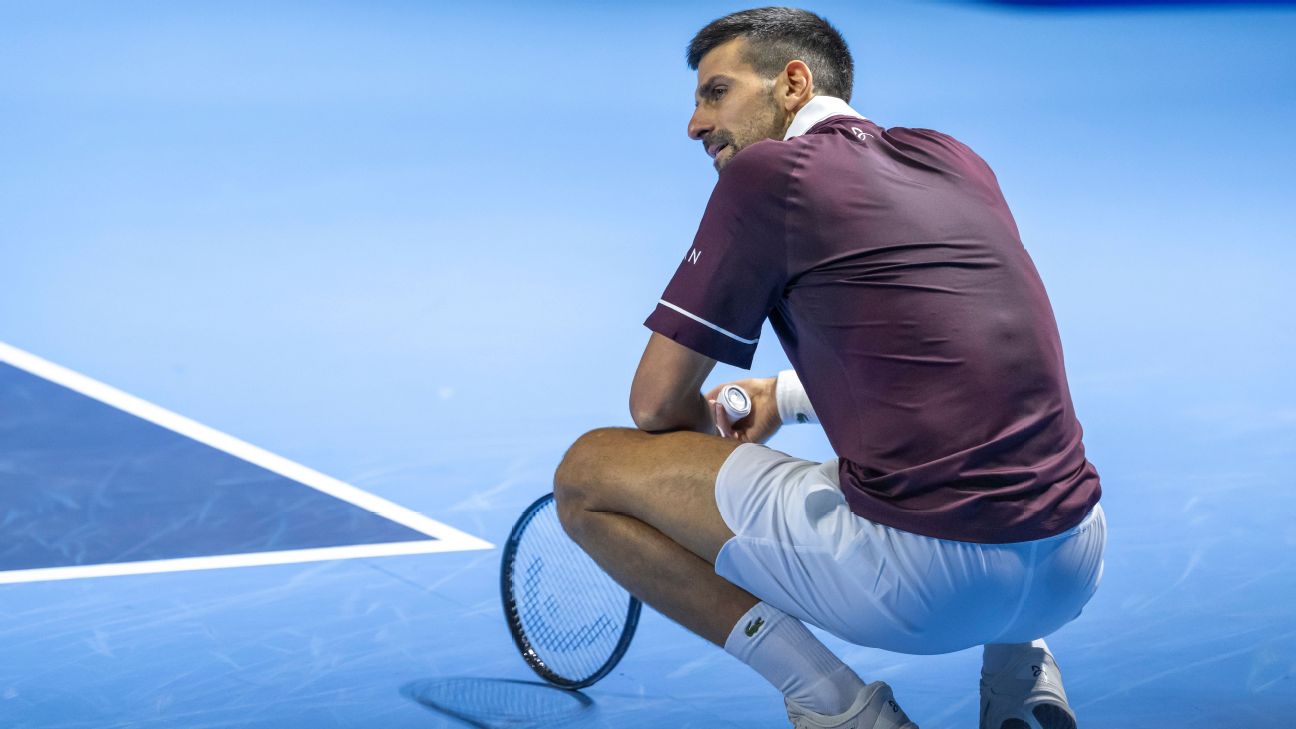
- ▪Novak Djokovic fought past Swiss Indoors champion Valentin Vacherot in Round 1 of the Paris Masters before losing to qualifier Rinky Hijikata, ending his bid for the 2026 ATP Finals.
- ▪Days earlier in Basel, Djokovic dropped a razor-thin 6-7 (4), 7-5, 7-6 (5) thriller to Jan-Lennard Struff, leaving him at 102 career titles — one behind Roger Federer's 103.
- ▪Back-to-back daily scheduling on fast indoor courts compressed Djokovic's overnight physical recovery far more than his underlying shot-making quality.
- ▪Missing the ATP Finals grants Djokovic an uninterrupted eight-week winter preparation block aimed squarely at the January 2027 Australian Open.
Late in the second set of his opening match at the Paris Masters, seven-time tournament champion Novak Djokovic had to summon every ounce of veteran survival craft just to fend off surging big server Valentin Vacherot. Twenty-four hours later, the tank finally clicked empty: a loss to scrappy Australian qualifier Rinky Hijikata extinguished Djokovic's dwindling hopes of reaching the 2026 ATP Finals and brought down the curtain on a bruising autumn indoor cameo.
Pair that Paris exit with his grueling 6-7 (4), 7-5, 7-6 (5) loss to forty-seventh-ranked Jan-Lennard Struff at the Swiss Indoors in Basel five days earlier — a defeat that kept Djokovic parked at 102 career titles, one shy of Roger Federer's 103 — and public narratives immediately rushed toward Father Time. Quantitative tennis handicappers see a far more nuanced equation heading into the 2027 Grand Slam calendar.
Thin Indoor Margins Against First-Strike Servers Struff and Vacherot
Fast late-October and early-November indoor hard courts represent the single most unforgiving environment on the ATP calendar for a thirty-nine-year-old legend operating on selective match sharpness. Under an indoor roof with zero wind drag and crisp Court Pace Index speeds, towering servers who average north of 132 miles per hour on first deliveries erase even the greatest return instincts in tennis history for entire sets at a time.
Look closely at the scoreboard from Djokovic's two-week European indoor swing. In Basel, forty-seventh-ranked German veteran Jan-Lennard Struff redlined his serve-and-volley and first-strike forehand across three razor-thin sets to edge Djokovic 6-7 (4), 7-5, 7-6 (5). Dropping two tiebreaks by two points apiece against an inspired six-foot-five server indoors is a coin-flip variance outcome rather than a systemic collapse.
Arriving in Paris four days later, Djokovic drew Valentin Vacherot, arguably the hottest unseeded indoor ball-striker in Europe fresh off rallying past Jiri Lehecka 2-6, 6-3, 6-3 to capture the Swiss Indoors crown. Overcoming a late second-set scare to dispatch Vacherot proved Djokovic's competitive pride and clutch return reading remain intact when his legs are fresh — yet spending that physical and emotional energy in Round 1 left him noticeably flat-footed the very next day.
Why Hijikata Exposed Back-to-Back Recovery Limits in Best-of-Three
Losing to qualifier Rinky Hijikata in Paris after beating Vacherot highlighted the real variable governing late-career Djokovic: overnight neuromuscular recovery rather than single-match tennis skill. Hijikata plays with relentless, low-center-of-gravity court coverage, redirecting pace cleanly and forcing opponents to hit three extra balls per point.
At age twenty-six, Djokovic could survive a high-stress evening tussle against a big server and bounce back eighteen hours later with zero drop in split-step reactivity. In late 2026, however, back-to-back daily scheduling at Masters 1000 events taxes fast-twitch recovery. Whenever Djokovic's first-step anticipation slows by even a tenth of a second, balls he normally takes on the rise off his shoelaces catch him slightly late, inflating unforced errors and turning routine service games into extended deuces.
Notice the crucial structural difference between ATP Masters 1000 scheduling and Grand Slam scheduling: at the Australian Open, Roland Garros, Wimbledon, and the US Open, players receive a mandatory built-in rest day between every single match. That forty-eight-hour recovery window between rounds remains Djokovic's greatest ally as he plans his 2027 campaign.
How to Spot Reverse Line Movement When the Public Is All Over One Side.
When 75% of the tickets are on a popular favorite and the spread still moves the other way, respected money is stepping in. Here is how to tell real steam from a head-fake.
Missing the 2026 ATP Finals: Hidden Rest Dividend for Melbourne 2027
While Alcaraz and Ben Shelton went on to lock down the final ATP Finals spots later that week in Paris, missing the year-end championships in Turin could quietly hand Djokovic an invaluable strategic head start on January 2027. Playing three guaranteed round-robin clashes against the world's top eight indoor hitters in mid-November adds zero Grand Slam legacy value for a twenty-four-time major champion while extending physical wear deep into winter.
Shutting down his competitive season on November 4 grants Djokovic eight uninterrupted weeks of off-season periodization before Australian warm-up events begin. Just as Roger Federer famously leveraged extended autumn blocks late in his career to arrive in Melbourne fresher than rivals who emptied their reserves in November, Djokovic can now tailor every gym session, flexibility block, and serve-motion tweak around Melbourne Park's Plexicushion-style hard courts.
Meanwhile, sitting at 102 career ATP titles — just one behind Federer's 103 and seven behind Jimmy Connors's all-time mark of 109 — gives Djokovic crystal-clear motivational fuel for selective 250 or 500 tune-up stops in early 2027 where he can build match rhythm without facing back-to-back top-ten gauntlets.
Separating Djokovic's 2027 Best-of-Five Value From Weekly Tour Events
For tennis bettors mapping out 2027, the analytical split on Novak Djokovic has never been sharper. In best-of-three Masters events where daily scheduling removes recovery days and big servers can steal a match via two rapid tiebreaks like Struff nearly perfected in Basel, backing Djokovic at short favorite prices is an outdated habit.
In best-of-five Grand Slams — specifically the January 2027 Australian Open and July 2027 Wimbledon, where built-in off-days protect overnight recovery and opponents must win three full sets against his unmatched tactical brain — public recency bias over his Hijikata loss could generate the richest outright and quarter-winner prices Djokovic has carried in Melbourne in more than a decade.
Fade Djokovic in Daily Best-of-Three Draws; Buy Post-Paris Dip for Melbourne 2027
Market recency bias always overreacts when an aging icon drops early autumn indoor matches to lower-ranked opponents like Jan-Lennard Struff (6-7, 7-5, 7-6 in Basel) and Rinky Hijikata in Paris. Oddsmakers and public bettors frequently extrapolate daily best-of-three fatigue onto best-of-five Grand Slam projections, overlooking that Slam tournaments provide mandatory rest days between every round.
Skipping the grueling ATP Finals gives Djokovic an eight-week winter runway to recharge physically while chasing his 103rd career title to tie Roger Federer. Avoid laying heavy chalk on Djokovic in consecutive-day Masters 1000 brackets in 2027, but look closely at drifted quarter-winner and outright numbers for the January 2027 Australian Open if Sinner shows rust in December.
Frequently Asked Questions
Sharp Wire Market DeskHow close is Novak Djokovic to Roger Federer's career ATP titles total?
Following his Basel and Paris indoor appearances, Djokovic sits at 102 career titles, just one title shy of tying Roger Federer's career mark of 103.
Why did Novak Djokovic miss out on the 2026 ATP Finals?
After overcoming Valentin Vacherot in the opening round of the Paris Masters, Djokovic lost his next match to qualifier Rinky Hijikata, extinguishing his remaining points path to Turin.
Why does Grand Slam scheduling favor Djokovic more than Masters 1000 events in 2027?
Grand Slams provide a full rest day between every match to restore neuromuscular explosiveness over best-of-five sets, whereas Masters events require playing on consecutive days.
