






























































































Gaël Monfils Named France Davis Cup Captain: Indoor Pedigree and 2027 Team Tennis Stakes
As European tennis navigates an emotional changing of the guard, France's federation handed the Davis Cup captain's chair to ultimate showman and locker-room magnet Gaël Monfils.
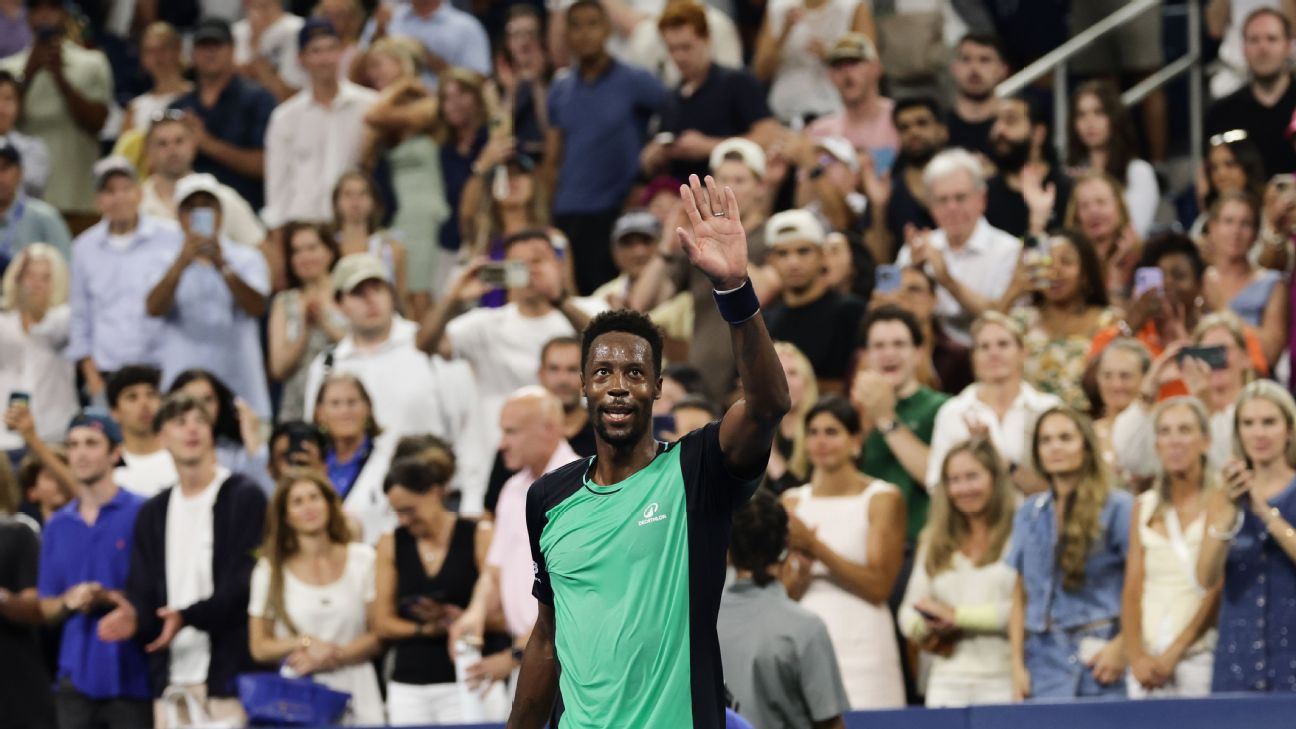
- ▪France's national tennis federation announced Saturday that Gaël Monfils will stay in tennis as captain of the French Davis Cup team.
- ▪Monfils's appointment arrives amid an autumn generational shift following Stan Wawrinka's retirement farewell in Basel.
- ▪French indoor hard-court depth — highlighted by Arthur Rinderknech pushing US Open runner-up Ben Shelton to a third-set tiebreak in Paris — gives Monfils versatile lineup weapons.
- ▪In 2027 Davis Cup markets, France's combination of two-deep indoor singles firepower, doubles pedigree, and host-surface control creates consistent underdog value against single-star nations.
For two electric decades on the ATP Tour, nobody in professional tennis understood how to turn a partisan French arena into a roaring cauldron of nerve, theater, and momentum better than Gaël Monfils. On Saturday, France's national tennis federation ensured that unmistakable electricity will stay anchored courtside rather than fading into retirement nostalgia, officially naming Monfils the new captain of France's Davis Cup squad ahead of the 2027 campaign.
Coming just eleven days after fellow generational icon Stan Wawrinka bowed out in an emotional career-ending first-round farewell at his home tournament in Basel, Monfils's transition into leadership captures European men's tennis at a pivotal crossroads. Tasked with marshaling one of the deepest cohorts of big-serving indoor hard-court talents in the sport, Monfils steps into a captaincy chair where surface selection, lineup chess, and bench calm decide international ties.
From Showman to Tactician: Why Monfils Commands Instant Locker-Room Buy-In
Casual highlights often reduced Gaël Monfils to sliding splits, airborne overheads, and supersonic forehands, obscuring one of the sharpest defensive-to-offensive tactical minds of his era. You do not survive twenty years inside the top echelons of the ATP Tour alongside Federer, Nadal, Djokovic, and Wawrinka on athleticism alone; Monfils mastered pace absorption, serve-spot disguise, and mid-match momentum shifts better than almost any contemporary.
In Davis Cup competition, a captain's primary currency is credibility with twenty-three-to-thirty-year-old touring pros who spend forty-five weeks per year answering only to their private coaches. Because Monfils shared practice courts, locker rooms, and late-season indoor swings directly with every active French contender, there is zero generational disconnect in his team meetings.
Equally vital is emotional temperature control under the unique pressure of playing for the national flag. Representing France in front of twelve thousand singing home supporters has historically lifted inspired underdogs and tightened nervous favorites in equal measure. Having lived every emotional extreme of Parisian spotlight tennis himself, Monfils knows instinctively when a player between odd games needs quiet tactical clarity on return positioning versus an injection of fiery bench energy.
Auditing France's Indoor Hard-Court Depth Pool Entering 2027
A Davis Cup captain is only as dangerous as the depth chart at his disposal, and French men's tennis boasts enviable middle-of-the-order depth tailored specifically for quick indoor ties. Unlike top-heavy nations that rely on a single top-five superstar and scramble to fill the No. 2 singles slot or pivotal doubles rubber, France fields a phalanx of fearless ball-strikers comfortable taking the racquet out of anyone's hands indoors.
Look no further than Arthur Rinderknech's performance at the Paris Masters just forty-eight hours before Monfils's appointment was announced. Facing US Open runner-up and eventual Paris finalist Ben Shelton, Rinderknech uncorked booming first serves and crisp net approaches to win the opening set and push Shelton to the brink in a 3-6, 6-4, 7-6 (5) thriller.
Across provincial French arenas from Lille to Orléans, Brest, Metz, and Paris, generations of French players grow up competing on medium-fast indoor acrylic surfaces. That shared developmental DNA gives Monfils interchangeable singles options who hold serve above 85 percent indoors alongside veteran French doubles specialists capable of swinging a 1-1 tie via quick-hands reflex volleying.
Only the Sports You Bet. None of the Filler.
Pick NFL, NBA, College Hoops, College Football, NHL, UFC, or Soccer. You only get the morning notes and line moves for the leagues you actually follow.
Surface Selection Physics and Lineup Chess in Davis Cup Formats
Handicapping international team tennis requires throwing standard individual ATP ranking math out the window and focusing on three structural levers: host-choice Court Pace Index (CPI), condensed best-of-three variance, and doubles-pivot lineup flexibility. When France hosts a 2027 Davis Cup qualifier tie, Monfils and the federation control both court speed and ball selection within regulated ITF parameters.
Suppose France draws a clay-court powerhouse from South America or Spain in a February or September 2027 tie: laying down a high-CPI, low-skidding indoor hard court immediately strips heavy western-grip topspin grinders of their preparation window while supercharging French first-strike servers. Conversely, against a nation anchored by one towering serve-bot and a vulnerable No. 2 singles player, a slightly grippier medium-pace indoor resin surface rewards France's superior two-man baseline depth.
Condensed tie formats — two singles matches and one high-leverage doubles clash — magnify every tactical substitution. Monfils's intimate knowledge of each French player's live physical readiness and head-to-head comfort allows him to deploy fresh legs in the No. 2 singles slot without ego friction.
Why International Team Markets Misprice Deep Rosters Without a Top-5 Star
In sports betting markets for Davis Cup qualifiers and Finals knockouts, recreational money habitually gravitates toward whichever country boasts the highest-ranked individual singles name — such as Zverev's Germany, Alcaraz's Spain, or Sinner's Italy — even when star availability is uncertain after exhausting Grand Slam runs or when the No. 2 singles and doubles rubbers heavily favor the deeper squad.
Under Monfils's captaincy in 2027, France fits the classic sharp-side team profile: cohesive bench chemistry, battle-tested doubles pairings, elite indoor hard-court comfort, and multiple top-fifty singles threats who elevate their level in team environments. Whenever France hosts an indoor tie or faces a top-heavy opponent missing a reliable second singles point, Monfils's squad projects as a live plus-money threat capable of swinging tie-deciding third sets in front of roaring home galleries.
Back French Roster Depth and Host Surface Control Over Single-Star Nations in 2027
Team tennis tie pricing routinely overweights a nation's No. 1 singles star while undervaluing the mathematical reality that capturing one singles slot plus the doubles rubber clinches victory. Even if an opposing top-five star wins his singles match, a deep roster like France — featuring dangerous indoor servers such as Arthur Rinderknech alongside proven doubles chemistry — holds two high-probability paths to sealing a tie.
With Gaël Monfils taking over captaincy duties for 2027, expect optimal host-surface tailoring on French indoor hard courts and unified locker-room buy-in. Target France in home-soil 2027 Davis Cup qualifiers and neutral indoor knockout ties whenever oddsmakers price top-heavy single-star opponents as decisive favorites.
Frequently Asked Questions
Sharp Wire Market DeskWhat new role did Gaël Monfils accept in November 2026?
France's national tennis federation announced on November 7, 2026, that Gaël Monfils will serve as captain of France's Davis Cup team.
Why is France particularly dangerous in indoor Davis Cup ties?
French players develop extensively on medium-fast indoor hard courts across domestic tournaments, giving captain Monfils multiple big-serving singles options like Arthur Rinderknech alongside seasoned doubles specialists.
How does Davis Cup tie math differ from standard ATP tournament handicapping?
Because team ties hinge on winning two of three rubbers (two singles and one doubles), a balanced nation with a strong No. 2 singles player and elite doubles team frequently upsets opponents relying on a lone top-five star.
