





































































































Houston vs. Kansas Futures Odds: Big 12 Win Totals and Title Value
Comparing Houston and Kansas early-season futures, defensive continuity, and win totals across the competitive Big 12 landscape.
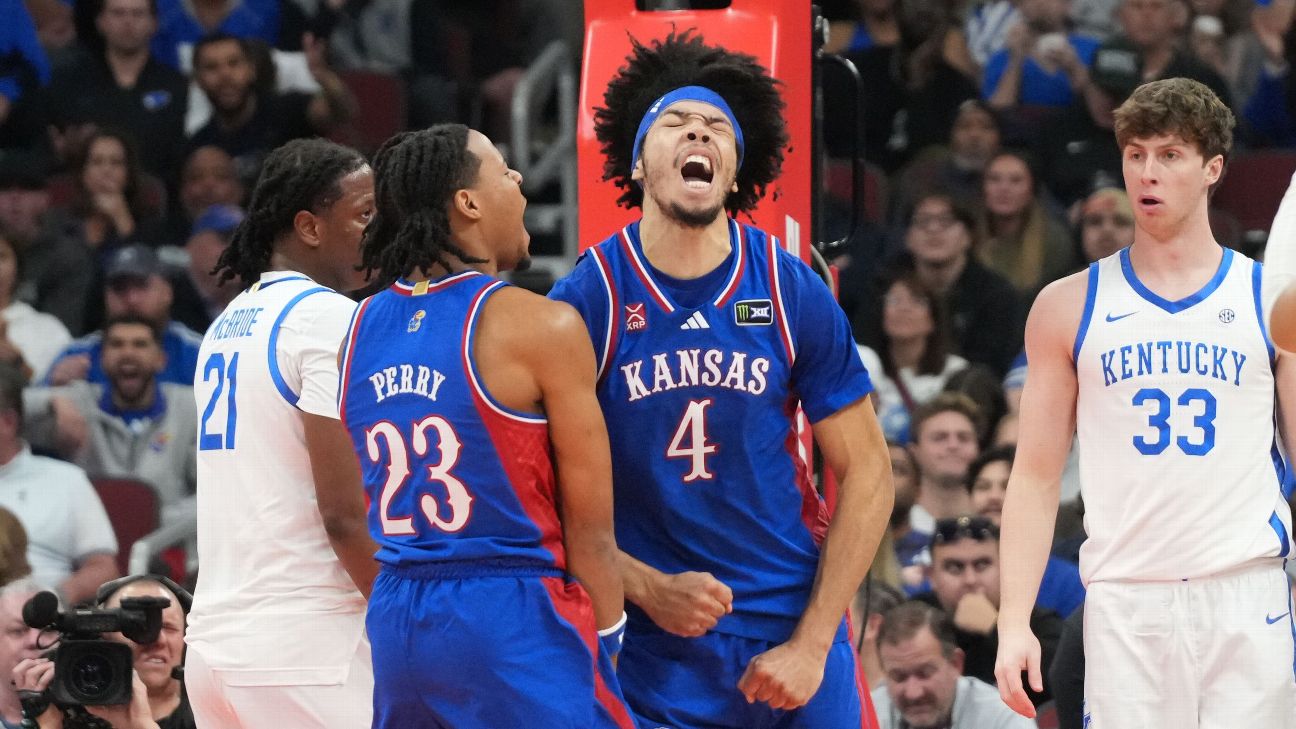
- ▪Houston anchors its upside with an elite 81.6 defensive efficiency rating and 60.6% two-point shooting.
- ▪Kansas matches structural stability behind a 66.1% two-point clip and stellar rim protection.
- ▪Current national title odds at +2300 and +2000 misprice proven coaching continuity relative to volatile portal rosters.
College basketball futures boards are reacting violently to autumn portal splashes while completely overlooking the bedrock of March success: defensive continuity and structured interior lockdown. Kelvin Sampson's Houston Cougars and Bill Self's Kansas Jayhawks stand as the ultimate rebuke to roster volatility, anchoring early-season valuations that smart bettors are leveraging across the Big 12 landscape.
As public tickets pile onto high-turnover rosters, the underlying efficiency metrics tell a starkly different story about who commands the conference. Both programs boast elite statistical profiles that create massive discrepancies between implied probabilities and actual title value, making their season win totals prime targets for analytical accumulation.
Big 12 Futures Market Dynamics and Public Overvaluation
Major sportsbooks continue to adjust their Big 12 futures boards in response to casual betting volume, frequently overrating flashy high-turnover portal squads that lack foundational chemistry. When evaluating conference win totals, public sentiment heavily skews toward offensive flash rather than the gritty possession-by-possession execution required to survive a grueling round-robin league schedule.
This market inefficiency leaves disciplined, system-driven programs like the Houston Cougars and Kansas Jayhawks trading at prices that fail to reflect their true probabilistic ceilings. By underpricing defensive continuity and rebounding efficiency, oddsmakers inadvertently create lucrative windows for sharp capital looking to lock in long-term value before November games give way to conference wars.
| Seed / Team | Overall | Conf | GB | Home / Road | PT DIFF | TITLE ODDS | Streak |
|---|---|---|---|---|---|---|---|
1. 23BYU Cougars | 4-0 | 0-0 | 0.0 | 3-0 / 0-0 | +83 | +7000 | W4 |
2. Baylor Bears | 3-0 | 0-0 | 0.5 | 3-0 / 0-0 | +107 | +10000 | W3 |
3. 8Houston Cougars | 3-0 | 0-0 | 0.5 | 2-0 / 0-0 | +103 | +2300 | W3 |
4. TCU Horned Frogs | 3-0 | 0-0 | 0.5 | 3-0 / 0-0 | +99 | +15000 | W3 |
5. West Virginia Mountaineers | 3-0 | 0-0 | 0.5 | 3-0 / 0-0 | +97 | +2800 | W3 |
6. 15Kansas Jayhawks | 3-0 | 0-0 | 0.5 | 2-0 / 0-0 | +94 | +2000 | W3 |
7. Arizona State Sun Devils | 3-0 | 0-0 | 0.5 | 3-0 / 0-0 | +59 | +2200 | W3 |
8. 16Texas Tech Red Raiders | 3-0 | 0-0 | 0.5 | 3-0 / 0-0 | +58 | +2200 | W3 |
Houston Cougars: Rim Protection and Defensive Floor
Kelvin Sampson's squad has constructed an absolute fortress on the defensive end, anchored by a stifling Defensive Efficiency (DRTG, measuring points allowed per 100 possessions) of 81.6. Active rotation stalwarts like Ikenna Alozie and Delrecco Gillespie enforce a relentless physical standard, driving opponent points per game down to a suffocating 56.3 mark through the early 2026 slate.
Offensively, the Cougars generate efficient chaos through an Adjusted Tempo of 69.0 possessions per 40 minutes while maintaining stellar shot quality. Their effective field goal percentage (eFG%, which adjusts for the added value of three-pointers) sits at a stellar 58.1%, perfectly complementing an elite free-throw rate of 44.7% to sustain a towering offensive rating estimate of 131.4 points per 100 possessions.
8Houston Cougars(3-0)VS.15Kansas Jayhawks(3-0)8Houston69.015Kansas73.08Houston131.415Kansas124.78Houston58.1%15Kansas62.2%8Houston34.6%15Kansas37.1%Kansas Jayhawks: Roster Continuity and Half-Court Execution
Bill Self has engineered another masterclass in roster continuity, guiding the Jayhawks to an unblemished 3-0 start built upon devastating half-court execution and veteran poise. Kansas operates at an up-tempo 73.0 possessions per 40 minutes, translating into a blistering 124.7 offensive rating estimate underpinned by a nation-elite 66.1% shooting clip from inside the arc.
Defensive stopper Davion Adkins and floor general Trent Perry orchestrate a balanced unit yielding just 59.7 opponent points per game. With a stingy 81.8 defensive efficiency rating and an effective field goal percentage soaring at 62.2%, the Jayhawks demonstrate the exact structural discipline required to navigate the Big 12 gauntlet and challenge for ultimate supremacy.
Betting Value: Win Totals and National Title Edges
Assessing the current futures landscape reveals compelling edges when comparing no-vig implied probabilities directly against tempo-free efficiency projections. Houston's national title odds standing at +2300 and Kansas positioned right alongside at +2000 significantly undervalue the immense margin for error these two defensive powerhouses possess relative to their peers.
Strategic portfolio allocation should heavily favor accumulating over on their regular-season win totals while scaling into conference title futures. By capitalizing on early-season market mispricings before the public catches up to their sustainable efficiency floors, savvy analysts can secure tremendous long-term upside in the nation's premier basketball conference.
Locking In Defensive Continuity: Why Houston and Kansas Own Big 12 Futures Value
Public capital consistently overreacts to high-turnover transfer portal rosters early in the college basketball calendar, creating structural mispricings on established powerhouses. While casual bettors chase flashy offensive output, elite defensive efficiency and coaching continuity remain the ultimate predictors of March success.
Houston and Kansas anchor their respective title aspirations in suffocating defensive structures. Kelvin Sampson's squad yields just 81.6 points per 100 possessions (DRTG), pairing lockdown perimeter defense with 60.6% two-point efficiency. Meanwhile, Bill Self's Jayhawks match that physical standard with an 81.8 DRTG and a blistering 66.1% clip inside the arc.
Executing on these futures requires fading the media narrative surrounding volatile roster builds. At +2300 for the Cougars and +2000 for the Jayhawks, the current board presents a rare opportunity to buy elite defensive floors before conference play exposes the vulnerabilities of unproven portal-heavy contenders.

Frequently Asked Questions
Sharp Wire Market DeskWhat are the current national title odds for Houston and Kansas?
Kansas is currently posted at +2000 on the board, while Houston sits at +2300.
How do the defensive metrics compare between Houston and Kansas?
Houston boasts an elite 81.6 defensive efficiency rating (DRTG), while Kansas is right behind with an 81.8 DRTG.
Why are these two Big 12 programs considered strong futures targets?
Both teams feature proven coaching continuity under Kelvin Sampson and Bill Self, elite two-point shooting efficiency, and reliable rim protection that translates into deep tournament runs.