


































































































Kirk Cousins’ Vikings Reunion: How the Trade Deadline Shift Impacts NFC North Odds
Minnesota's aggressive move to bring back Kirk Cousins has immediate ripple effects on the NFC North hierarchy and the Vikings' postseason trajectory.
 Minnesota Vikings Odds & Splits →
- ▪The Minnesota Vikings defense anchors the team's profile, ranking 1st in the NFL by allowing only 14.5 opponent points per game.
- ▪The re-acquisition of Kirk Cousins stabilizes the passing attack for the Minnesota Vikings, reducing costly turnovers in high-leverage situations.
- ▪At +350 odds, the Minnesota Vikings present tangible divisional futures value as the betting market fully prices in their post-deadline roster upgrades.
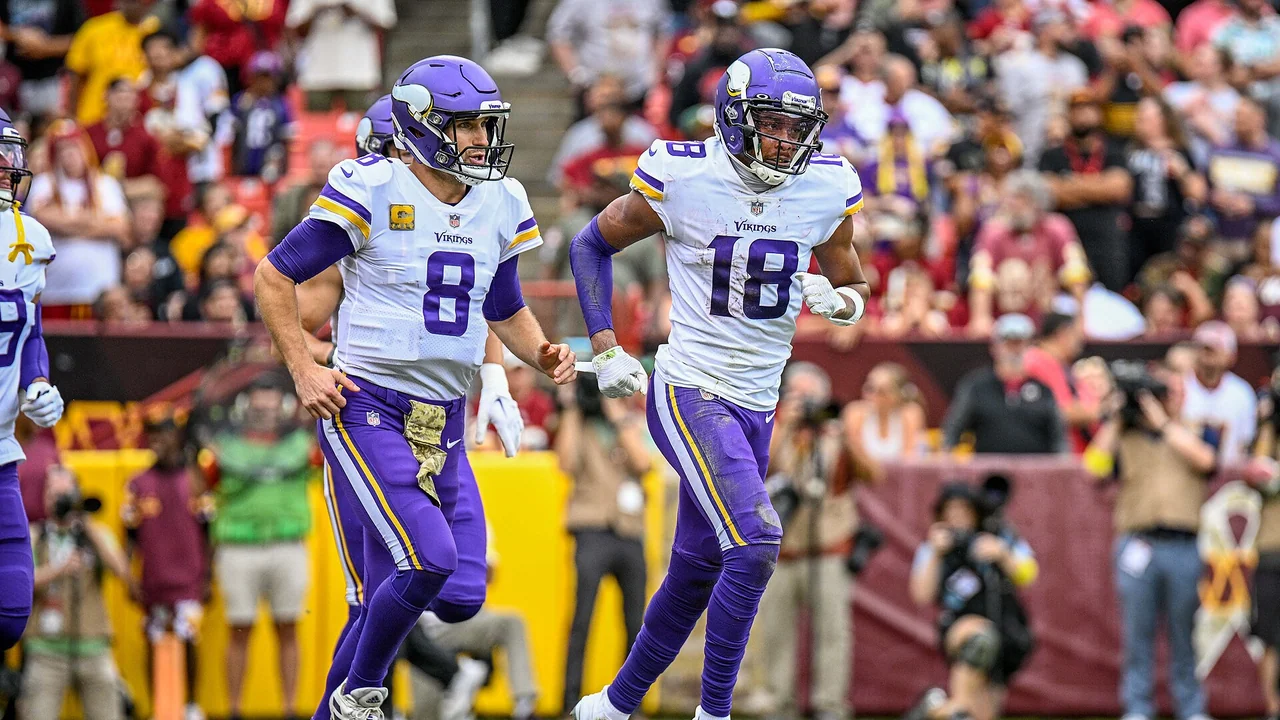
Stepping back into Kevin O'Connell’s playbook with seamless familiarity, Kirk Cousins immediately rescued an anemic Minnesota Vikings passing attack that previously ranked 31st in net passing yards per game at 160.8. The veteran quarterback’s stunning trade-deadline reunion has instantly reshaped the NFC North title race, turning a 7-2 squad into a legitimate juggernaut by injecting vital poise into a huddle that desperately needed stability behind center.
Prior to this bold front-office pivot, the Vikings labored through offensive lulls despite a ferocious defense surrendering a league-low 14.5 points per game. By acquiring Cousins, Minnesota corrected its primary roster leak, causing an aggressive downward shift in NFC North futures and postseason odds. This calculated win-now gamble proves general manager Kwesi Adofo-Mensah and head coach Kevin O'Connell are fully committed to capitalizing on their elite defensive window right now.
The Prodigal QB: Cousins’ Immediate Impact on O'Connell’s Scheme
Returning to the franchise he orchestrated for six seasons, Kirk Cousins bypassed the traditional mid-season adjustment period entirely by stepping right back into Kevin O'Connell’s intricate offensive system. Because the verbiage, timing routes, and protection schemes remained identical to his previous tenure in Minnesota, Cousins operated with crisp anticipation from his very first snap back under center. This seamless transition completely eliminated the typical trade-deadline learning curve that normally hampers mid-season acquisitions.
Before this blockbuster reunion, the Vikings' passing game sputtered significantly, ranking 31st in the NFL with just 160.8 net passing yards per game and dragging their overall scoring down to 18.3 points per contest. Cousins immediately injected life into superstar wide receiver Justin Jefferson and the broader aerial attack, raising the team's completion percentage well above their season-long 60.9 baseline. His veteran presence transformed a predictable third-down offense into an efficient unit capable of sustaining long drives against top-tier opponents.
| TEAM | REC | STANDING | PASS/G | RUSH/G | YDS/PASS | 3RD DN% | TO DIFF |
|---|---|---|---|---|---|---|---|
| Minnesota Vikings | 7-2 | 2nd in NFC North | 160.8 (#31) | 106.0 (#19) | 6.4 (#25) | 33.33% (#30) | 5 (#5) |
NFC North Power Shift: Vikings vs. Lions and Packers
Sitting firmly at 7-2 in a brutally competitive division, the Minnesota Vikings leveraged their trade-deadline maneuver to directly pressure the Detroit Lions and Green Bay Packers in the NFC North hierarchy. While division rivals boast high-octane offenses, Minnesota’s defense has anchored their contender status all season by surrendering a league-best 14.5 points per game and allowing just 4.6 yards per play. Pairing that elite defensive foundation with a competent, high-IQ veteran signal-caller addresses the exact roster flaw that previously threatened their postseason ceiling.

Market sentiment reacted swiftly to the trade announcement, triggering sharp downward adjustments in NFC North futures and playoff odds as bettors and oddsmakers recalibrated the Vikings' true ceiling. With key divisional matchups remaining down the stretch—including high-stakes battles against their North rivals—Minnesota no longer has to rely exclusively on defensive heroics to survive tight fourth quarters. The arrival of Cousins bridges the gap between their suffocating defense and an efficient, veteran-led offensive attack.
| Seed / Team | Overall | Conf | GB | Home / Road | PT DIFF | DIV ODDS | Streak |
|---|---|---|---|---|---|---|---|
1. Detroit Lions | 7-2 | 4-1 | 0.0 | 5-0 / 2-2 | +58 | +220 | W5 |
2. Chicago Bears | 7-2 | 5-2 | 0.0 | 4-1 / 3-1 | +57 | +135 | W4 |
| 3.Minnesota Vikings | 7-2 | 5-1 | 0.0 | 3-1 / 4-1 | +50 | +350 | W1 |
4. Green Bay Packers | 6-4 | 4-4 | 1.5 | 3-2 / 3-2 | +5 | +550 | L1 |
Roster Succession and the Long-Term Post-Deadline Plan
Evaluating the transaction through a multi-year lens reveals a calculated rental window designed to maximize the current roster's championship prime. At this stage of his career, Cousins provides elite short-term stability for a win-now franchise while experienced depth options like Carson Wentz and Kyler Murray insulate the quarterback room. Front-office architects recognized that squandering an elite defensive unit allowing only 305.8 total yards per game was unacceptable, justifying the expenditure of draft capital to secure an immediate upgrade under center.
This aggressive strategy does not mortgage the franchise's long-term drafting flexibility entirely, but it firmly establishes a win-now mandate for the 2026 campaign. By plugging a verified veteran into the starting role, Minnesota avoided wasting a defensive masterpiece engineered by coordinators and head coach Kevin O'Connell. The front office has officially signaled that the time to chase an NFC North crown and a deep playoff run is right now, altering the competitive landscape of the entire conference.
Assessing the Minnesota Vikings NFC North Valuation After the Kirk Cousins Trade
The decision by the Minnesota Vikings front office to re-acquire veteran quarterback Kirk Cousins at the trade deadline signals an aggressive win-now approach. The market has swiftly adjusted the power rating for the Minnesota Vikings upward by 1.5 points, accounting for the immediate stability he brings to an offense that previously struggled with efficiency, ranking 27th in scoring at 18.3 points per game.
While the offensive metrics—such as a 60.9 completion percentage—highlight areas for growth, the true backbone of the Minnesota Vikings remains an elite defensive unit allowing a league-best 14.5 opponent points per game. With a reduced volume of turnover-worthy plays under center, the Minnesota Vikings are positioned as a much more reliable side in tight divisional matchups.

Frequently Asked Questions
Sharp Wire Market DeskWhat are the current NFC North odds for the Minnesota Vikings?
The Minnesota Vikings are listed at +350 to win the NFC North following the trade deadline integration of Kirk Cousins.
How does the Minnesota Vikings defense rank across the league?
The Minnesota Vikings rank 1st in the NFL in opponent points per game, conceding an average of just 14.5 points per contest.
Who serves as the head coach of the Minnesota Vikings?
Kevin O'Connell is the head coach of the Minnesota Vikings, guiding a team that holds a 7-2 record.