





























































































Kirk Cousins Trade Analysis: How Vikings and Raiders Grade Out
Evaluating the tactical fit, scheme familiarity, and market fallout after the Minnesota Vikings acquire quarterback Kirk Cousins from the Las Vegas Raiders.
- ▪Minnesota ranks 1st in the NFL defensively, allowing just 14.5 points per game.
- ▪Cousins fills a major void for a Vikings passing attack averaging 160.8 net yards per game.
- ▪The Raiders allow a league-worst 399.9 total yards per game, driving their strategic reset.
- ▪Vikings futures at +2200 offer asymmetric value given elite defensive efficiency.
Kirk Cousins steps straight back into the Minnesota Vikings facility carrying a third-round pick's price tag and an immediate mission to rescue an offense ranked 31st in net passing yards per game. General manager Nolan Teasley pulled the trigger on a mid-season blockbuster after an inept Monday night display on national television threatened to capsize the locker room. Cousins arrives with an elite play-action resume, ready to spark a unit that has averaged just 18.3 points per game despite a 6-2 start.
Trading a proven veteran quarterback on a 38-touchdown passing pace fundamentally alters the competitive landscape for both conferences. While Minnesota secures the veteran stability required to leverage a defense conceding a league-low 14.5 opponent points per game, Las Vegas pivots toward draft capital accumulation under head coach Klint Kubiak. The transaction hinges on whether Cousins can seamlessly reclaim his familiar rhythm within Kevin O'Connell's system and carry a title-contending roster through a brutal November gauntlet.
Why the Vikings Had to Make the Move for Cousins
Minnesota general manager Nolan Teasley faced an untenable reality after a string of stagnant offensive performances left a 6-2 team suffocating under its own tactical limitations. Despite fielding a ferocious defense allowing a league-low 14.5 points per game, the Vikings ranked 27th in scoring at 18.3 points per game and 31st in net passing yards per game at 160.8. Parting with a third-round draft pick was a calculated necessity to prevent a locker room mutiny and salvage a championship window built on prime defensive efficiency.
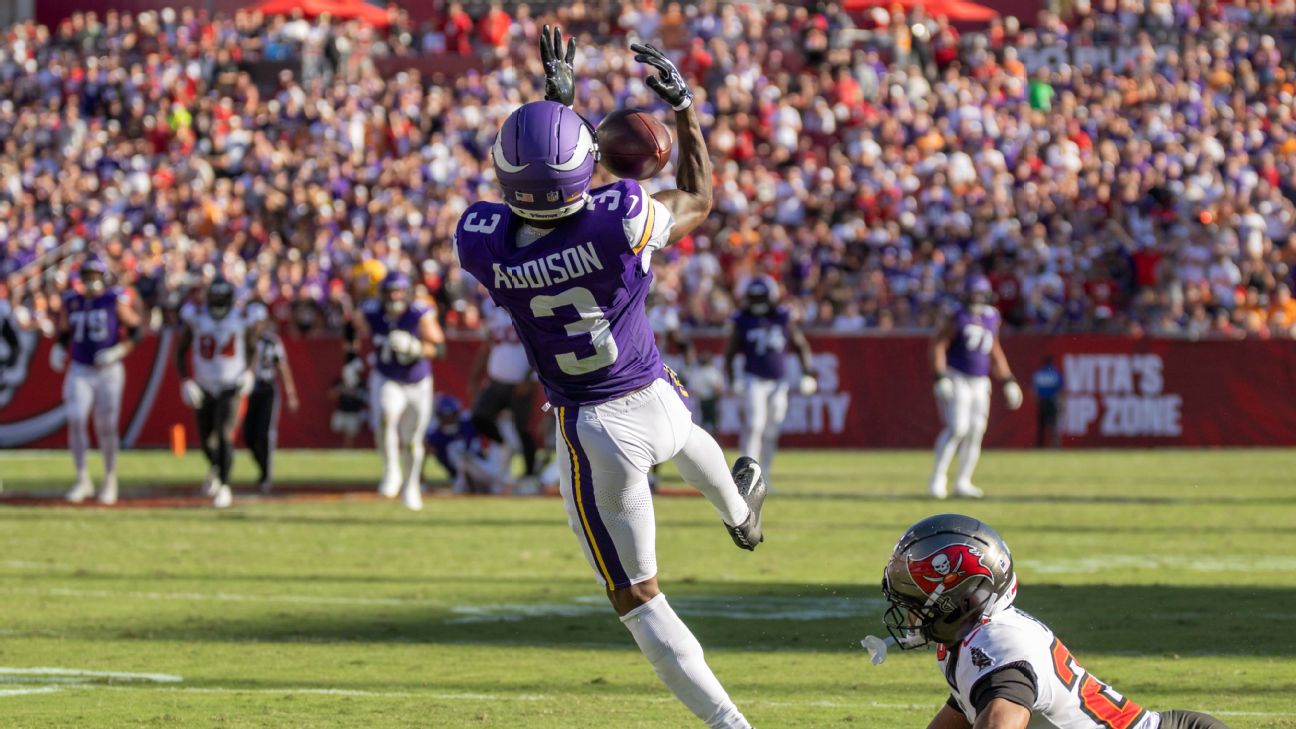
Historical mid-season quarterback salvages rarely materialize cleanly, matching the desperate precedents set by Sam Bradford's arrival ahead of the 2016 campaign or Randy Moss's 2010 return. Yet, the sheer depth of Minnesota's offensive skill positions—featuring star wide receiver Justin Jefferson alongside Jordan Addison and injured tight end T.J. Hockenson—made acquiring a seasoned commander imperative. Cousins immediately steps into the starting role, bypassing backup uncertainty and offering instant command over an offense yearning for stability.
 Minnesota Vikings(6-2)15 Listed
 Las Vegas Raiders(4-5)7 Listed
Scheme Continuity: Klint Kubiak's System Meets Kevin O'Connell
The transition logistics for Cousins are uniquely streamlined thanks to extensive overlap in West Coast and play-action principles. Having operated inside head coach Klint Kubiak's scheme in Las Vegas earlier this season, Cousins boasts a sublime 123.4 passer rating on play-action throws this year and a career 107.2 mark from under center. Expected Points Added per dropback—a metric quantifying a player's net positive contribution relative to down-and-distance expectations—underlines his elite proficiency in executing structured, rhythm-based passing concepts.
Where Did the Money Just Hit? Track Opening-to-Current Spreads Live.
Compare opening numbers against current spreads, see which games just crossed 3 or 7, and check no-vig fair odds across today's board.
Head coach Kevin O'Connell's playbook relies heavily on under-center play-action to maximize explosive downfield opportunities for Justin Jefferson, who leads the team with 393 receiving yards. Cousins now steps into the starting role, providing immediate stability while Carson Wentz transitions to a backup duty. By stepping directly into the lineup, Cousins bridges the gap between Minnesota's dominant defense and a lagging offensive attack.
Raiders' Fallout and Life After Cousins in Las Vegas
In Las Vegas, front-office architects must navigate a profound roster pivot after parting with a signal-caller who was on a staggering 38-touchdown passing pace. Despite ranking second in passing touchdowns, fifth in yards, and ninth in Expected Points Added per dropback, Cousins could not single-handedly overcome a leaky defense surrendering a league-worst 29.8 opponent points per game. The Silver and Black sit at 4-5 despite averaging 26.4 points per game offensively, highlighting a severe roster imbalance that ultimately triggered this mid-season trade return.
Acquiring valuable draft capital gives head coach Klint Kubiak and the Raiders front office essential ammunition to rebuild their porous defensive front and address long-term quarterback succession. With Fernando Mendoza stepping into starting reps, Las Vegas shifts its evaluation lens toward youth and future asset accumulation. While losing a high-performing veteran stings in the short term, the third-round draft compensation provides a critical building block for a franchise striving to regain competitive equilibrium in the AFC West.
Las Vegas Raiders(4-5) RamsL 21-35
 JetsW 38-33
 49ersL 17-38
 SeahawksHOME • 4:05 PM ET
 BroncosAWAY • 4:25 PM ET
 BrownsAWAY • 1:00 PM ET
Quantifying the Kirk Cousins Impact: Vikings NFC Value vs. Raiders Rebuild
The acquisition of Kirk Cousins addresses Minnesota's glaring offensive efficiency deficit, where Kevin O'Connell's squad ranks 27th in scoring at 18.3 points per game despite boasting an elite defense surrendering a league-best 14.5 points per contest.
With Cousins stepping into a familiar scheme, the Vikings' current +2200 odds to win the conference present a high-upside futures position, capitalizing on a defense yielding just 305.8 total yards per game.
Conversely, the Las Vegas Raiders pivot firmly toward asset accumulation and roster restructuring. Sitting at 4-5 with a porous defense allowing 29.8 points per game, Las Vegas's market profile shifts entirely toward long-term valuation.

Frequently Asked Questions
Sharp Wire Market DeskWhat are the Minnesota Vikings' current odds to win the conference following the trade?
The Minnesota Vikings are listed at +2200 in pre-computed futures markets.
How does Kirk Cousins impact Minnesota's offensive metrics?
Cousins arrives to boost an offense currently averaging 18.3 points per game, which ranks 27th in the NFL.
What is the defensive standing of the Las Vegas Raiders post-trade?
The Las Vegas Raiders allow 29.8 points per game and 399.9 total yards per game, ranking 32nd in the NFL as they shift toward asset building.