



































































































Ohio State’s Jeremiah Smith: Why Scouts Have Him Ranked No. 1 Overall
An analytical look at Ohio State wide receiver Jeremiah Smith, evaluating his route efficiency, defensive bracket coverage, and impact on team futures.
 Ohio State Buckeyes Odds & Splits →
- ▪Defensive coordinators frequently commit double-teams to Jeremiah Smith, forcing Ryan Day to rely on secondary targets.
- ▪The Ohio State Buckeyes average 34.9 points per game with an elite defensive unit allowing only 286.1 yards per contest.
- ▪National championship futures on the Ohio State Buckeyes sit at +7500 on the board.
- ▪Player award markets list Jeremiah Smith at +225, offering a compelling position for portfolio diversification.
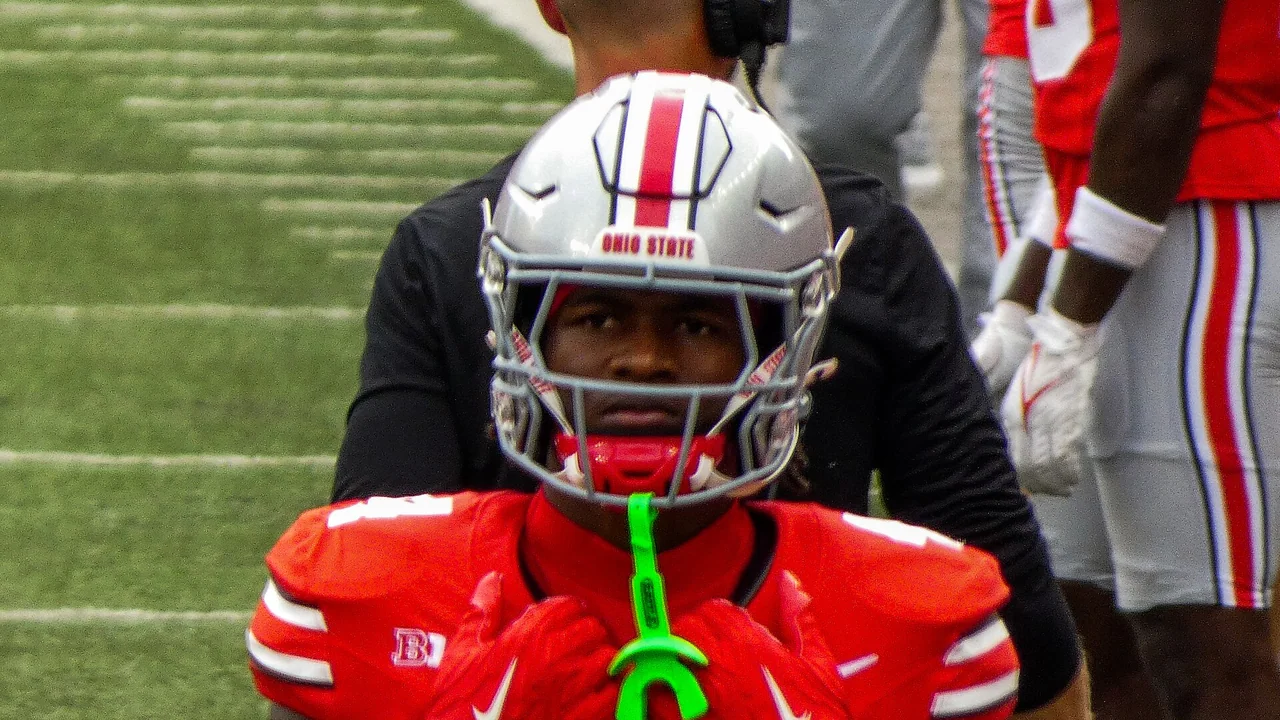
Scouts holding stopwatches inside press boxes from Columbus to Pasadena are already circling a single name on their preliminary draft boards as Ryan Day orchestrates another high-velocity offensive series. Ohio State wide receiver Jeremiah Smith continues to capture the undisputed consensus #1 player ranking across multiple NFL talent-evaluation circles, turning routine third-down conversions into clinic reels. Opposing defensive coordinators are no longer debating whether to single-cover the explosive sophomore; they are calculating how many defensive backs they can afford to allocate before the rest of the Buckeyes' receiving corps dismantles their zone structure.
The media hyperbole surrounding Smith’s generational ceiling can easily cloud the granular tactical reality of how Ohio State constructs its 34.9 points-per-game scoring profile. With the team sitting at 7-3 and ranking 11th nationally in net passing yards at 308.3 yards per contest, understanding his actual target share against elite Big Ten safety shells unlocks where sharp bettors find real value. We must dissect whether the public narrative is already baked into current numbers or if there is an actionable fade opportunity in upcoming matchups against Nebraska and Michigan.
Decoding Jeremiah Smith’s Target Share and Route Efficiency
Inside Ryan Day’s scheme, Jeremiah Smith operates as the primary engine driving an aerial attack that averages 9.3 yards per pass attempt, tied for seventh nationally in the FBS. His yards per route run—a metric measuring how productive a receiver is on every single snap he runs a pattern—soars when facing single-high safety coverages where cornerbacks are left on an island. Against man-to-man alignments, Smith leverages subtle head fakes and elite deceleration to create immediate separation before the pass rush can home in on quarterback Luke Fahey.
High-leverage situations magnify his dominance, as Smith commands an astronomical target share on third downs and inside the red zone. When opponents attempt to disguise their coverages pre-snap, Fahey routinely checks into predetermined option routes designed to exploit vacated zones or isolated single matchups. This precise execution explains why the passing game maintains a stellar 67.2 completion percentage despite facing aggressive secondary rotations week after week in a brutal conference gauntlet.
How Big Ten Defenses Deploy Brackets to Contain the Star
Defensive coordinators across the conference have abandoned standard base packages when confronting the Buckeyes, frequently deploying two-high safety shells that morph into bracket coverage post-snap. By rolling a safety over the top while jamming Smith at the line of scrimmage with a physical cornerback, opponents attempt to disrupt his timing on deep crossing routes and vertical stems. This defensive over-allocation forces Ohio State to rely heavily on secondary weapons like David Adolph and Bennett Christian to punish light boxes.
Despite these heavy bracket coverages and safety rotations designed specifically to take away the deep ball, Smith's route versatility allows him to feast on underneath curl routes and quick slants. When linebackers widen their drops to help clog the intermediate windows, the Buckeyes capitalize by utilizing running backs Favour Akih and Legend Bey on quick screens or draw plays. Opponents are essentially forced to pick their poison, choosing whether to get beaten vertically by the nation's premier wideout or dismantled underneath by a balanced offensive attack.

Weighing Scout Consensus Against Futures Market Value
The overwhelming consensus from NFL scouts ranking Jeremiah Smith at the top of future draft boards has created significant distortion in the betting markets surrounding Ohio State's season trajectory. With the team holding a 7-3 record and positioned behind top conference contenders like the UCLA Bruins and Indiana Hoosiers, public perception often inflates national championship odds beyond realistic mathematical value. Sharp bettors understand that individual prospect hype does not automatically translate to a flawless team-total cover when elite defenses shade their entire game plan toward one dynamic playmaker.
Evaluating the remaining schedule—featuring a road trip to Nebraska followed by the regular-season finale against Michigan—requires separating draft projection reality from immediate team futures. Because the market frequently overcorrects for star power, smart capital looks for spots where opposing defenses successfully limit explosive plays, forcing low-scoring defensive battles. Recognizing these situational discrepancies allows disciplined analysts to extract maximum value from game totals and conference futures rather than blindly paying the heavy tax associated with a consensus #1 overall draft prospect.
20Ohio State Buckeyes(7-3) 18USCL 18-30
 16OregonL 28-41
 NorthwesternW 28-19
 NebraskaAWAY • 12:00 PM ET
 MichiganHOME • 12:00 PM ET
Targeting Ohio State's Secondary Efficiency and Futures Market Value
While media hype concentrates on individual prospect evaluations for Jeremiah Smith, sharp handicappers look past the consensus rankings to analyze how defensive coordinators allocate safety help against the Ohio State passing game. When opponents commit double-teams to neutralize primary receiving options, the efficiency of secondary targets dictates whether Ryan Day's offense can sustain drives against elite Big Ten defensive units.
The Ohio State Buckeyes currently average 34.9 points per game while yielding just 18.4 points defensively, placing them among the top tier of FBS programs. However, when evaluating seasonal futures and player prop portfolios, the key metric is explosive play generation versus sustained down-down consistency when coverage rolls away from the primary weapon.
Evaluating the current YouWager odds board, the Ohio State Buckeyes sit at +7500 in national title markets, while individual award markets price Jeremiah Smith at +225. Bettors should isolate secondary target volume and team total overs against defensive opponents playing heavy single-high coverages rather than paying an inflated tax on straight point spreads.

Frequently Asked Questions
Sharp Wire Market DeskWhat is the current scoring average for the Ohio State Buckeyes in 2026?
The Ohio State Buckeyes average 34.9 points per game while holding opponents to 18.4 points per contest.
Where are the Ohio State Buckeyes ranked defensively in total yards allowed?
The Ohio State Buckeyes rank 13th nationally in FBS, allowing just 286.1 total yards per game.
What are the championship odds for the Ohio State Buckeyes on the futures market?
The Ohio State Buckeyes are currently listed at +7500 to win the national title.