

































































Rangers Face Depth Test Following Igor Shesterkin's Season-Ending Injury
With Igor Shesterkin sidelined for the season, the Rangers face a critical test of their defensive depth, forcing Mike Sullivan to rely on Dylan Garand and newly acquired center Max Sasson.
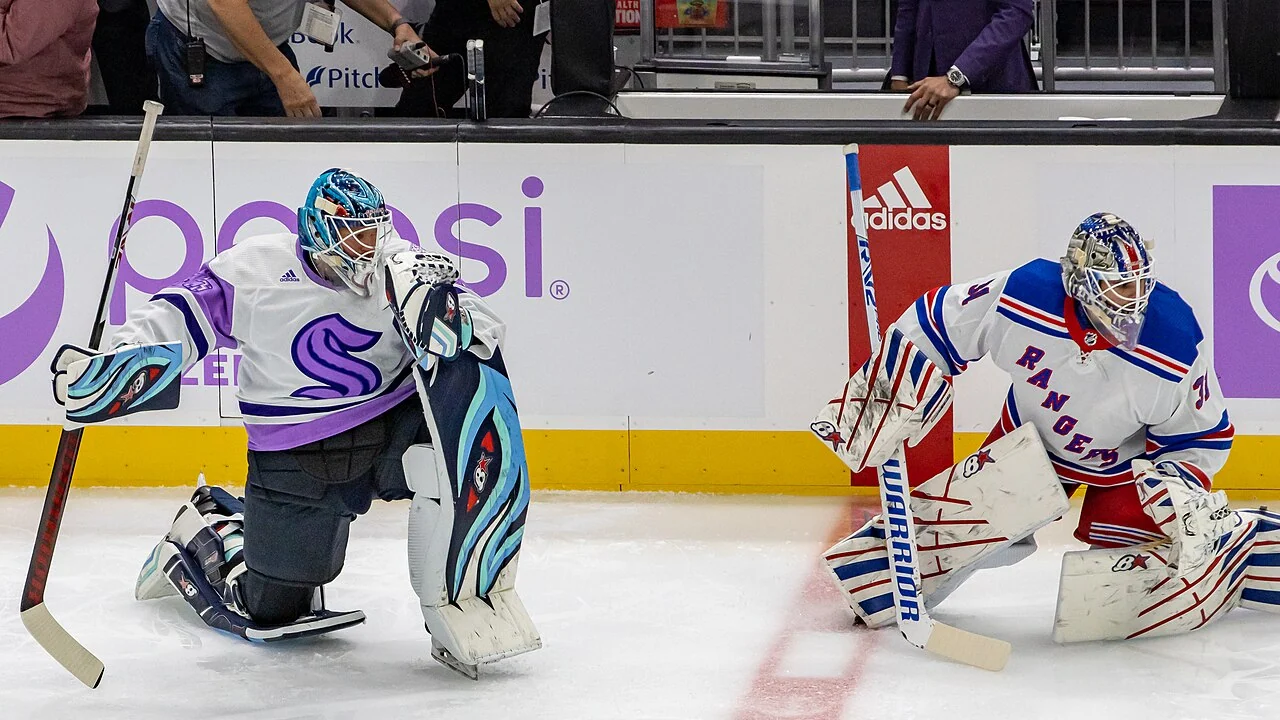
The New York Rangers' roster stability faces a significant challenge following the season-ending knee injury to star goaltender Igor Shesterkin. This loss forces head coach Mike Sullivan to navigate a precarious Metropolitan Division race with a reconfigured goaltending hierarchy and a thinned lineup.
The loss of these key contributors creates a ripple effect throughout the depth chart, demanding immediate tactical adjustments as the team attempts to maintain their 13-10 record. Sullivan must now reconfigure his forward rotations and goaltending hierarchy to sustain the team's defensive structure during this critical stretch.
The Mounting Injury Toll at Madison Square Garden
The loss of Perreault removes a critical piece of the Rangers' offensive depth, leaving the team to scramble for production as they sit at 13-10 on the season. With Shesterkin sidelined for the remainder of the campaign, the defensive structure that previously anchored the team’s 2.83 goals-against average is under immediate duress. The organization must now rely on internal solutions to fill the void left by two high-impact contributors who were central to the early-season blueprint. This sudden attrition forces a shift in team identity, moving away from relying on star-driven efficiency toward a more collective, grind-it-out approach across all four lines.
Madison Square Garden has become a site of significant attrition, as the team struggles to maintain their standing in a competitive Metropolitan Division. The Rangers currently hold a 13-10 record, but the margin for error has evaporated with the absence of their top-tier goaltender and a key forward. Sullivan is now tasked with reconfiguring his lines to prevent further slippage while the roster depth is tested against the division's elite. The team's ability to navigate this period will depend on whether their league-best 90.3% penalty kill can continue to mask the current lack of offensive firepower.
 INJURY REPORT
 New York Rangers(13-10)1 Listed
Lineup Reshuffling and Tactical Fallout
Mike Sullivan’s primary challenge involves integrating newly acquired center Max Sasson into a bottom-six role that requires immediate defensive reliability. With the team’s power play operating at 20.3% and the penalty kill leading the league at 90.3%, the focus shifts to maintaining structural integrity during 5-on-5 play. Sasson’s arrival provides a necessary infusion of speed, yet the transition requires him to adapt rapidly to the team's high-pressure system under the current injury-depleted conditions. Sullivan will likely lean on veterans like Mika Zibanejad and Adam Fox to elevate their ice time to compensate for the missing offensive production.
The crease now belongs to Dylan Garand, who assumes the mantle as the primary starter for the foreseeable future. Garand must stabilize the defensive efforts, as the team’s high PDO of 101.8 suggests a need for consistent goaltending to avoid negative regression. Sullivan’s reliance on Garand, supported by Joonas Korpisalo, will dictate the Rangers' ability to remain competitive while the front office evaluates potential depth additions before the March trade deadline. The success of this transition depends on Garand’s capacity to handle high-leverage minutes while the team works to stabilize their 49.1% shot share.
Rangers Face Defensive Depth Test Following Shesterkin Injury
The New York Rangers are facing a significant structural challenge following the season-ending loss of Igor Shesterkin. With the team already navigating a high 5v5 PDO of 101.8, the current roster instability suggests that the market's pricing on the Rangers' future outlook may be overly optimistic regarding their ability to maintain defensive efficiency without their primary starter.
The reliance on Dylan Garand in the crease, while the team ranks 22nd in scoring, creates a narrow margin for error. Disciplined bettors should avoid rushing into positions on the Rangers until the market fully accounts for the drop-off in goal-prevention metrics and the potential for negative regression in their league-leading penalty kill efficiency.
Subscribe to Our Free Daily Betting Newsletter.
See how lines are moving before kickoff and tipoff—verified opener-to-current line movement, key-number spread alerts, and confirmed starter injuries delivered free to your inbox.
Frequently Asked Questions
Sharp Wire Market DeskHow does the loss of Igor Shesterkin impact the Rangers' defensive metrics?
Shesterkin provided a.927 save percentage; his absence forces reliance on Dylan Garand, who must now anchor a unit that ranks 22nd in scoring.
What is the current status of the Rangers' special teams?
The Rangers maintain a league-best 90.3% penalty kill, which remains their primary tactical weapon while they navigate the current scoring drought.
Where can I track the Rangers' odds for the remainder of the season?
You can monitor the latest Stanley Cup and Metropolitan Division futures for the New York Rangers at the link provided in the partner attribution section.